

Contents
The EU has ended its customs duty exemption for consignments with an intrinsic value of up to 150 euros. From 1 July 2026, a flat 3 euros is charged on each item declared, and it applies until 1 July 2028. Until now, small parcels under 150 euros were declared under a simplified procedure, entered duty-free and went straight to the buyer. Two more changes are coming, both starting on 1 November 2026: a handling fee on small parcels and mandatory product identifiers.
Who is hit and how the charge works
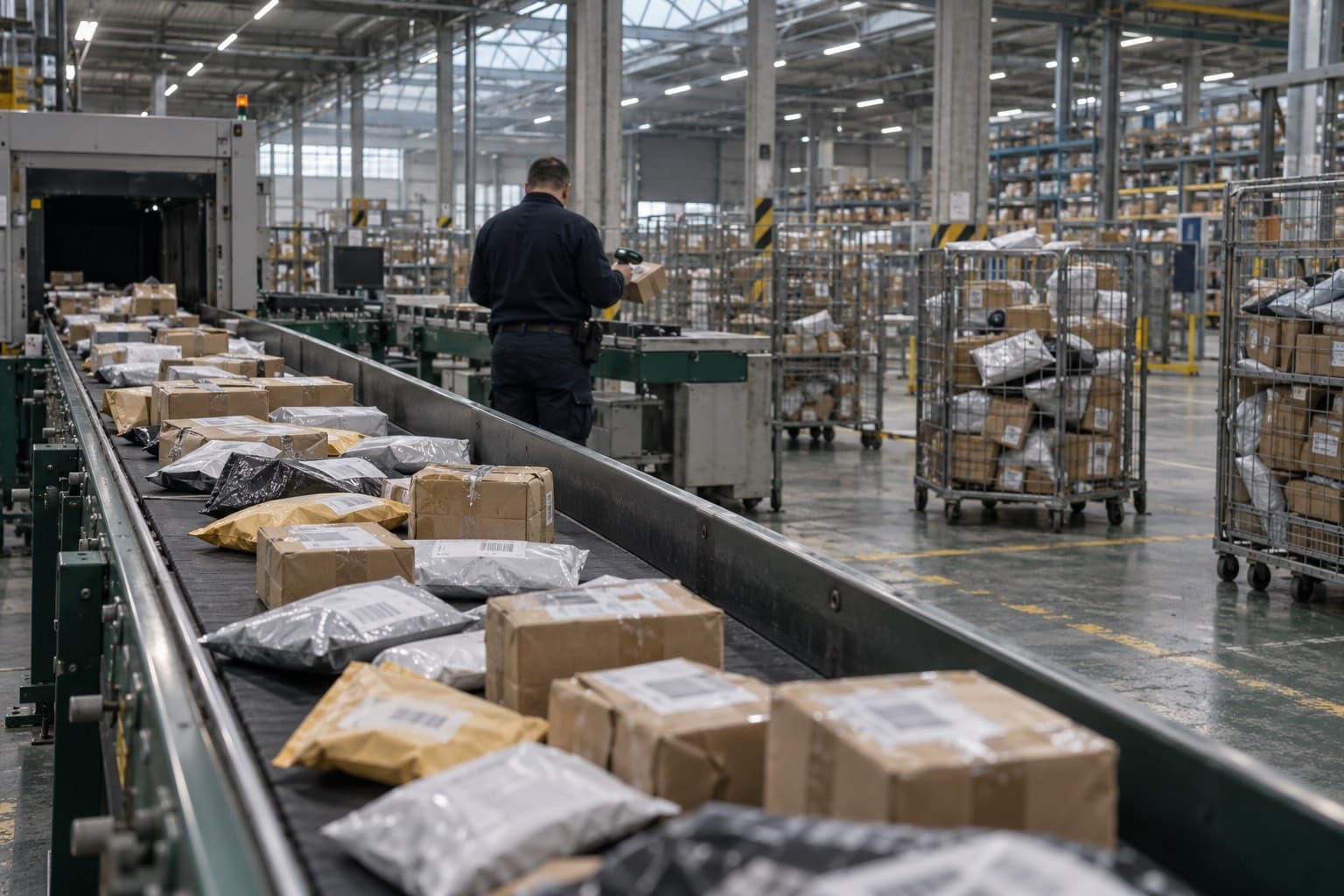
The charge covers consignments worth up to 150 euros that enter from outside the EU. It mainly targets non-EU e-commerce sellers. The EU has shut the bulk-entry route for B2C sales, so each consumer transaction is now assessed on its own. According to the European Commission (DG TAXUD, as cited by Vietnam Logistics Review), low-value items entering the EU rose from about 1.39 billion in 2022 to nearly 5.9 billion in 2025, roughly 98% of items imported.
The 3 euros is levied per item, not per parcel. Customs classification, description and origin determine what counts as an item. A parcel with several items can be charged several times, and if goods are split into separate lines by code or origin, extra duty follows. HS/CN/TARIC classification therefore bears directly on the economics of every order.
The charge comes on top of VAT and does not replace it. VAT has been collected since 2021 through IOSS or other mechanisms, and sellers using IOSS still pay the 3 euros. France began collecting the charge early, in March 2026.
The handling fee on small parcels is separate from the 3 euros. The EU Council approved the customs reform on 3 September 2026, placing more responsibility on non-EU platforms and remote sellers. The fee applies from 1 November 2026 at the latest. As of September 2026 the Commission had not announced the amount. RSM Belgium puts it at about 2 euros per parcel, expected from November 2026 and not yet confirmed. Romania already charges about 5 euros per parcel.
Also from 1 November 2026, product identifiers become mandatory for low-value goods imported through e-commerce, after a voluntary phase. A missing identifier, or catalogue data that does not match the customs declaration, can get goods held at customs.
Impact by commodity
The sources do not break down the impact by specific sector, so it is more useful to sort goods by their nature. Cheap, bulky or frequently returned products stand to lose more than light, high-margin ones.
Returns are also more complicated than before, because duty and fees are tied to the import. To protect margins, Vietnam Logistics Review suggests selling in bundles and setting a minimum order value.
What it means for shippers
Direct shipping from Vietnam still suits niche markets and products with unpredictable demand. Sellers with enough volume can consolidate stock into an EU hub, which cuts the number of customs procedures, pools freight and shortens the last mile. The trade-off is exposure to inventory, tax, warehousing and compliance risk.
EVFTA helps if the goods meet the rules of origin and the paperwork is complete, but it does not automatically remove every new cost. The declaration, the IOSS number and the proof of origin must all match.
Three things to do now:
- Before 1 November 2026, prepare a product identifier for every SKU sold into the EU. Check product name, material, origin, HS code, identifier and value across the catalogue, ERP, warehouse records, labels, invoices and declarations, and fix any mismatch.
- Review the HS/CN/TARIC classification and origin of each SKU, since these decide how lines are split and how the 3 euros is counted. For a check before shipping, work with a customs clearance provider.
- Recalculate profit per SKU after import duty, VAT, order handling, returns, platform fees and the new handling fee. Keep a separate cell for the handling fee and update it once the EU announces the official amount, by 1 November 2026 at the latest.
Sources
Related service: Customs brokerage