
Contents
Ukraine has opened an investigation into whether silicon-manganese steel wire declared as originating in Vietnam is circumventing anti-dumping measures. The Interdepartmental Commission on International Trade (ICIT) issued Decision AD-615/2026/441-01 on 3 November 2026. While the probe runs, ICIT is collecting a 32.6% deposit from Vietnamese exporters.
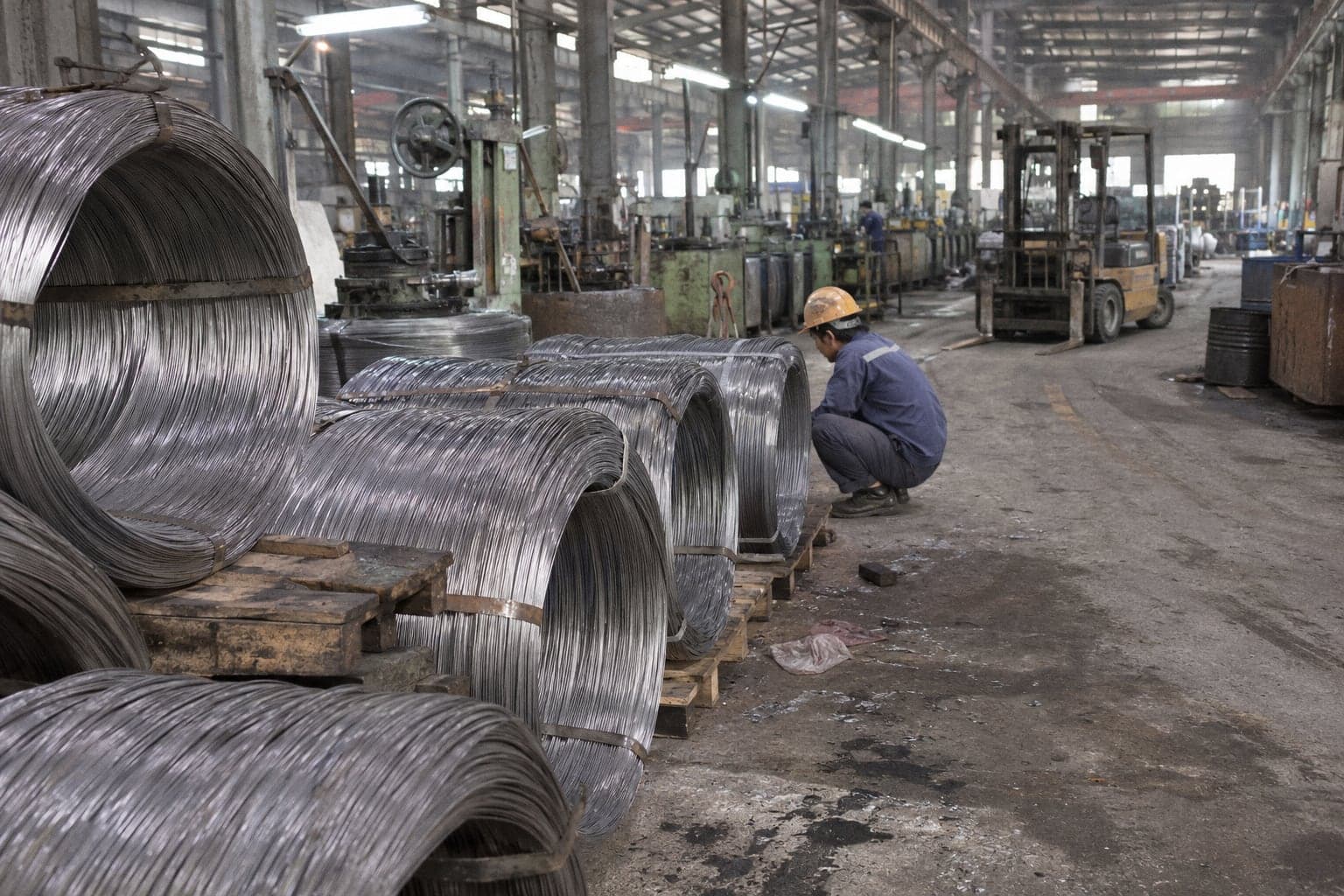
Ukrainian welding-materials producer PlasmaTec filed the petition. ICIT suspects Chinese wire is being routed through Vietnam into Ukraine to avoid the anti-dumping duty on Chinese goods. The product code is UCGFEA 7229 20 00 00, according to law firm Ilyashev & Partners, which represents the petitioner. Information from Vietnam's Trade Remedies Authority, part of the Ministry of Industry and Trade, does not give an HS code.
How the deposit works and key deadlines
Ukraine has imposed a definitive 32.6% anti-dumping duty on Chinese wire since 2023, under Decision AD-549/2023/441-01 of 13/7/2023 (original investigation AD-488/2021/4411-03 of 23/4/2021). The rate comes from Ilyashev & Partners. The Trade Remedies Authority's information does not state it.
Vietnamese suppliers covered by the probe must post a deposit equal to the anti-dumping duty plus VAT. It is calculated on the customs value of in-scope imports, using the rate in Decision AD-549/2023. The deposit stays frozen until the investigation ends.
The decision takes effect 10 days after official publication in the gazette Uryadovyi Kurier.
All deadlines below run from the effective date. Ukraine accepts registrations from interested parties and requests for a hearing for 20 days. A registration must include the company name, address, phone, email, type of business (producer, exporter or importer) and a contact person. Written comments are accepted for 30 days. They must be filed in Ukrainian, or in the original language with a Ukrainian translation.
Why Vietnam is in the frame
Ilyashev & Partners says the anti-dumping measure was extended to Malaysian-origin goods in 2025. Shipments from Malaysia then stopped, while volumes of identical wire declared as Vietnamese-origin rose fast. Lawyer Olena Omelchenko said anti-dumping duties do not always end unfair competition, because importers look for ways to change the declared country of origin.
The Trade Remedies Authority sees a similar pattern. After 2023, China's share of Ukraine's wire imports fell, while Vietnamese goods rose and took part of that share.
Ilyashev & Partners represents the petitioner, so its account of Malaysia and Vietnam is one side's argument. The conclusion rests with ICIT.
Impact by commodity
The case touches only silicon-manganese alloy steel wire (heading 7229 20) shipped to Ukraine. Exporters must be able to prove where their inputs come from, and that production in Vietnam is independent and substantive.
Cargo owners will have money held at Ukrainian customs clearance: a 32.6% deposit plus VAT on customs value, held until the investigation closes. Origin and production records should be ready before registering as an interested party, because the 20-day clock starts on the effective date.
What exporters should do
The Trade Remedies Authority recommends the following.
Review production, exports and the supply chain for in-scope products. Prepare evidence of origin, the production process, input sources and processing steps, to show that production in Vietnam is independent and substantive.
Compile data on output, purchases, sales and transaction values, along with lists of suppliers and customers.
Register as an interested party and file comments and evidence on time, in Ukrainian or with a Ukrainian translation.
Work out in advance how the deposit will affect costs, clearance and export plans.
Point of contact: Foreign Trade Remedies Handling Division, Trade Remedies Authority, Ministry of Industry and Trade.
Sources
Related service: Customs Brokerage