

Contents
Vietnam has extended anti-dumping duties on polyester filament yarn from India, Indonesia, Malaysia and China for another five years. The Ministry of Industry and Trade signed Decision 2652/QĐ-BCT on 13 October 2026. The duties run from 16 October 2026 to 15 October 2031 and follow a sunset review, case code ER01.AD10.
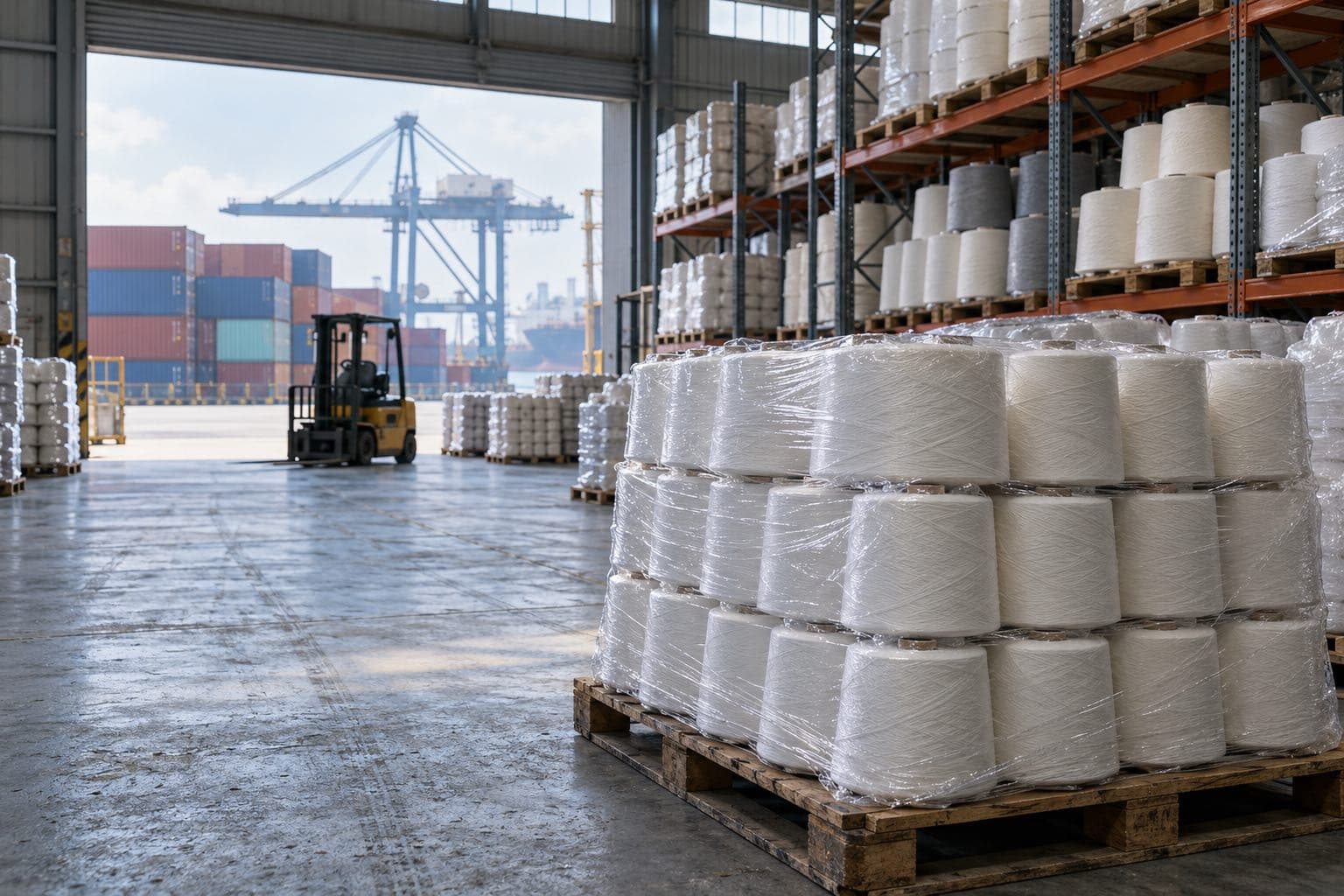
The new duties pick up exactly where the old ones end, with no gap. The original measure came from Decision 2302/QĐ-BCT, signed on 13 October 2021 and effective from 16 October 2021. The ministry opened the review on 16 October 2025 under Decision 3013/QĐ-BCT, after four years of duties.
Duty rates and HS codes covered
Rates depend on the country of origin: India 54.9%, Indonesia 21.94%, Malaysia 21.45% and China 3.36% to 17.45%. Across all four countries, rates range from 3.36% to 54.9%.
The scope covers polyester filament yarn in three forms, partially oriented yarn, textured yarn and fully oriented yarn, under six HS codes: 5402.33.10, 5402.33.90, 5402.46.10, 5402.46.90, 5402.47.10 and 5402.47.90. None of the sources checked mention any excluded product.
Why the ministry extended the duties
The ministry says the duties worked. Imports from India, Indonesia and Malaysia fell sharply while they were in force. Domestic producers kept operating, added capacity and raised output. The ministry also credits the measure with supporting jobs and the textile and garment supply chain, upstream and downstream.
Its second argument is the risk of removal. According to the ministry, dumping continued during the review and could persist or return if the duties lapse. Imports from the investigated countries kept rising, China above all. Without duties, cheap imports could surge and push down domestic prices.
The local industry has not recovered either. The ministry found that many indicators remain unfavorable: output, capacity utilization, market share, inventory, profit, labor productivity, investment and cash flow.
It also pointed to external factors. China has large capacity to produce and export polyester yarn, while some third markets maintain trade remedies on the product. That raises the risk of diverted shipments landing in Vietnam. A draft conclusion went to interested parties for comment before the ministry issued the final decision.
Impact by commodity
Importers of partially oriented yarn, textured yarn and fully oriented yarn from the four countries will keep paying anti-dumping duties with no gap from 16 October 2026. China has the lowest rates, from 3.36% to 17.45%, but it is also the source where the ministry cites rising imports. India faces 54.9%, the highest of the four.
For importers, the key point is the timeline. With duties in force until 15 October 2031, landed costs for yarn from these four countries can be budgeted at the Decision 2652 rates for the full five years. Duty is not the only factor in choosing a supplier, but Indian yarn at 54.9% is a very different proposition from Malaysian or Indonesian yarn at roughly 22%.
Downstream textile and garment makers that rely on imported yarn should note the ministry's reasoning: the measure protects the domestic upstream supply chain. They should ask domestic mills for quotes and compare them with duty-paid import prices.
The ministry itself cites trade diversion as a risk behind the extension, linking it to China's capacity and to trade remedies in third markets. This is an assessment of risk, not a finding about any specific shipment or supplier.
What importers should do now
- Check the HS codes on your declarations against subheadings 5402.33, 5402.46 and 5402.47 to see whether a shipment falls within scope.
- Match the origin and manufacturer of each shipment to the rates in Decision 2652/QĐ-BCT, especially for Chinese yarn, where rates run from 3.36% to 17.45%.
- Keep complete origin documents for every shipment.
- Get quotes from domestic yarn suppliers for comparison, and ask your customs broker how to handle shipments whose declarations were opened around 16 October 2026.
Sources
- VietnamPlus: Bộ Công Thương gia hạn thuế chống bán phá giá với sợi dài polyester thêm 5 năm
- Bộ Công Thương: Quyết định về rà soát cuối kỳ biện pháp chống bán phá giá sản phẩm sợi dài polyester
- Mekong ASEAN: Gia hạn thuế chống bán phá giá sản phẩm sợi từ Trung Quốc, Indonesia, Malaysia
- Tạp chí Công Thương: Bộ Công Thương rà soát cuối kỳ việc áp thuế chống bán phá giá với sợi dài làm từ polyester
Related service: Customs brokerage