

Contents
According to Vietnam's Ministry of Industry and Trade, Taiwan's Ministry of Finance opened an anti-dumping investigation into cold-rolled flat stainless steel from Vietnam on 14 August 2026. The complaint alleges a dumping margin of 31.36% on 2025 shipments, a figure supplied by the petitioners rather than a finding by the investigating authority. The notice lists 20 Vietnamese producers and exporters. It set a registration window of 20 days from publication; that original window had expired by 29 September 2026.
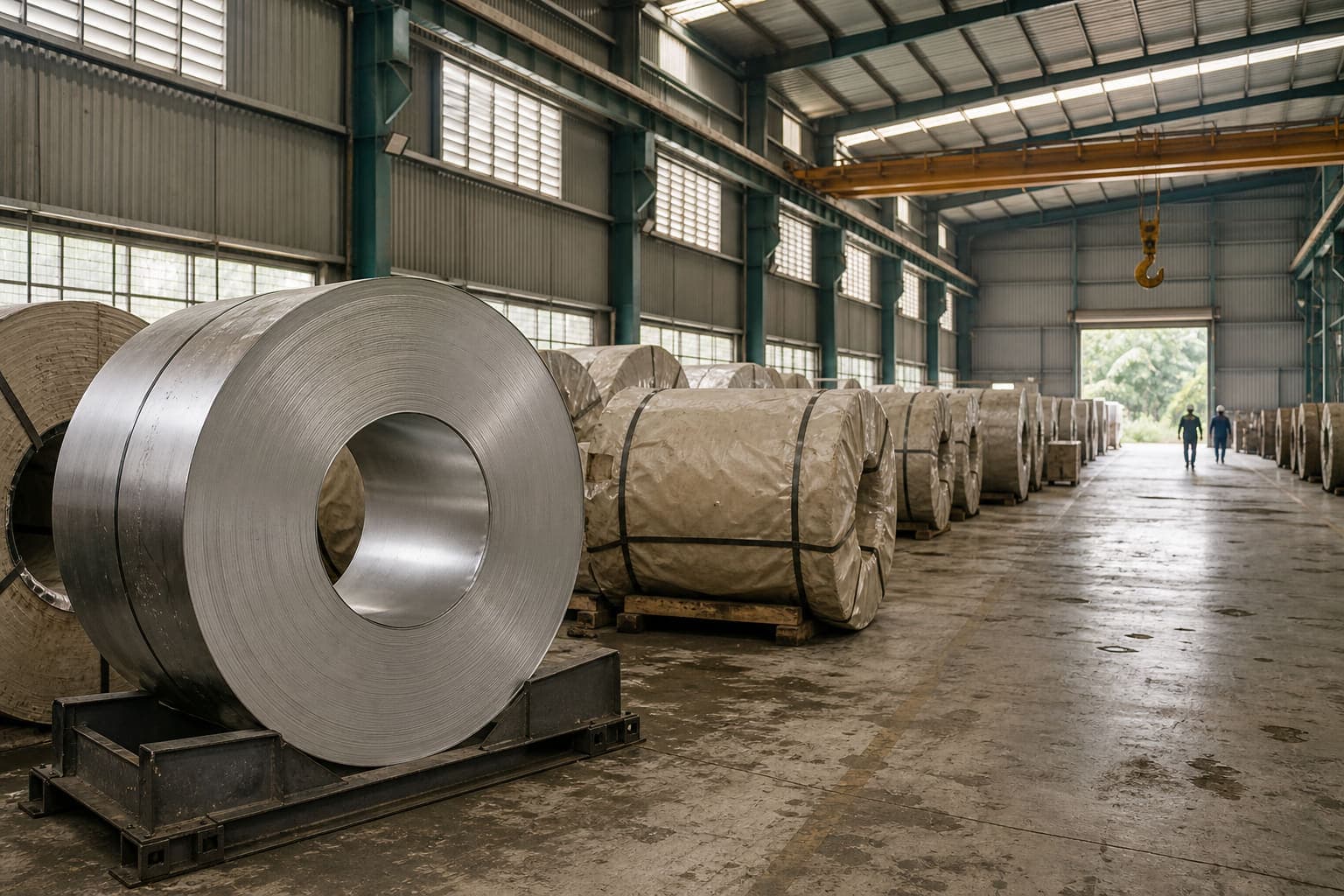
What the stainless steel investigation covers
The product description defines the scope; HS codes are for reference only. The goods are cold-rolled flat stainless steel, coiled or not, surface-treated or not, further worked or not, from 0.05 mm to 6.10 mm thick. Composition by weight is 5 to 20% nickel, 15 to 25% chromium, up to 3% manganese and up to 0.5% aluminium. Products coated, plated or clad with metal are excluded from the investigation.
For document review, an HS-code match alone is not enough. Two consignments declared under the same HS code can land on opposite sides of the line depending on gauge and on what the mill certificate says about composition. Check certificates for sheet and coil sold to Taiwan alongside surface-treatment specifications to establish whether an exclusion applies.
Who filed, and what else they asked for
The case rests on a petition from two Taiwanese producers, Yieh United Steel and Tang Eng Machinery. The period of investigation runs from 1 July 2025 to 30 June 2026. Producers and exporters should assemble production and sales records for those twelve months in preparation for information requests from the investigating authority.
The petitioners also requested retroactive duties on imports entering during the 90 days before provisional duties begin, seeking to prevent a surge of imports during the investigation. The initiation information states that MOF will announce its decision on retroactive collection when it completes the final dumping determination. For shipment planning, early delivery should therefore not be treated as a guarantee against duty exposure.
Procedural deadlines in the initiation information
The procedure described by Vietnam's trade ministry gives Taiwan's Ministry of Economic Affairs (MOEA) 40 days, counted from the day after receipt of the notice, to make a preliminary injury determination and notify the Ministry of Finance (MOF). If imports are found to cause injury, MOF has 70 days from the day after receiving MOEA's notification to make a preliminary dumping determination, providing a basis to consider provisional duties. These are the procedural time limits reported at initiation, not confirmation of the case's current progress.
Vietnam's trade ministry warns that exporters who do not register may have their dumping margins determined using adverse facts available. Incomplete cooperation also risks a finding of non-cooperation and an adverse duty rate; the source does not identify that rate as the highest in the case. Vietnam's Trade Remedies Authority recommends reviewing operations, assembling production and sales records, and cooperating fully with the investigation.
Impact by commodity
Two consignments declared under the same HS code can land on opposite sides of the line depending on gauge and on what the mill certificate says about composition.
Cold-rolled flat stainless within the scope requires direct review. The investigation notice describes this material as feedstock that is worked into kitchenware and food equipment, household appliances, architectural trim, aerospace parts, petrochemical and mechanical components, and transport hardware.
From a purchasing perspective, downstream businesses should check whether their inputs fall within the scope and are imported into Taiwan. Duties on those inputs could affect costs. The listed end uses do not, however, establish that every plant uses this particular material or that all finished goods exported from Vietnam would face the same cost impact. Exposure needs to be assessed against the actual material and trade flow.
For compliance planning, track trade-remedy exposure by product and market rather than extrapolating one case across the steel sector. Related reading covers prestressed steel bar from China and US trade-defence risk. For the Taiwan case, focus on the product description, investigation period and records requested. Freight costs are a separate planning consideration, not a substitute for checking potential duty exposure.
Records stainless steel shippers should review
- Check certificates for each grade sold to Taiwan: 0.05 to 6.10 mm thick, nickel 5 to 20%, chromium 15 to 25%, manganese up to 3%, aluminium up to 0.5%. Exclude products coated, plated or clad with metal.
- Check whether your company appears among the 20 producers and exporters listed in the notice. The original registration procedure also covered relevant businesses not named in the petition.
- Review your registration status with Taiwan's customs administration. The original window was 20 days from publication of the 14 August 2026 initiation notice and had expired by 29 September 2026; this is not a new registration invitation.
- Assemble production and sales records for the investigation period, 1 July 2025 to 30 June 2026, in preparation for information requests.
- Review cargo in transit and planned bookings, remembering that the 90-day retroactive collection described at initiation was a request from the petitioners, not an approved measure.
- Coordinate with producers and exporters to review submissions already filed and track subsequent requests and their specific deadlines.
Homexim handles documentation and customs clearance for steel and stainless cargo on North Asia lanes, including the specification check that happens before a declaration is filed. Send the HS code you currently declare together with the mill certificate and we will map it against the scope of the case.
Sources
- Bộ Công Thương: Đài Loan khởi xướng điều tra chống bán phá giá đối với thép không gỉ cán nguội nhập khẩu từ Việt Nam
- CafeF: 20 doanh nghiệp Việt bị điều tra chống bán phá giá thép không gỉ cán nguội
- Thời báo Tài chính Việt Nam: Thép không gỉ Việt Nam bị điều tra chống bán phá giá tại Đài Loan
- Mekong ASEAN: 20 doanh nghiệp Việt bị điều tra chống bán phá giá thép
Related service: Customs brokerage