

Contents
Europe's new packaging and packaging waste regulation, PPWR (Regulation 2025/40), takes effect across the EU market on August 12. Food-contact packaging can no longer carry PFAS above 25 parts per billion for any single substance or 250 ppb combined, and exporters need compliance documentation ready from day one. For Vietnamese seafood processors, the deadline lands at an awkward time: the country still lacks both a domestic recycled-content standard and the lab capacity to test for it.
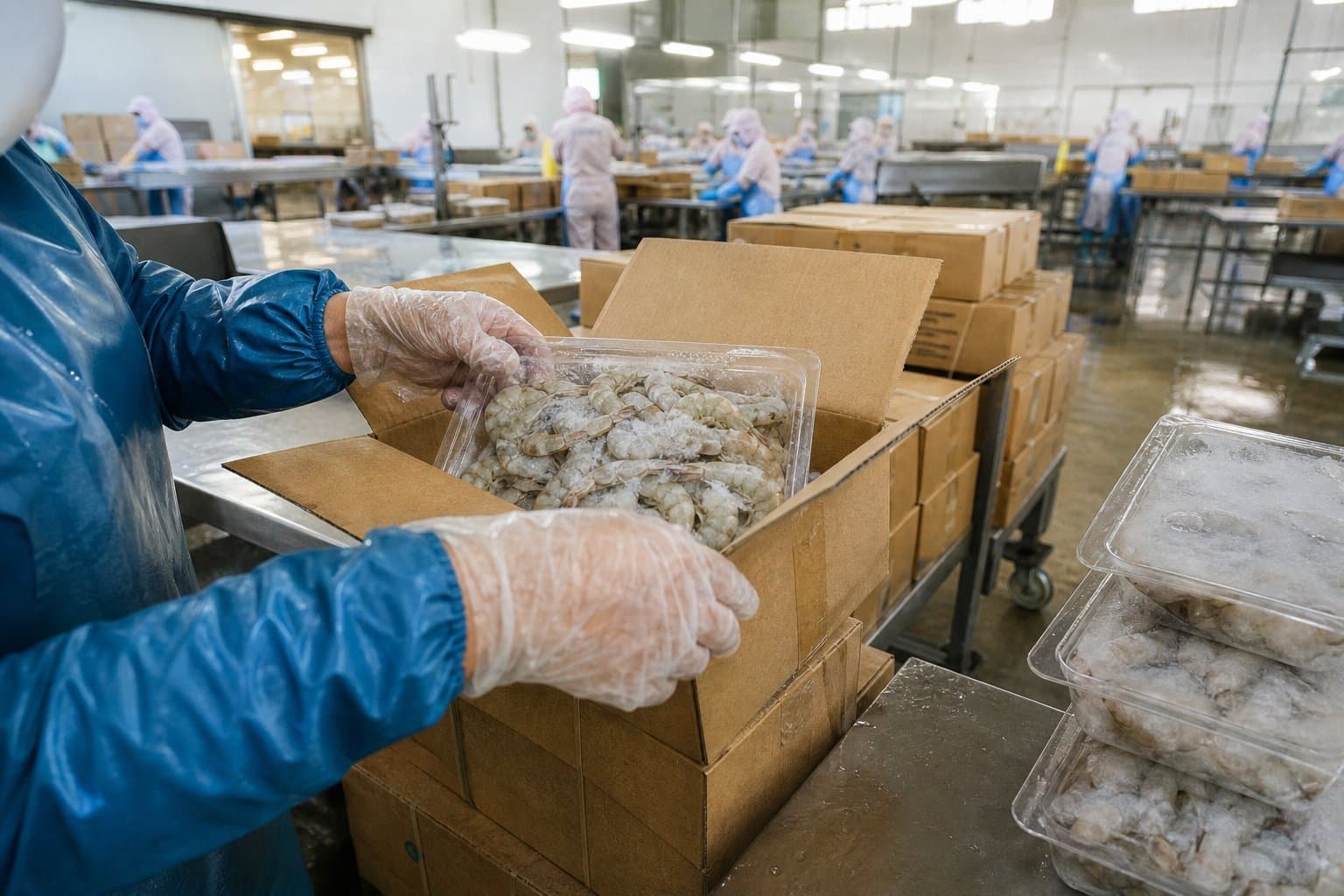
Bags, trays, pallets: the rule covers every export package
The Vietnam Association of Seafood Exporters and Processors (VASEP) says the regulation reaches every type of packaging used to ship seafood out of Vietnam: plastic bags, trays, boxes, cartons, pallets, wrapping film. Shipment size or processing category earns no exemption.
The recycled-content bar is not light either. EU rules require PET bottles and other plastic packaging to carry at least 30% recycled content by 2030, rising to 65% by 2040, applied at food-grade level, a far stricter bar than ordinary packaging faces.
Vietnam is short on both the standard and the testing
Tran Duc, external affairs director at Suntory PepsiCo Vietnam, says domestic recycled PET runs 40-70% contaminated depending on the batch, and Vietnamese labs can currently certify recycled content only for PE, plastic bags. Testing capacity for PET and other packaging materials is not ready.
Nguyen Thi, a lecturer at Hanoi University of Natural Resources and Environment, traces the gap to collection infrastructure: recycling still runs heavily on informal collectors, and material quality degrades through multiple hand-offs before it reaches a factory.
Impact by commodity
PET bottles and other plastic packaging must carry at least 30% recycled content by 2030, rising to 65% by 2040, applied at food-grade level.
Seafood feels this first and hardest, since most shipments to Europe already move in food-contact plastic, exactly the category under tightest control. Shrimp, pangasius and tuna plants need to audit their full packaging set, bags, trays, film, before signing the next EU contract.
Beyond seafood, processed food and produce exporters to the EU face the same constraint, since the rule covers any food-contact packaging regardless of sector. Frozen vegetables, dried fruit and retail-packed roasted coffee should treat packaging review as a priority alongside seafood, rather than wait for a sector-specific notice that may never come.
What to line up before the next order
- Audit every package type on the factory floor, bags, trays, boxes, pallets, film, against the 25 ppb per substance, 250 ppb combined PFAS threshold.
- Ask packaging suppliers for actual recycled-content figures, not just what the label claims.
- Prepare compliance documentation alongside standard export paperwork, since EU buyers can request it any time after August 12.
- Track further guidance from the EU and from VASEP, since enforcement detail on a newly effective rule can still shift.
Homexim tracks destination-market regulatory changes alongside seafood and produce shippers, and helps line up a clean customs declaration file from the start, so a shipment that is already packed and ready does not get held up in a European port over one missing piece of paper.
Sources
Related service: Customs brokerage