

Contents
The US Department of Commerce has opened administrative reviews of the anti-dumping and countervailing duty orders covering three Vietnamese product lines: solar cells, raw honey and woven sacks. The reviews were triggered by requests from interested parties. Any company on the preliminary review list that shipped nothing to the United States during the period of review must file a no-shipment notice with Commerce within 30 days of initiation, a deadline expected to land on 10 September.
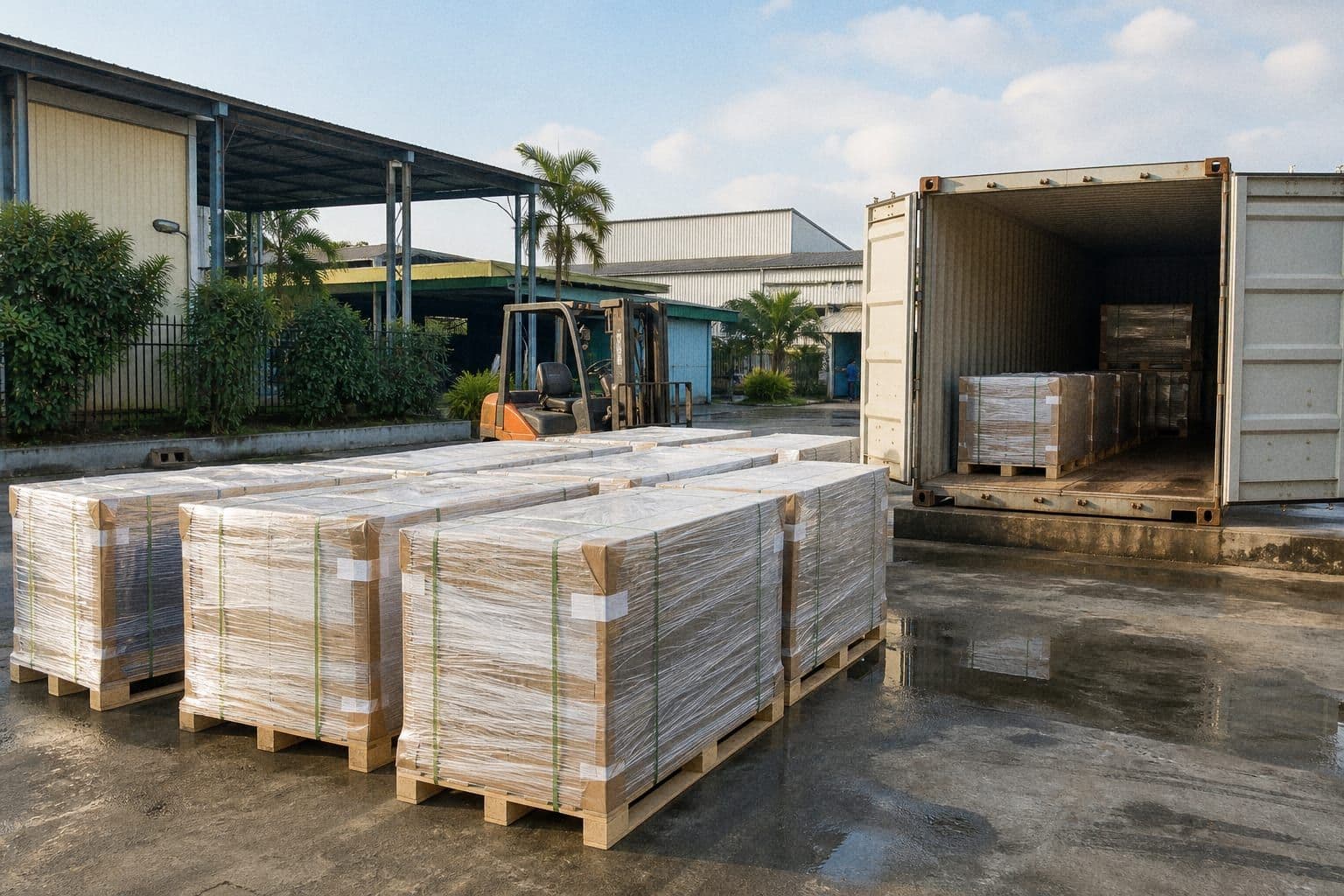
Three products, four case numbers, three review periods
Solar is the only line pulled into both tracks at once. The anti-dumping review runs under case A-552-841 for shipments between 4 December 2024 and 31 May 2026; the countervailing review sits under C-552-842 and covers 4 October 2024 to 31 December 2025. Raw honey (A-552-833) and woven sacks (A-552-823) each face an anti-dumping review over the same window, 1 June 2025 to 31 May 2026.
Read the period of review before anything else. It is backward-looking: every entry filed inside that window is reopened for recalculation. The solar anti-dumping window stretches close to 18 months, half again as long as the 12-month windows on honey and sacks.
Commerce picks mandatory respondents within 35 days of the initiation notice, ranking exporters by volume from largest down, using Customs and Border Protection entry data. The biggest shippers get the questionnaire first. Parties have 90 days to withdraw a review request. Final results are due no later than 30 June 2027.
An administrative review moves money at both ends
A review sets two numbers, not one. The final results tell CBP what duty is actually owed on entries already made during the period of review, and they reset the cash deposit rate on everything shipped afterwards, effective from Federal Register publication. Cargo that cleared months ago is still exposed.
The honey review that just closed shows the spread. Final results issued on 8 June for the 1 June 2023 to 31 May 2024 period set margins of 8.83% and 26.77% for the two mandatory respondents. Twelve companies qualifying for a separate rate drew 17.80%, the simple average of the two. Everyone else fell into the Vietnam-wide entity at 60.03%. The gap between 17.80% and 60.03% is what filing on time is worth.
The gap between 17.80% and 60.03% is what filing on time is worth.
Commerce still builds Vietnamese margins from third-country surrogate values. Expect requests on surrogate country selection, then the Quantity and Value questionnaire, then the full mandatory respondent questionnaire.
Impact by commodity
Solar carries the heaviest exposure because it sits under two orders at once. The 22 April 2025 final determination set anti-dumping rates of 52.54% to 120.38% for the two mandatory respondents, 77.12% for nine separate-rate companies, and a 271.28% country-wide rate for non-cooperating exporters based on adverse facts available. The countervailing side runs higher still: 68.15% to 230.66% for the mandatory respondents, 124.57% all-others, and 542.64% for four non-cooperating companies. The cargo declares under 8541.42.0010 and 8541.43.0010 alongside lines in 8501.71, 8501.72, 8501.80 and 8507.20. The volumes justify the scrutiny: in 2023, before the case opened, the US imported $4.2 billion of solar cells from Vietnam, 26% of total US imports of the product and the largest share among the four countries investigated.
Honey enters this review from a much softer base than it has seen in years. The 1 June 2023 to 31 May 2024 rates sit well below the original order, where margins ran 58.74% to 61.27%, and further below the previous review at 60.03% to 156.96%. They did move the wrong way against the 18 November 2025 preliminary results, however, after Commerce revised its margin calculation: the mandatory respondents went from 6.72% and 21.55% to 8.83% and 26.77%, and the separate rate from 14.14% to 17.80%. The trend line is down, but it is not a straight line, and each review can bend it back.
Woven sacks, laminated woven sacks in the US filings, carry the steepest rates of the three. Commerce investigated in 2018 and duties have applied since 2019, at 109.46% to 292.61% on the anti-dumping side and 3.02% to 198.87% on countervailing. The order entered its first sunset review, initiated 1 May 2024, on the standard five-year cycle: if Commerce concludes that revoking the order would likely lead to renewed dumping and subsidisation injuring US producers, the order runs another five years. Scope reaches eleven tariff lines, from 6305.33.0040 across plastics lines including 3917.39.0050, 3921.90.1100 and 3923.21.0080, and out to 5903.90.2500. Bag plants should check the code they actually declare against that list, because trade names and tariff classification rarely map one to one. Cumulative duties can close a lane outright, as the plywood case showed (final plywood determination).
What to do before 10 September
- Pull every US-bound export declaration inside your product's exact review window: 4 December 2024 to 31 May 2026 for solar anti-dumping, 4 October 2024 to 31 December 2025 for solar countervailing, 1 June 2025 to 31 May 2026 for honey and sacks.
- If you shipped nothing in the window, file the no-shipment notice with Commerce before 10 September rather than sitting quietly on the review list.
- Reconcile the HS codes you declare against each case's scope, particularly woven sacks, where eleven lines span four different chapters.
- Build the shipment-level quantity and value table now; the Quantity and Value questionnaire is what Commerce sends first.
- If you are among the larger exporters, plan for mandatory respondent status, since Commerce ranks the list by CBP volume from the top down.
- Work through Vietnam's Trade Remedies Authority for the duration, especially on surrogate country selection.
Homexim handles documentation and customs clearance on US lanes, including pulling declaration history by date range and reviewing HS classification before a declaration is filed. To check whether your shipments fall inside one of these review windows, send the HS code you declare together with the shipping dates.
Sources
- Bộ Công Thương: Hoa Kỳ rà soát hành chính thuế chống bán phá giá và chống trợ cấp đối với pin năng lượng mặt trời, mật ong thô, túi dệt nhập khẩu từ Việt Nam
- VietnamPlus: Hoa Kỳ rà soát thuế phòng vệ thương mại với pin mặt trời, mật ong, túi dệt Việt Nam
- VnEconomy: Hoa Kỳ rà soát thuế chống bán phá giá và chống trợ cấp với 3 nhóm hàng của Việt Nam
- VietnamPlus: Hoa Kỳ công bố kết quả rà soát thuế chống bán phá giá mật ong Việt Nam
- VnEconomy: Pin năng lượng mặt trời lo ngại bị áp thuế chống bán phá giá, chống trợ cấp rất cao tại thị trường Hoa Kỳ
- VnEconomy: Hoa Kỳ rà soát cuối kỳ lần thứ nhất với sản phẩm túi dệt Việt Nam
Related service: Customs brokerage