

Contents
The US Commerce Department issued its final determinations on July 16 in the twin antidumping and countervailing duty investigations of hardwood and decorative plywood from Vietnam. Every Vietnamese producer now faces an 84.95% antidumping cash deposit, and once subsidy duties are stacked on top, combined rates run from 132.63% to 250.34% depending on the company. The notices hit the Federal Register on July 21. No duty order is in force yet, because the US International Trade Commission still has to rule on injury. For wood shippers, though, 84.95% is already a number to price into every US-bound quote.
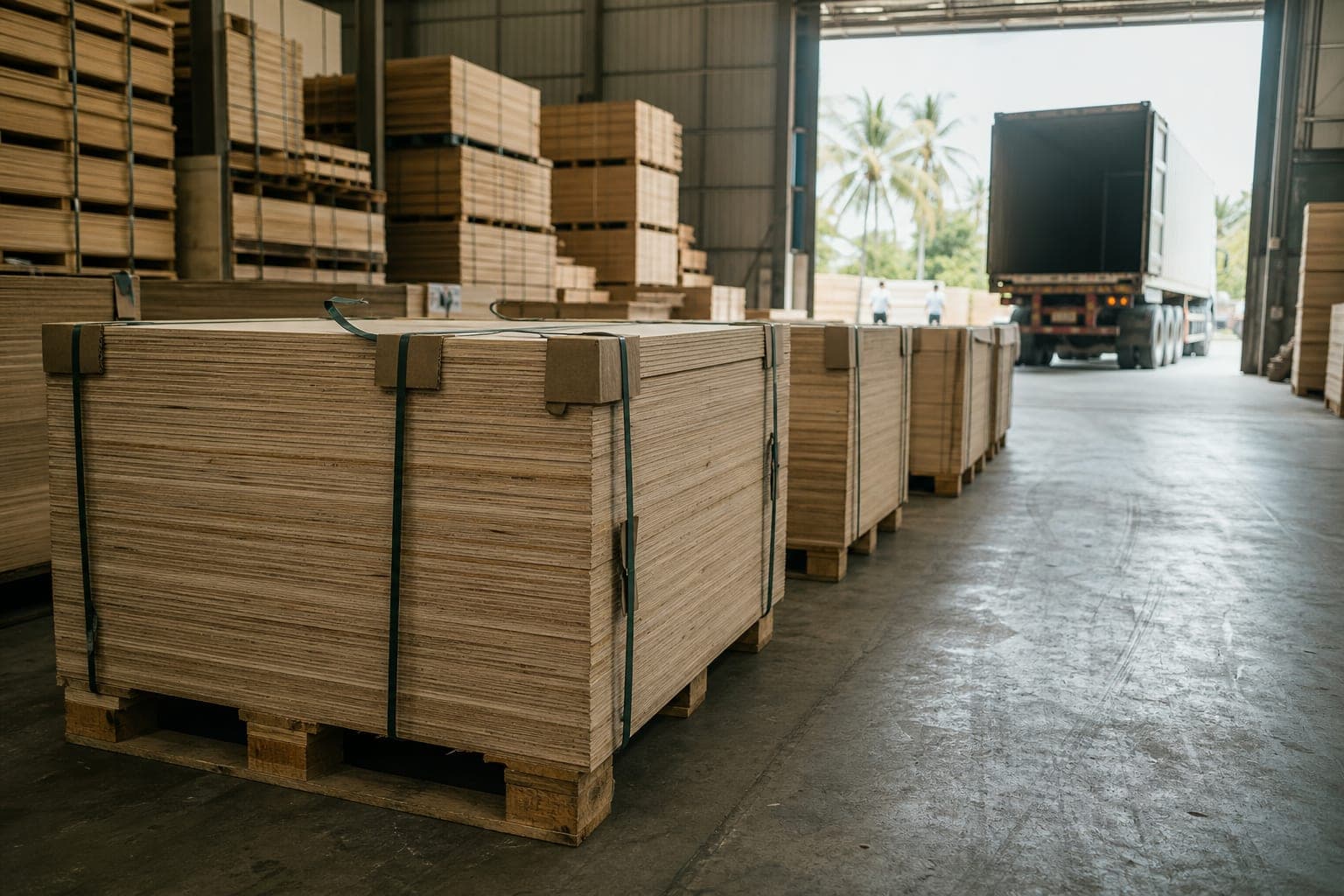
Final rates fall from the preliminary round, but still bite
Commerce set a single dumping margin of 90.12% for all Vietnamese companies, including mandatory respondents Junma Phu Tho and Trieu Thai Son, with the effective cash deposit at 84.95% after export-subsidy offsets. That is less than half the preliminary rates of 196.14% to 199.69% published in March. The relief only goes so far. A deposit of 84.95% still strips away most of the price advantage Vietnamese plywood held in the US market.
A deposit of 84.95% still strips away most of the price advantage Vietnamese plywood held in the US market.
The subsidy side splits sharply by company. Junma Phu Tho drew a final subsidy margin of 165.39%, Trieu Thai Son 47.68%, and all other Vietnamese exporters take the 47.68% rate. Combined, the baseline for Vietnamese cargo is 132.63%, rising to 250.34% for Junma Phu Tho. US Customs and Border Protection continues to suspend liquidation of in-scope entries dating back to March 2, 2026. One detail worth reading twice: importers currently post deposits only for the 84.95% antidumping leg. Collection on the subsidy leg is paused because the CVD provisional measures expired on May 22 under the 120-day limit in US law. Paused is not cancelled. If the ITC finds injury, the countervailing duty order still issues.
Scope unchanged: cabinet components stay in the net
Commerce rejected every request to narrow the scope or add exclusions. Products that only undergo minor processing such as cutting to size, drilling or grooving remain in-scope plywood. So do kitchen cabinet components not packaged as complete sets, and a range of tropical-veneer panels. The only exit is a complete ready-to-assemble cabinet: packaged with all components, assembly hardware and instructions, sold directly to the end consumer. Shipments of loose components still risk being classified as in-scope plywood.
There is one break for cash flow. On the antidumping side, Commerce made a negative critical circumstances finding, so no retroactive duties apply to goods entered in the 90 days before provisional measures. Cargo cleared into the US early in the year escapes that particular bill.
Impact by commodity
For plywood itself, the most uncomfortable comparison sits inside the same set of rulings. Commerce set the China-wide cash deposit at 185.96%, well above Vietnam. Indonesia is the real variable: its two main respondent groups landed deposits of just 15.39% and 23.78%, with all other Indonesian exporters at 18.06%. Against Vietnam's 84.95%, that gap is wide enough for US buyers to consider resourcing new orders to Indonesia. Plywood shippers should negotiate second-half contracts with that risk on the table rather than waiting for the ITC result.
For kitchen cabinets and flat-pack furniture built on plywood, Commerce holding the line on a strict scope reading sends a direct message: packaging and declaration now decide whether a given shipment pays duty. The same cabinet shipped as a complete RTA set for an end consumer sits outside the scope; shipped as loose components to an assembly plant, it can be counted as dutiable plywood. Exporters should check every SKU against the scope language before signing new orders, not infer from the product name on the invoice.
The last gate is the ITC injury vote
Under US procedure, duty orders issue only if the ITC concludes the domestic industry is materially injured or threatened with injury. A negative vote ends the case and refunds the deposits already posted. The injury investigation is running in parallel. While it runs, the practical checklist:
- Map each SKU's HS code and technical description against the case scope, especially minor-processed panels and cabinet components.
- Price the 84.95% deposit into FOB or DDP quotes for US buyers instead of treating it as a contingent cost.
- For cabinet component shipments, assess whether complete RTA packaging is feasible for the product and sales channel.
- Keep full core-veneer origin files and production records; this case shows the US is squeezing the circumvention angle too.
- Track the ITC injury determination before locking Q4 delivery plans.
Homexim moves wood and furniture cargo to the US routinely, from customs brokerage with goods descriptions aligned to the case scope, to FCL/LCL ocean freight on the trans-Pacific lane. If you have plywood or cabinet components waiting to ship, send us the product details for a scope check, and see our briefs on US trade-defense risk and July rates to the US to cost both layers at once.
Sources
- HAWA: Bộ Thương mại Hoa Kỳ công bố kết luận cuối cùng vụ gỗ dán cứng và trang trí nhập khẩu từ Việt Nam
- ITA (trade.gov): Final Affirmative Determination, Hardwood and Decorative Plywood from China, Indonesia, and Vietnam
- Federal Register: Hardwood and Decorative Plywood from Vietnam, Final Affirmative LTFV Determination
Related service: Customs brokerage