
Contents
Vietnam exported more than $3.45 billion of durian in the first nine months of 2026, up 25% year on year, according to preliminary Customs Department figures. Mainland China bought nearly $3.3 billion, almost 96% of the total. September alone fell to nearly $750 million, well below September 2025, when exports neared $1 billion, the best month of last year.
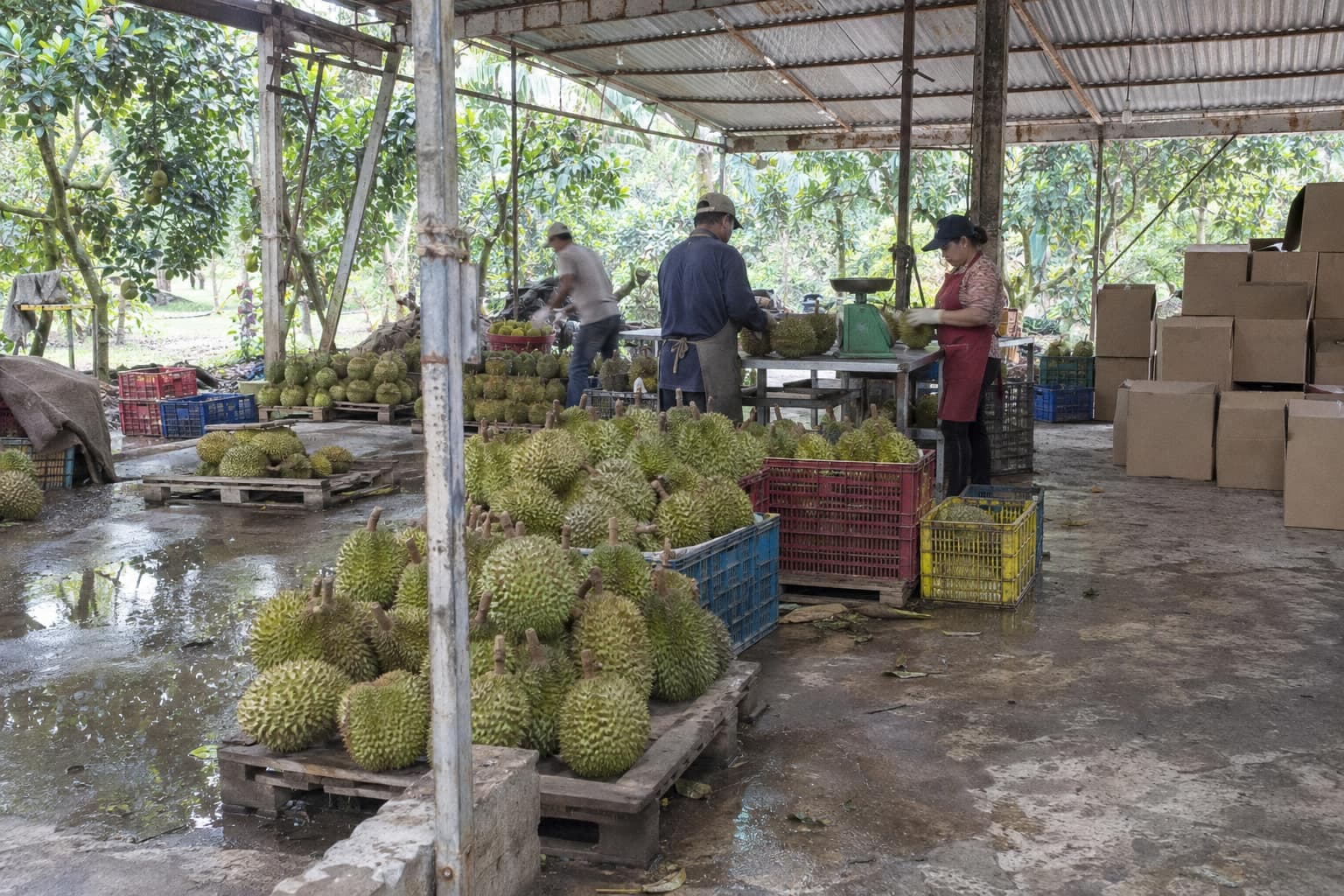
September also lagged far behind August, which reached $956 million, up 62% year on year. It again failed to reach the $1 billion mark.
For exporters, the headline figure hides two separate stories. Fresh durian bound for China and frozen or processed product shipped elsewhere face different risks.
One market carries almost everything
Shipments to mainland China rose 27.6% year on year, outpacing the 25% overall growth. Thanh Niên reports that China's share rose about 2 percentage points from 93.5% a year earlier.
Other markets trail far behind. Papua New Guinea is next at $37.68 million, followed by Hong Kong at $36.7 million and the US at nearly $20.5 million.
South Korea ranks eighth and grew fastest, at 129%, but reached only $4.2 million. Fast growth from a low base does not change the structure.
The product mix is just as lopsided. China buys mainly fresh durian, while other markets mostly take frozen, segmented or processed product.
Why September fell
Đặng Phúc Nguyên, secretary general of the Vietnam Fruit and Vegetable Association, blamed erratic weather in the Central Highlands. Prolonged heavy rain cut fruit quality, and the share of fruit meeting export standards fell with it.
Two other factors played a part. Cadmium problems in the Mekong Delta slowed shipments in the early months of the year, and main-crop prices in the Southeast and the Central Highlands ran below last year's levels.
The association forecasts 2026 exports at $4.5-4.7 billion, about 20% above last year. That is lower than its August forecast, and the $5 billion target may be missed.
Frozen and processed products are growing strongly and have offset part of the shortfall. They include frozen segments, ice cream, cakes and durian powder.
Impact by product line
Fresh durian to China. This is the largest flow and the most sensitive to timing. Durian ripens quickly and is hard to hold for long without deep freezing. If customs clearance runs behind schedule, packing houses in the Mekong Delta and the Central Highlands could be left with unsold stock, adding pressure to sell and the risk of falling prices. Growers lack cold storage, so they cannot hold fruit and wait.
Quality also decides whether a shipment goes through. Cadmium, pesticide residues and traceability must be controlled from the growing area. Thương Trường magazine lists the response: more testing capacity and tighter monitoring of growing-area and packing-facility codes.
Frozen and processed durian. This is almost the only channel for durian going anywhere but China. The US, EU, Japan, South Korea and Australia are potential markets, but none can absorb fresh durian at China's scale in the short term. Nguyên said no market is likely to match China's capacity to take Vietnamese durian.
Strong growth in frozen product is therefore a good sign, but it demands an unbroken cold chain, from freezing to cold storage to reefer containers.
What exporters should do
For fresh durian shipments:
- Recheck the growing-area code and packing-facility code for each lot before fixing contracts and shipping schedules.
- Test for cadmium and pesticide residues at the farm, not at the packing stage.
- Keep a backup plan for freezing or reefer containers in case clearance is slow, so fruit does not sit in storage until it overripens.
- Ask your forwarder about vessel schedules and reefer trucks early, before harvest ends.
For frozen and processed shipments:
- Check your partner's cold storage and freezing capacity before taking on more orders.
- Agree reefer container arrangements with your forwarder for markets outside China.
Over the longer term, companies can invest in cold storage, freezing technology and deeper processing. RCEP and EVFTA open more routes for shipments to new markets. Target the premium segment, supermarket chains and Asian communities in the US, Japan and the EU, backed by GlobalG.A.P. or organic certification. Long-term offtake contracts with cooperatives help keep supply stable.
Sources
Related service: Ocean freight FCL/LCL