

Contents
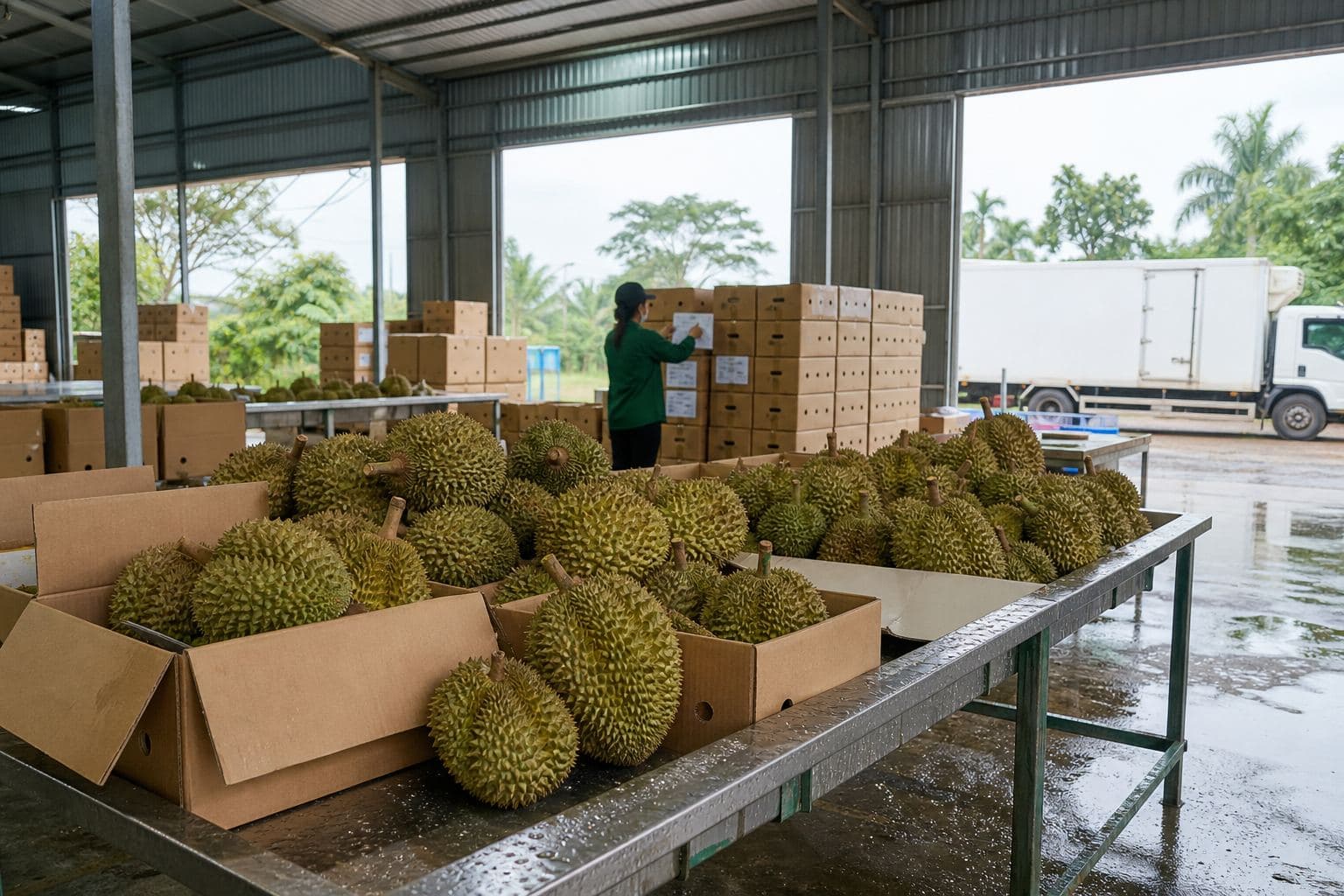
Vietnam's police investigation agency indicted and detained four officials on July 27 and 28 in a case tied to durian exports to China, including Deputy Minister of Agriculture and Environment Hoang Trung. Investigators allege a scheme that issued fake inspection certificates and growing-area codes, and illegally traded growing-area and packing-facility codes, the exact paperwork every durian shipment needs to clear the border into China.
Four officials, two sets of charges
Hoang Trung and Nguyen Quang Hieu, deputy head of the Department of Crop Production and Plant Protection, were charged with taking bribes under Article 354 of the Penal Code. The other two, Nguyen Thi Ha, head of Plant Quarantine Sub-Department No. 7, and Be Thi Thu Hien, head of the Huu Nghi border quarantine station in Lang Son, were charged with falsifying official records under Article 359. All four sat at points that sign off on or control phytosanitary paperwork, the last checkpoint before a durian shipment clears for export.
How a growing-area code became a tradable item
According to the charges, Hoang Trung and Nguyen Quang Hieu abused their positions to issue unlawful policies that functioned as an extra licensing layer, then directed subordinates to issue fake inspection certificates and growing-area codes, and to illegally trade growing-area and packing-facility codes. Both code types are mandatory: China only accepts a durian shipment tied to a specific growing area that has actually passed quarantine inspection, not a number bought and resold.
Impact by commodity
Investigators found the scheme caused serious harm to the legitimate rights of growers and genuine durian exporters, cost the state budget a substantial sum, and damaged the reputation of Vietnamese agricultural exports. Durian is one of Vietnam's leading fruit and vegetable exports, most of it shipped to China through the very code system now under investigation. A shipment carrying a code that looks valid on paper but does not match its actual growing area, or one that changed hands through a sale, now faces real risk of rejection or return at the Chinese border regardless of the fruit's actual quality.
The scheme caused serious harm to the legitimate rights of growers and genuine durian exporters, and damaged the reputation of Vietnamese agricultural exports.
What durian shippers should do now
Authorities have not disclosed how many codes are implicated, but shippers do not need that number to start managing the risk:
- Cross-check the growing-area and packing-facility codes on your shipment against the official list from the Department of Crop Production and Plant Protection, not a code sourced through an unverified middleman.
- Keep documentation proving the actual growing area matches the declared code, in case both sides' quarantine agencies step up post-clearance checks after this case.
- Work directly with growing areas or packing facilities under long-term contract, rather than pooling codes through an opaque broker.
- Watch for updates from the Department of Crop Production and Plant Protection, since codes tied to the investigation could be suspended at short notice.
Homexim handles customs brokerage and quarantine paperwork for agricultural shipments to China, cross-checking a client's growing-area and packing-facility codes against the official list before cargo is loaded. If you are shipping durian soon, send us the codes you currently use for a cross-check before the reefer container is sealed. See our briefs on same-day customs clearance for farm produce and durian driving fruit exports past $1 billion for the fuller picture on durian exports.
Sources
Related service: Customs brokerage