

Contents
The United States is Vietnam's number-one export market, and for most shippers, ocean freight is the primary mode. Yet for the same cargo, cost and timing can differ substantially depending on port choice, service selection, and document preparation. This guide distills real shipments operated by the Homexim route desk.
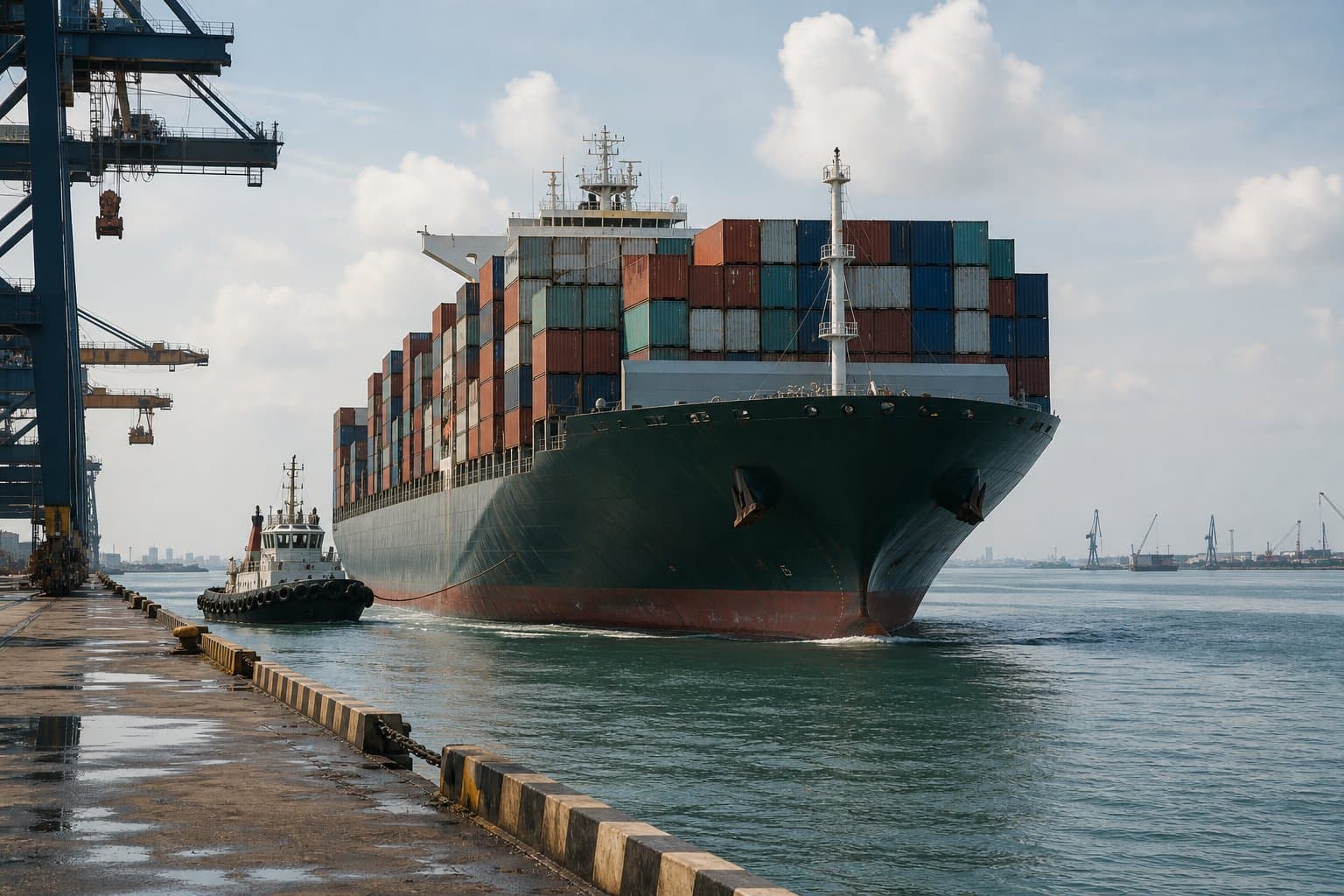
Choosing the origin port: Hai Phong, Cat Lai, or Cai Mep?
Northern cargo defaults to Hai Phong. Southern cargo has two options: Cat Lai is convenient for city trucking and the Binh Duong / Dong Nai industrial zones, but most US services actually depart from Cai Mep, where mother vessels call directly rather than transship via Singapore or Hong Kong. Many bookings marked 'Cat Lai' are in fact gated in at Cat Lai and barged to Cai Mep, adding 1-2 days you should build into the plan.
Realistic transit times
- West Coast (Los Angeles, Long Beach, Oakland, Seattle): direct services 16-20 days; transshipment 22-28 days.
- East Coast (New York, Savannah, Norfolk): 28-35 days depending on Panama or Suez routing.
- Add at both ends: 3-5 days for loading, filing, and haulage before departure; 2-6 days for clearance and delivery after arrival.
The number that matters is not the carrier's brochure transit, but door-to-door time: from cargo ready at the factory to delivery at the buyer's warehouse. Ask your forwarder to commit against this milestone.
US entry rules to prepare from the Vietnam side
US-bound cargo gets stuck most often at the pre-departure filing stage, not on arrival. Three items need to be ready from the Vietnam side: ISF, AMS, and an import bond. Missing any one leads to fines or a hold.
The Importer Security Filing (ISF, also called 10+2) is a security declaration the importer must submit to US Customs no later than 24 hours before the container is loaded onto the vessel at origin. A late or inaccurate filing draws a penalty starting at $5,000 per shipment, and failure to file can reach $10,000. That is Customs' opening figure: first violations are often mitigated to $1,000-$2,000, the per-shipment penalty caps at $10,000, and serious or repeat offenses bring closer scrutiny, cargo holds, and a forced bond increase. Because the ISF deadline runs off vessel loading time, locking your shipment data early is the only reliable way to make it.
The ISF must reach US Customs no later than 24 hours before the container is loaded onto the vessel at origin; a late or inaccurate filing starts at $5,000 per shipment.
AMS (Automated Manifest System) is the electronic manifest filed with US Customs, also due 24 hours before loading. The carrier or NVOCC files AMS, but its data must match the ISF. A mismatched B/L number or cargo description between the two filings is a common reason a shipment gets flagged for hold on arrival.
To file the ISF and clear entry, you need an active customs bond. Buy it per shipment (single-entry) or annually (continuous, $50,000 minimum) if you ship regularly. All of this runs through a US customs broker: the party that files the entry, works any holds from agencies such as the FDA or USDA, and confirms release. A forwarder with an established US broker network keeps ISF, AMS, and entry in one flow so nothing falls between parties.
Cost structure of an FCL shipment to the US
The cost of a US shipment sits at both ends, not just in the freight line. The Vietnam side includes:
- Ocean freight, seasonal, spiking notably ahead of major US holiday periods.
- Vietnam-side local charges: THC, B/L fee, seal, manifest filing.
- Inland trucking and lift-on/lift-off.
- Customs brokerage, C/O if needed, and specialized inspection fees where applicable.
The US side is where shippers most often under-count when comparing quotes. Beyond the ISF fee and import clearance, there are destination local charges, chassis fees (the frame that hauls the container, billed per day at many US ports), and demurrage or detention if cargo is picked up late. On D-group Incoterms, all of these US-side costs fall on the seller and must be priced in from the start.
The most common mistake is comparing quotes by ocean freight alone. A cheap base rate with heavy local charges and surcharges can easily cost more in total. Always request an all-in quote itemized line by line for both ends.
Peak season: book and price early
Ocean rates to the US are not flat year-round. Transpacific peak season typically runs from around mid-year through the end of October, when US retailers stock up for the year-end selling period. During this window carriers add a peak season surcharge, vessel space tightens, and rates climb fast. If you plan Q3 or Q4 deliveries, book and lock rates early, check the sailing schedule ahead to secure space, and avoid hunting for slots close to cut-off.
Three mistakes that inflate the bill
- Missing closing time due to late container haulage, incurring storage, rebooking fees, and a missed buyer deadline.
- Late or inaccurate ISF, or data that does not match the AMS, triggering fines and a hold on the US side.
- Not checking US-side DEM/DET free time: if the buyer's warehouse receives slowly, container detention accrues daily.
If you are planning a US-bound shipment, send your lane and cargo details to Homexim. The route desk returns a plan with weekly sailing schedules, a fully itemized total cost for both ends, and a documents checklist matched to your cargo.
Related service: Ocean freight FCL/LCL