

Contents
Importing is not a single act but a chain of steps, each feeding the next. A first-time owner usually sees only the customs declaration, while most of the time and cost risk sits in the steps before and after it. Below is the full process in eight steps, enough to plan a standard shipment.
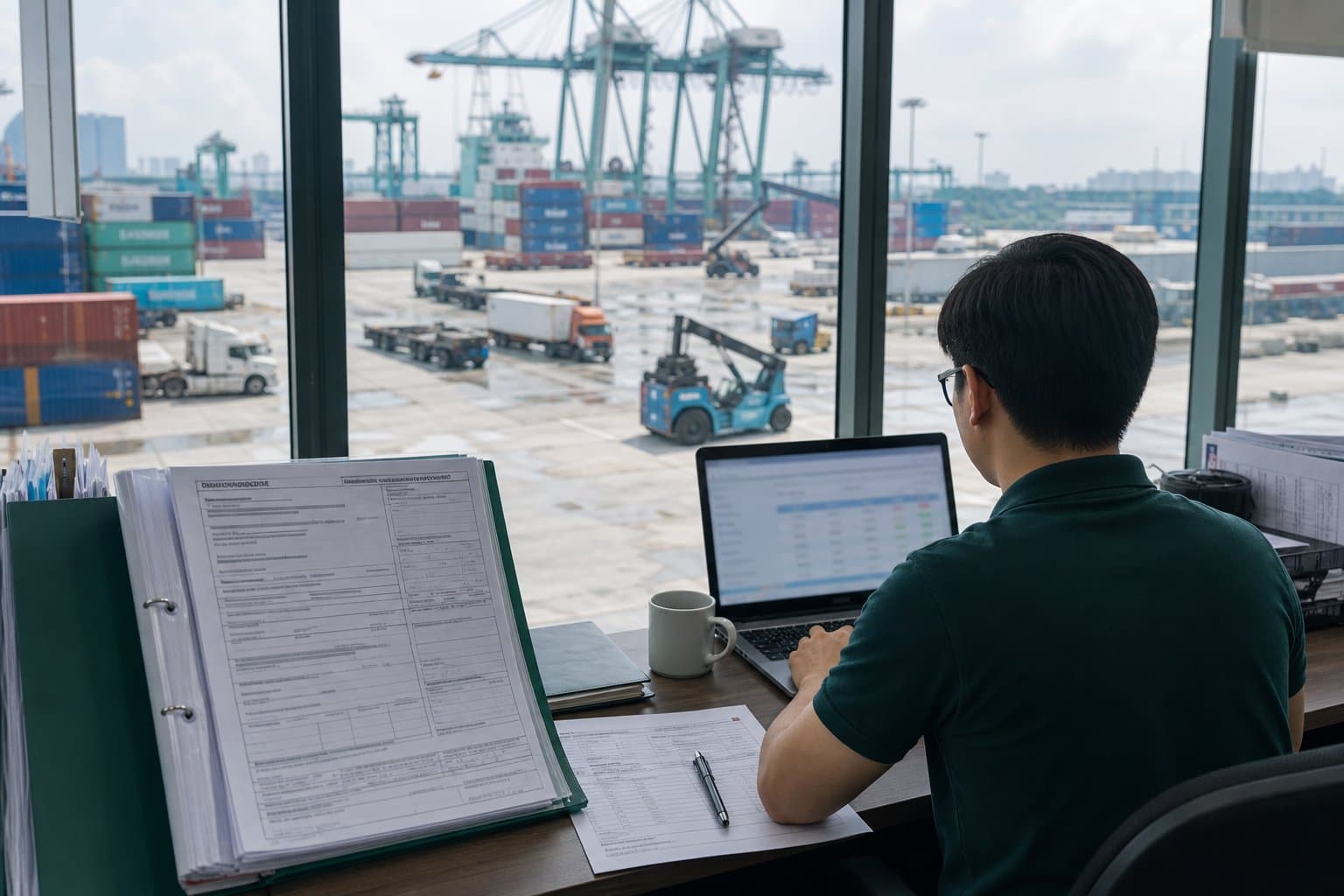
- Step 1: Check the product policy.
- Step 2: Sign the trade contract and choose Incoterms.
- Step 3: Prepare the document set.
- Step 4: File the declaration through VNACCS.
- Step 5: Pay duty.
- Step 6: Clear customs.
- Step 7: Take delivery and haul to the warehouse.
- Step 8: Keep records for post-clearance audit.
Steps 1 and 2: product policy and contract
Before talking price, the first job is to determine whether the goods may be imported, whether they are banned or restricted, and whether they need a permit or specialized inspection. Checking policy by HS code here avoids buying goods you cannot clear. Once policy is clear, the trade contract locks the terms, and the Incoterms rule decides who bears freight, insurance, risk, and procedures at each leg. The wrong Incoterms choice is a common source of cost disputes, so agree it clearly from the start.
Step 3: the document set
The document set is the basis for filing and for customs to verify the shipment. A consistent file is the condition for fast clearance, while mismatched documents are the most common reason cargo stops.
- Commercial invoice: value, unit prices, payment and delivery terms.
- Packing list: package count, weight, packing specs, must match the invoice.
- Transport document (B/L or AWB): shipper, consignee, origin and destination ports.
- C/O if claiming preferential duty under the relevant FTA.
- Permit or specialized-inspection result where the goods are under control.
Steps 4 and 5: filing on VNACCS and paying duty
The import declaration is filed through VNACCS, the electronic clearance system businesses use to declare to customs. Declaring the correct HS code, value, and origin here decides the duty owed and influences the channel result. After filing, the business meets its duty obligation for the shipment. The exact rate depends on the goods, the origin, and any FTA preference, and it changes with the tariff in force, so calculate it for each shipment rather than applying an old figure.
Step 6: clearance
After filing and duty handling, the system routes the declaration into the green, yellow, or red channel. Green clears almost immediately, yellow reviews the paper file, and red inspects both the file and the physical cargo. A complete file and an accurate declaration are the way to shorten this step in every channel.
Steps 7 and 8: delivery and record keeping
Once cleared, the owner takes the delivery order (D/O) from the carrier or agent, completes port formalities, and hauls the container to the warehouse. This is the last physical leg, but not the last on paper. The shipment's full document set must be kept for the legally required period, since customs can run a post-clearance audit years after release. A cleanly archived file is your insurance if you are checked later.
Seen as eight steps, most lost time comes from running each stage in isolation instead of parallelizing what can be done early. Homexim coordinates the whole chain from policy check, documents, and VNACCS filing to delivery and record keeping, so the owner can track progress instead of linking each stage alone.
Related service: Customs brokerage