

Contents
Vietnam's farm, forestry and fishery exports were estimated at almost $49.31 billion in the first eight months of 2026, up 7% year on year, according to the Ministry of Agriculture and Environment. Imports in the same basket came to $35.06 billion, up 8.1%, leaving a surplus of $14.25 billion. August alone brought $6.47 billion, 3.6% above the same month last year but 3.5% below July. Split the total by commodity and it runs in two directions at once: fruit, seafood and livestock pulling up, coffee, rice and rubber pulling down.
Coffee ships more and earns less
Coffee illustrates the effect of lower prices. Eight-month exports reached about 1.3 million tonnes, worth roughly $6 billion. Coffee moved 13.1% more volume while the average price fell 19.7% to $4,538 a tonne, so earnings dropped 9.1%. More tonnage brought less export revenue, but these figures do not reveal container or customs declaration counts.
Coffee moved 13.1% more volume while the average price fell 19.7% to $4,538 a tonne.
Rice lost on both counts. About six million tonnes were exported, down 6.3% by volume; the average price slipped 6% to $480.9 a tonne; value fell 11.9% to $2.86 billion. Rubber ran the other way. Volume dropped 16.1% to 936,100 tonnes while the average price rose 11.9% to $1,986 a tonne, so value gave up only 6.2% at $1.86 billion.
For shipment costing, lower selling prices warrant a fresh look at freight and local charges as a share of revenue. If transport costs per tonne stay unchanged, that share rises. For containerised cargo, compare the box rate with the actual payload before calculating a per-tonne cost. Coffee volume rose while rice volume fell, so one assumption about transport demand should not be applied to both commodities. Use each shipment's loading plan rather than the aggregate export trend.
Impact by commodity
Fruit, seafood and livestock products all recorded higher eight-month export values. Fruit and vegetables reached $6.02 billion, up 24.9%. Seafood came to $7.94 billion, up 10.9%. Livestock products reached $511.9 million, up 30%, of which dairy accounted for $139.3 million, up 79.2%, and meat and offal $154.1 million, up 15.2%. At the top level, agricultural goods contributed $25.66 billion (up 2.7%) and forestry products $12.57 billion (up 5.4%).
Dry cargo is more mixed. Wood and wood products reached $11.69 billion, up 5%. Cashews shipped 474,000 tonnes, 1.7% less by volume, yet value rose 2% to $3.35 billion on a unit price of $7,058 a tonne, up 3.7%. Pepper shipped 190,100 tonnes, up 14.5%, worth $1.24 billion, up 9.6%, even with the average price of $6,513.8 a tonne down 4.3%. Tea came to $142.8 million, down 2%, on an average price of $1,856 a tonne, up 9.1%. Cassava and cassava products reached $836 million, down 2.5%, while the average price rose 21.3% to $369.8 a tonne.
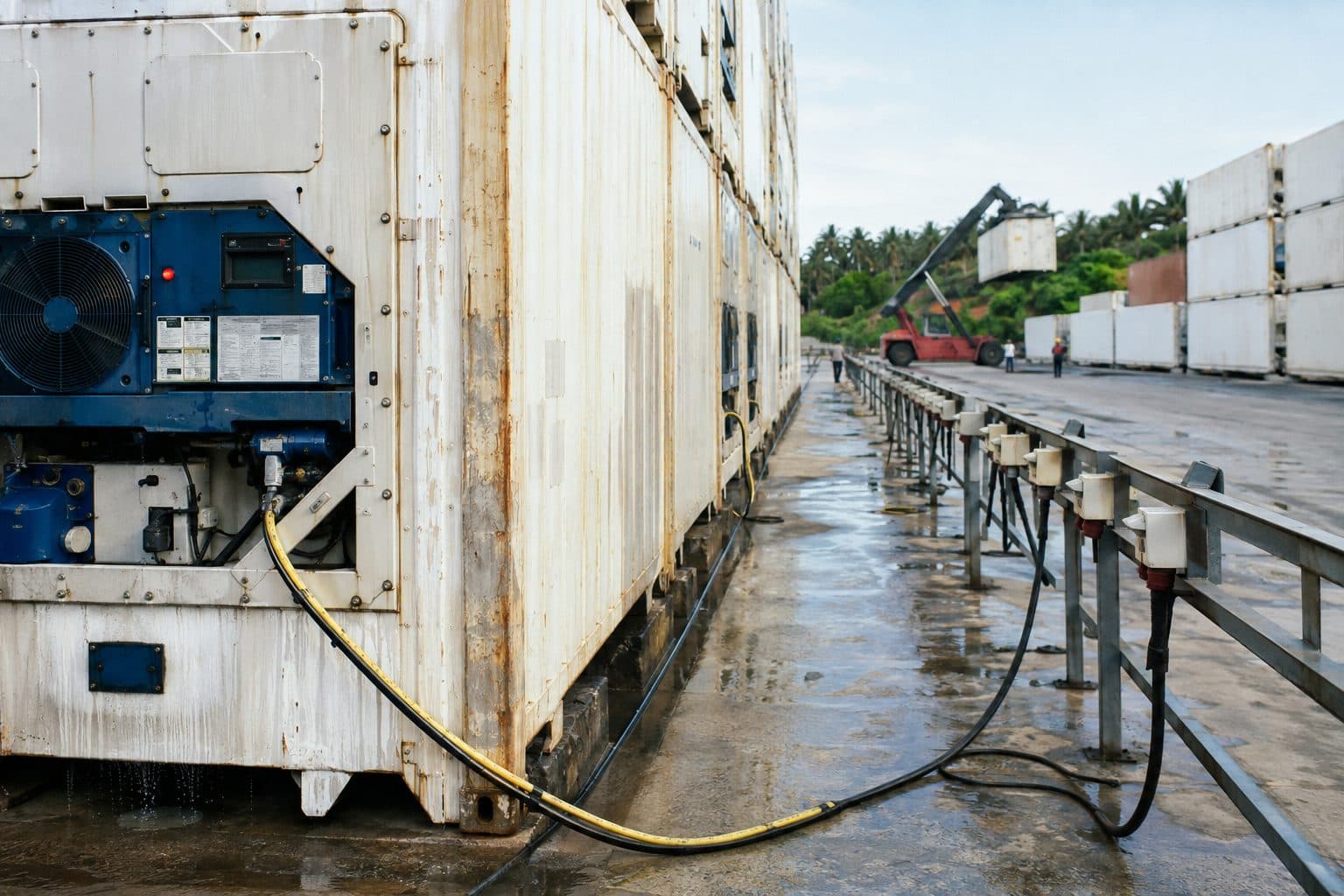
Higher export values do not establish a shift towards reefer cargo at the ports. The sources do not separate fresh, frozen and processed goods or identify transport modes. For shipment planning, Homexim recommends confirming the storage requirements of each consignment before choosing equipment. Where a reefer is needed, check yard power availability, free time, cut-off and the applicable quarantine documents. For a separate look at customs procedures, see same-day clearance for farm goods.
Rubber, tea and cassava all recorded higher average prices and lower export volumes. That does not establish fewer sailings or higher value per shipment: shipment sizes and transport modes are missing from the data. In planning individual consignments, consider freight alongside delivery schedules and storage requirements rather than treating export-price movements alone as a guide to booking decisions.
China holds 22.7% of Vietnam's farm exports
China remains the largest market with 22.7% of the total, ahead of the United States on 19.1% and Japan on 6.8%. For fruit and vegetables alone China takes 58.9%, close to six-tenths of that whole line. Rubber exports to China went the other way, down 20.3% on the seven-month count. One large market does not pull every commodity at once, so growth in one line is a poor guide to space planning in another.
The 22.7% and 19.1% shares describe market size, not transit times or freight rates. From a logistics planning perspective, exporters serving both China and the United States should cost the lanes separately. For each shipment, review the transport mode, collection and delivery points, quarantine requirements and proposed schedule. If a quote or schedule changes, recalculate that shipment's costs rather than relying on one blended figure for both markets. Market share alone is not a transport budget.
What to settle before the Q4 contracts close
- Coffee and rice: review freight and local charges as a share of revenue per tonne, since average export prices fell for both. Coffee volume rose 13.1%, while rice volume declined 6.3%.
- Fruit, seafood, dairy and meat: confirm each consignment's storage requirements. If reefer transport is needed, check equipment and yard power availability when planning production.
- New livestock and dairy lanes: review HS classification and quarantine requirements before the first customs declaration. Eight-month livestock exports reached $511.9 million, up 30%; that is the current-period result, not the comparison base.
- Selling into China: reconcile the quarantine requirements and growing-area codes that apply to your exact commodity rather than reusing a file built for another one.
- Q4 contracts: if commodity prices continue to fall, compare per-container and per-tonne transport costs using the actual planned payload.
- Rubber, tea and cassava: monitor monthly average prices and export volumes, but plan sailings around actual orders rather than inferring shipment counts from export values.
Homexim books ocean freight for Vietnamese agricultural exports, reefer and dry alike, together with customs clearance and the documentation that travels with the cargo. Send the commodity, destination market and expected fourth-quarter volume for a space plan and a full landed-cost sheet before the sales contract is signed. Fruit and vegetable shippers can also read how that line has been running.
Sources
- Thời báo Tài chính Việt Nam: Xuất khẩu nông, lâm, thủy sản đạt gần 49,3 tỷ USD sau 8 tháng
- Mekong ASEAN: Xuất siêu nông lâm thủy sản 8 tháng đầu năm 2026 đạt 14,2 tỷ USD
- Báo Công Thương: Xuất khẩu nông, lâm, thủy sản 8 tháng năm 2026 đạt gần 49,3 tỷ USD
- Tạp chí Kinh tế Tài chính: Xuất khẩu nông, lâm, thủy sản tiến sát 50 tỷ USD
Related service: Ocean freight FCL/LCL