

Contents
Vietnam has fixed where 12 categories of imports must be declared. Since 14 August, cargo on that list clears customs at the border gate of entry under Decision 31/2026/QD-TTg, signed on 29 June by Deputy Prime Minister Nguyen Van Thang and replacing Decision 23/2019/QD-TTg. The transitional clause is narrower than it looks at first pass. It covers only goods that sat on the 2019 list, have dropped off the new one, and were already declared before the effective date; those consignments finish their formalities at the border customs office.
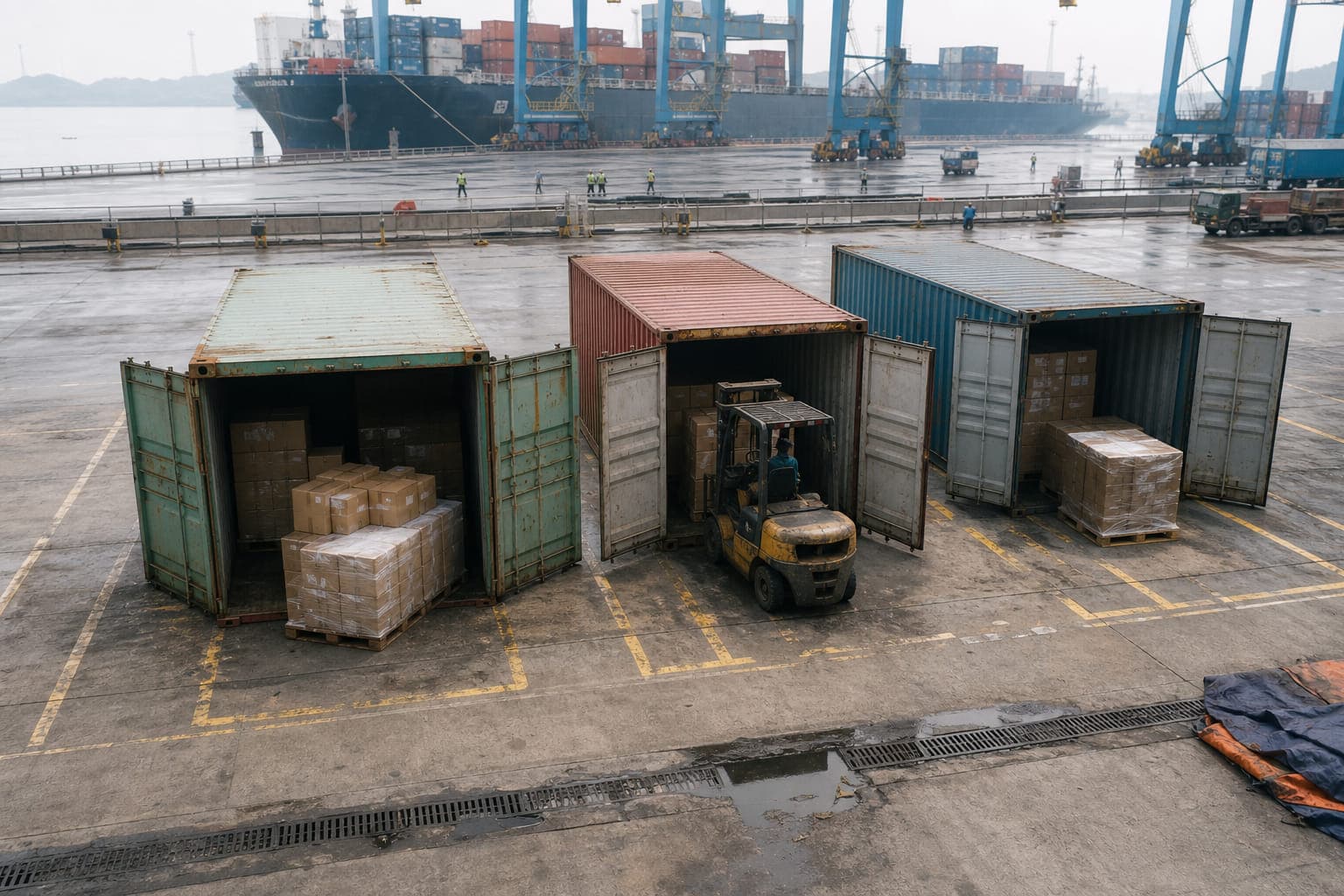
The 12 categories caught by the list
- Cigarettes, cigars and other preparations of tobacco for smoking, inhaling, chewing, sniffing or holding in the mouth
- Spirits and wine
- Beer brewed from malt
- Passenger cars with fewer than 16 seats
- Aircraft and yachts
- Petrol of all grades
- Air conditioners rated at 90,000 BTU or below
- Playing card decks
- Votive paper
- Explosives precursors and industrial explosive materials, per the list issued by the Ministry of Industry and Trade
- Imports on the national defence and security list issued by the Government
- Imports from countries or territories flagged for disease risk by the Ministry of Agriculture and Environment
Three of those entries cannot be read off a product name. Explosives precursors follow a list from the Ministry of Industry and Trade, defence-sensitive cargo follows a list issued by the Government, and disease-risk origins follow notices from the Ministry of Agriculture and Environment. Those are three separate instruments that move over time, so open the source document rather than reasoning from the goods description.
Two thresholds do the rest of the work. Air conditioners are caught at 90,000 BTU and below, which puts residential and light commercial units inside the list and larger plant outside it. Passenger vehicles are caught below 16 seats.
Where the entry gate actually sits
The decision defines the entry gate by mode of transport. For sea and air it is the seaport or airport where the cargo is discharged, or the port named on the bill of lading as the destination. For rail it is the international interchange station at the border. For road and inland waterway it is the international or main border gate where the goods enter Vietnamese territory.
One carve-out is worth committing to memory. Where the bill of lading or the carriage contract names ICD Phuoc Long in Ho Chi Minh City as the port of destination, ICD Phuoc Long is the entry gate. Cargo declared at the My Dinh and Long Bien dry ports in Hanoi follows separate Prime Ministerial rules.
Eleven cases where the declarant picks the place
Listed goods are not locked to the quayside. The decision sets out 11 cases in which the declarant may choose between the entry gate and an inland customs location, the last of them a catch-all for anything else the Prime Minister decides. The cases shippers meet most often:
- Equipment, machinery and materials imported to build a factory or works: cleared at the customs office covering the site or the site's warehouse
- Goods for processing, for domestic-market production, for export production and for export-processing operations: cleared at the customs office covering the head office, the branch office or the production facility
- Goods brought from abroad into a non-tariff zone or a bonded warehouse: cleared at the customs office managing that zone or warehouse. Cargo warehoused for onward export to a third country, where a temporary-import re-export code certificate from the Ministry of Industry and Trade applies, may only be held in the province or city holding the entry or exit gate
- Goods sold through duty-free shops: cleared at the customs office managing the shop
- Petrol imported from abroad or from a bonded warehouse into the domestic market: cleared at the customs office covering the trader's fuel depot, where that depot meets customs inspection and supervision conditions
- Import cargo consolidated in one container and moved to a container freight station: cleared at the customs office managing that CFS
- Postal and express consignments: cleared at the locations set out in the decree implementing the Customs Law
Mixed bills: read the overlap carefully
The decision is explicit on one point. Where an import consignment holds several product types, some listed and some not, travelling on a single bill of lading, it clears at the entry gate.
Consolidated cargo also needs to be checked against the cases allowing a choice of clearance location. The decision allows imports consolidated in one container and moved to a container freight station to clear at the customs office managing that CFS. As a practical planning step, review both the mixed-bill rule and the CFS provision before settling where to file the declaration.
If the applicable case is unclear, LCL shippers and consolidators should seek guidance from the customs office managing the intended CFS before finalising the plan. From an operational standpoint, raising the question before the bill is issued leaves time to review the destination port and any proposed bill split with the carrier, rather than waiting until the container reaches the terminal.
Impact by commodity
The decision allows imports consolidated in one container and moved to a container freight station to clear at the customs office managing that CFS.
Consumer imports carry the visible change: spirits and wine, malt beer, tobacco, passenger cars under 16 seats, air conditioners at or below 90,000 BTU, playing cards and votive paper. Because the entry gate follows the port of discharge or the port named on the bill, choosing the destination port at booking has become a customs decision rather than purely a rate-and-schedule one.
Manufacturing keeps its flow, and the carve-out reaches further than many assume. The processing case also covers production for the domestic market, export production and export-processing operations, so a plant selling locally does not lose the right to clear at its head office, branch office or production site. Projects importing equipment, machinery and materials to build a factory or works clear at the customs office covering the site or its warehouse.
Postal and express traffic clears at the locations named in the implementing decree. For fuel the outcome turns on the depot: one meeting customs inspection and supervision conditions can take the cargo inland, and anything short of that clears at the gate.
What importers should settle before the next booking
- Map your import lines against the 12 categories, watching the 90,000 BTU air-conditioner threshold and the 16-seat vehicle threshold.
- For the last three entries, go to the source instruments: the Ministry of Industry and Trade list for explosives precursors and industrial explosive materials, the Government list for defence and security goods, and Ministry of Agriculture and Environment notices for disease-risk origins.
- Check the destination port on the bill of lading, because that is what fixes the entry gate for sea and air cargo. A bill naming ICD Phuoc Long makes ICD Phuoc Long the entry gate.
- For cargo consolidated into one container for a CFS, put the question to the customs office managing that CFS before the bill is issued, since the mixed-bill rule and the CFS case sit side by side in the same decision.
- If you rely on the processing, export-production, export-processing or factory-construction case, keep the end-use documentation ready.
- For consignments declared before 14 August whose commodity has just dropped off the list, formalities are completed at the border customs office under the transitional clause.
Homexim supports customs clearance, checks cargo against the list and helps identify the appropriate clearance location for each shipment before booking. If you are unsure which category a product falls into, send the goods description with the HS code you currently declare. For what happens to a declaration once it is filed, see customs channel classification.
Sources
- Báo Chính phủ: Danh mục hàng hóa nhập khẩu phải làm thủ tục hải quan tại cửa khẩu nhập
- Thời báo Tài chính Việt Nam: Danh mục hàng hóa nhập khẩu phải làm thủ tục hải quan tại cửa khẩu nhập
- VOV: 12 loại hàng hóa nhập khẩu phải làm thủ tục hải quan tại cửa khẩu nhập
- VietnamPlus: Danh mục 12 nhóm hàng hóa phải làm thủ tục hải quan tại cửa khẩu nhập
Related service: Customs brokerage