

Contents
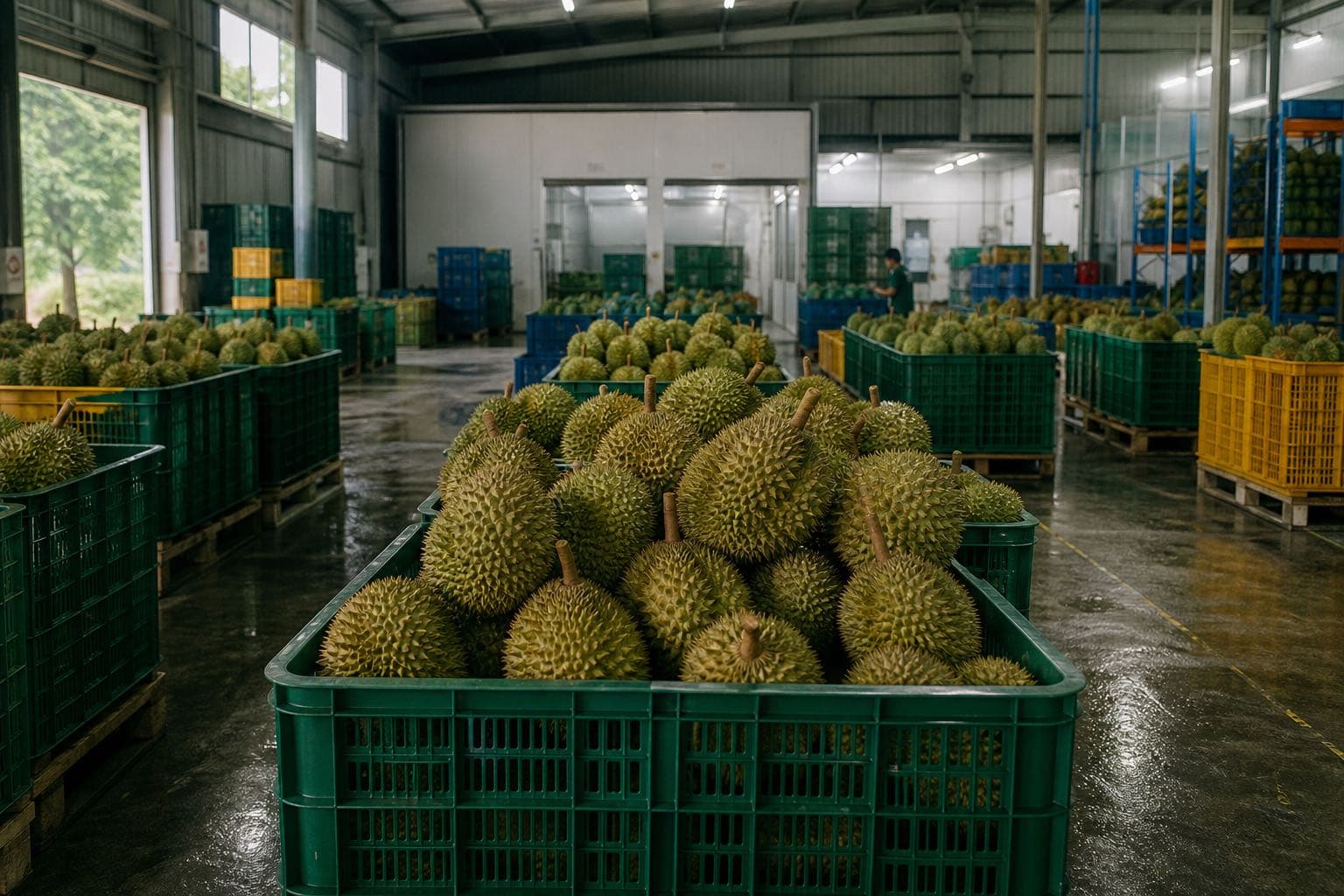
India has issued the Fifth Amendment to its Plant Quarantine (Regulation of Import into India) Order 2026, under Notification No. S.O. 3828(E) dated July 9, adding Vietnam to the list of countries approved to export fresh durian (Durio zibethinus). The order was published in the Indian Gazette on July 13 and took effect the same day. The detail that matters most to shippers: India attached no extra quarantine declaration or special import condition for Vietnamese durian, a sharp contrast to the years-long bilateral protocol negotiations this trade usually involves.
A market of 1.46 billion people, with no established lane yet
Vietnam's Ministry of Industry and Trade frames the opening as access to a market of more than 1.46 billion people. Three independent reports agree on where early demand will sit: major cities, premium retail, imported-fruit specialty shops, hotels and restaurants, and e-commerce, the segment able to absorb the freight cost that a perishable fruit carries over long distance. The Department of Crop Production and Plant Protection says it will work with Indian counterparts to guide exporters, but its own advisory is blunt: businesses need to research local buying habits, purchasing power, product specification, transport method and distribution before entering.
That line about transport method is not boilerplate. Durian shipments to China have long run over land and rail links through the northern border crossings, which keeps fruit fresh at low cost. India offers no such option: cargo has to move by sea or air, over a much longer distance, and no dedicated cold-chain lane exists for this commodity yet. That gap is exactly what shippers need to close before quoting an Indian buyer.
Vietnamese durian still leans hard on one market
In the first half of 2026 Vietnam was China's second-largest fresh durian supplier at 846 million USD, an 18% share, while Thailand held 81%.
That imbalance is why the India opening is worth tracking even at small early volumes. Vietnamese durian sits heavily on a single market, and Thailand controls most of it. A new destination that comes with no special quarantine requirement and no protocol negotiation is a rare shortcut to diversification, unlike the multi-year bilateral process that preceded China access.
Impact by commodity
For fresh durian and tropical fruit generally: this cargo needs continuous cold treatment, and the longer the transit the tighter the temperature control required. With no reefer sea service or scheduled cargo flight established between the two countries for this product, early movers will need to build a route with their forwarder rather than book onto an existing lane the way they would for China or the EU.
For processed produce and other fruit exporters eyeing India, the amendment signals something broader: Indian quarantine authorities are opening to Vietnamese agricultural goods with fewer technical barriers than expected. Exporters of adjacent products (mango, dragon fruit, banana) should watch the Department of Crop Production and Plant Protection's updated list, since the same opening mechanism could repeat.
What to line up before the first order
- Confirm packing specification and destination city (Delhi, Mumbai or another major hub) with the Indian buyer before choosing a transport mode.
- Compare cost and transit time between sea (reefer container, longer transit) and air (faster, higher cost) against the actual order volume, since no established lane exists yet to benchmark rates against.
- Prepare phytosanitary export documentation as for any other market, even though India adds no extra condition, to avoid delays on the domestic side.
- For a first trial shipment, prioritize buyers with cold-chain handling already in place, premium supermarkets or imported-fruit chains, rather than traditional markets without storage infrastructure.
Homexim helps produce shippers build routes into new markets, comparing air freight for time-sensitive shipments against sea options for larger volumes. A market with no established lane is exactly when a forwarder should be planning alongside you, not booking on autopilot.
Sources
Related service: Air freight