

Contents
Britain's Trade Remedies Authority (TRA) published preliminary findings on 23 October 2026 in its PET safeguard case, SG0094, and proposed a provisional tariff-rate quota from 1 December 2026. Goods within quota pay only the standard import duty, if any. Goods above quota face an additional 65% safeguard duty. According to the Ministry of Industry and Trade's summary of the findings, Vietnam would receive 3.1% of the total quota.
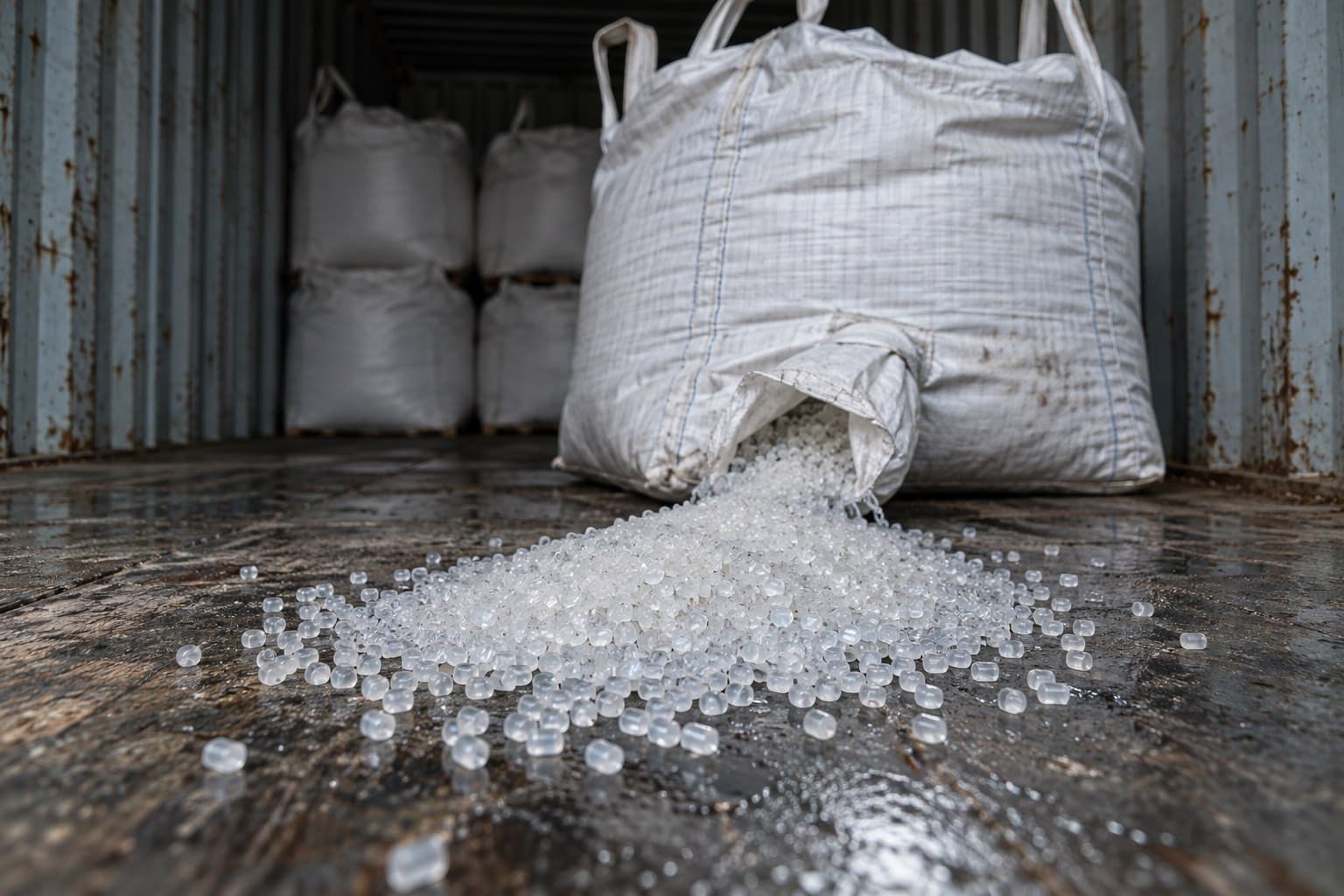
This is a proposal, not a measure in force. The case was brought by ALPEK Polyester Limited, and the TRA opened its investigation on 5 August 2026 (see the August PET investigation). It covers virgin PET (vPET) and recycled PET (rPET) with a viscosity number of 74 ml/g or higher, under reference HS codes 3907 6100 and 3907 6900. Vietnamese companies have until 22 November 2026 to submit comments.
What Vietnam's own quota means
The Ministry of Industry and Trade's summary of the TRA's preliminary finding sets total quota at 192,963.17 tonnes for 1 December 2026 to 31 May 2027. The EU holds 77.6%, Mexico 5.4%, Indonesia 3.7% and Vietnam 3.1%. Other eligible sources share the remaining 10.2%.
Vietnam's allocation is split into two periods: 1,475.27 tonnes from 1 December 2026 to 28 February 2027, and 1,508.06 tonnes from 1 March 2027 to 31 May 2027. Any shipment above the limit for its period faces an additional 65% duty.
The two figures add up to about 2,983 tonnes, which falls short of the 3.1% share of total quota cited above. The summary does not explain the gap. Importers should check the official notice for case SG0094 in the TRA's public file (link in the sources section at the end of the article) before fixing delivery schedules.
Goods above quota face an additional 65% safeguard duty.
The TRA says country-by-country allocation is meant to protect traditional trading partners, secure supply to the UK market and limit unnecessary disruption for downstream PET users.
Why Vietnam gets no exemption
The TRA places Vietnam among the sources whose exports to the UK have grown significantly. Developing countries can be exempted under Article 9.1 of the WTO Agreement on Safeguards, but Vietnam does not qualify: its imports exceed the 3% market-share threshold the TRA applied.
The case rests on these figures: UK PET imports rose 68% between 2021 and 2025. They dipped in 2023, then grew two years in a row and peaked in 2025. UK producers' output fell steadily, and domestic selling prices were pushed down toward the end of the period. The TRA found that lower production costs contributed but did not fully explain the price trend. Rising import volumes and falling import prices also weighed on prices.
The TRA ties this to global PET capacity expanding, especially in Asia, without a matching rise in demand. China accounted for an estimated 35 to 45% of globally traded PET in 2025, up from about 23% in 2020. Trade defence measures in the EU, Canada and the US have also redirected trade flows, pushing more product into the UK than expected.
Impact by commodity
PET chips, both vPET and rPET, declared under 3907 6100 and 3907 6900 are directly affected. Mills selling rPET to the UK are also in scope, since the case file names rPET alongside vPET. The common condition is a viscosity number of 74 ml/g or higher.
The published sources give no figure for Vietnam's PET exports to the UK, so the potential loss cannot yet be estimated.
The findings are preliminary. A provisional measure can run for up to 200 days from the day after the notice is published, or until a definitive measure takes effect, whichever comes first.
What plastics exporters should do before 22 November
The Ministry of Industry and Trade, through its Trade Remedies Authority of Vietnam (TRAV), advises companies to monitor the case and prepare now. Specific steps:
- Send comments to the TRA by 22 November 2026 at the latest, either directly or through the Vietnam Plastics Association (VPAS), so they can be considered in the final determination.
- Review UK-bound export declarations under 3907 6100 and 3907 6900 to establish actual export volumes and the customer mix.
- Compare planned shipments with 1,475.27 tonnes (1 December 2026 to 28 February 2027) and 1,508.06 tonnes (1 March 2027 to 31 May 2027), then check whether delivery schedules can be adjusted to fit each period.
- Test the viscosity number of each chip grade against the 74 ml/g threshold to see which shipments fall in scope.
- Contact VPAS and TRAV to ask how the quota will be allocated. If needed, request a direct meeting with the TRA.
Homexim provides customs declaration services. Exporters with PET shipments bound for the UK that need HS codes and delivery schedules reviewed before the quota takes effect can contact Homexim.
Sources
Related service: Customs brokerage