

Contents
Decree 292/2026/ND-CP takes effect on 5 September, retiring Decree 69/2018 after eight years as the backbone of Vietnamese import-export practice. The same day, Circular 41/2026/TT-BCT shuts waste and used goods out of temporary import, re-export and transshipment trade. On 9 September customs switches on automatic declaration confirmation for export processing enterprises. A list of 31 dual-use lines follows on 12 September, and a new classification regime on 15 September. Four deadlines, all inside the first half of the month.
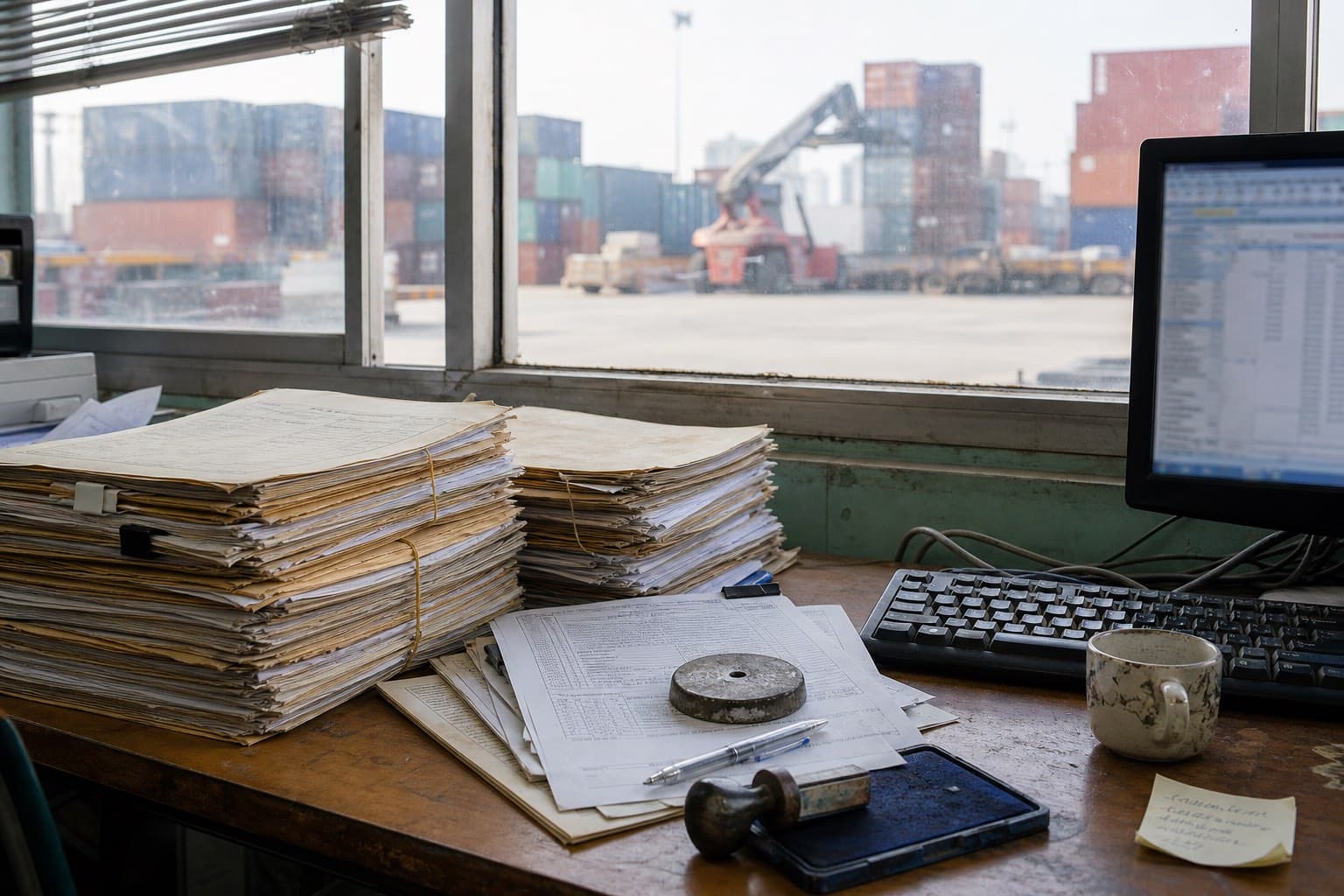
Decree 292 moves the signature and loosens processing rules
Signed on 22 July, Decree 292 pushes a block of approval powers down from the Prime Minister to line ministries. The Ministry of Science and Technology takes over imports of used machinery and equipment, a lane that already runs on a tight set of rules. That reads like housekeeping until you file something: it changes which desk receives the paperwork and whose signature closes it.
Toll-processing arrangements with foreign principals gain real room. Contract scope now reaches components and semi-finished goods, not raw materials alone. Any change to consumption norms must be papered as a written contract annex before it is applied, not regularised afterwards. On the agency side, Vietnamese traders may now appoint foreign traders as purchasing agents abroad, where the old rules covered selling agents only.
How long your existing paperwork holds
The first question any export desk asks when a decree is replaced is whether existing licences die with it. They do not. Free sale certificates issued before the effective date run to the expiry printed on the certificate. Those issued without an expiry date stay valid to 31 December 2027. Applications completed before 5 September are handled under the old regime; anything filed from 5 September falls under Decree 292. If a file is sitting on a desk awaiting signature, this is the week to decide which side of that line it lands on.
Free sale certificates issued without an expiry date stay valid to 31 December 2027.
There is money in the transitional clauses too. Temporary import and re-export business codes issued under the old regime expired on 1 July 2026, and the security deposits behind them must be refunded in full through the deposit-holding institution. Anyone who lodged a deposit should check whether it has actually landed back in the account.
Impact by commodity
Circular 41/2026/TT-BCT, issued 22 July, runs from 5 September 2026 to 31 December 2029 and repeals Circular 18/2024/TT-BCT. It closes an entire line of business. The suspended waste list covers 27 tariff lines: rubber waste at 4004.00.00, silk waste at 5003.00.00, wool and animal hair waste at 5103 and 5104.00.00, cotton waste at 5202, man-made fibre waste at 5505, textile rags at 6310, gypsum at 2520, slag and ash from 2618 to 2620, and scrap of rare and specialty metals across headings 8101 to 8113, tantalum, beryllium, chromium, hafnium, rhenium and cadmium among them.
The used-goods annex reaches much further: plastic articles, suitcases and handbags, tableware and ceramics; woven fabrics in a range of materials and the whole of chapter 64 for footwear; air conditioners, water heaters, headphones and audio equipment; motorcycles, mopeds, bicycles and watches; seats, furniture, mattresses and video game consoles. Two carve-outs are spelled out. Transshipment cargo carried directly from the exporting country to the importing country without passing a Vietnamese border gate falls outside the scope. Consignments that completed temporary import or transshipment formalities before the effective date may still be re-exported or transshipped.
Engineering, electronics and chemicals should mark 12 September. Circular 42/2026/TT-BCT, issued 29 July, sets out 31 dual-use lines under Ministry of Industry and Trade authority, implementing article 7.2 of Decree 259/2025/ND-CP on strategic trade control. The list runs from high-capacity DC power supplies and frequency converters through detonators, shaped charges, detonating cord and nitroamine compounds, on to maraging steel, titanium, nickel and aluminium alloys, tungsten compounds, high-purity phosphorus hydride, high-purity magnesium, calcium and bismuth, hafnium, beryllium and rhenium, and out to unmanned aerial vehicles.
The matching test is the line declarants need to read closely. A licence under Decree 259/2025/ND-CP applies only where the HS code, the product description and the technical specification all match the entry in the list at once. A shared HS code with different specifications does not pull cargo into the licensing net, and matching specifications will not rescue a misclassified entry. Plants should sit this list beside the codes they actually declare before 12 September, along with the specialised inspection lists already applying to their cargo.
Customs changes its method on 9 and 15 September
Export processing enterprises have a date of their own, 9 September. The Customs Department switches on automatic confirmation through the supervision area for export and import declarations moving between an EPE and a domestic company, between two EPEs, and between an EPE and its branches nationwide. The trade-off is exact coding in the internal management reference field. For domestic deliveries the exporter enters #&XKPTQ and the importer enters #&NKPTQ#& followed by the first 11 characters of the matching export declaration number. For deliveries designated by a foreign trader the codes are #&XKTC and #&NKTC#& plus the same 11 characters. Those strings are what pair an export declaration to its import declaration, so declaration templates need fixing before 9 September.
Six days later, Circular 85/2026/TT-BTC from the Ministry of Finance replaces both Circular 14/2015 and Circular 17/2021. Classification now rests on technical data, the product file and analysis results rather than on the HS code alone. Where customs asks, the importer has to produce documentation of the goods' properties, composition, construction, use or manufacturing process.
Several procedures get lighter in return. Functional units and machine assemblies under chapters 84, 85 and 90 imported in a single consignment no longer need a registered catalogue and drawdown monitoring sheet. Unassembled or disassembled machinery only needs its catalogue registered before the first declaration is lodged. Samples are retained for 120 days from notification of results, which is the window for building a challenge.
The exposure sits in the gap between the commercial description on the contract and the technical file from the plant. Those two documents rarely match, because sales writes for the buyer and engineering writes for the workshop. From 15 September that gap becomes a classification dispute, and the declaration waits while demurrage runs by the day.
What to do before 5 September
- Audit the licences and CFS certificates you hold: dated ones run to expiry, undated ones now carry a hard stop at 31 December 2027.
- For files awaiting submission, complete them before 5 September to stay under the old regime, or accept Decree 292 and work to the new one.
- If you lodged a temporary import and re-export deposit, check the statement: the old business codes expired on 1 July 2026 and the deposit is refundable in full.
- Review live toll-processing contracts: bring components and semi-finished goods into scope where relevant, and paper every change to consumption norms as an annex before it takes effect.
- If you trade on temporary import, re-export or transshipment, reconcile your codes against both Circular 41 lists; consignments cleared before 5 September still move under the old rules.
- Engineering, electronics and chemicals: check HS code, description and technical specification against the 31 dual-use lines, since all three must match before a licence applies.
- Build technical files by product group before 15 September, covering properties, composition, construction, use and manufacturing process. From that date they are the basis of classification, not supporting paper.
- Export processing enterprises: update the internal management reference field to the new codes before 9 September.
Homexim handles customs clearance and documentation for Vietnamese import and export cargo, including HS classification review before a declaration is lodged and screening goods against the specialised management lists. To check whether the code you declare falls inside the dual-use list or the suspended re-export lists, send the HS code together with the product description and technical specification ahead of the September deadlines.
Sources
- Sở Công Thương Hải Phòng: Thông tin Nghị định số 292/2026/NĐ-CP quy định chi tiết thi hành Luật Quản lý ngoại thương
- Hệ thống pháp luật Việt Nam: Điểm mới Nghị định 292/2026/NĐ-CP thay Nghị định 69/2018/NĐ-CP về quản lý ngoại thương
- LuatVietnam: Chính sách mới về xuất nhập khẩu có hiệu lực tháng 9/2026
- Tạp chí Kinh tế Tài chính: Từ 5/9/2026 tạm ngừng tạm nhập, tái xuất, chuyển khẩu nhiều hàng hóa đã qua sử dụng
- LuatVietnam: Danh mục phế liệu tạm ngừng kinh doanh tạm nhập, tái xuất, chuyển khẩu từ 05/9/2026
- LuatVietnam: Danh mục 31 hàng hóa lưỡng dụng thuộc quản lý của Bộ Công Thương từ 12/9/2026
- Thời báo Tài chính Việt Nam: Hải quan triển khai chức năng tự động xác nhận tờ khai cho doanh nghiệp chế xuất từ ngày 9/9/2026
- Doanh nghiệp Hội nhập: Thông tư mới gỡ vướng phân loại hàng hóa xuất nhập khẩu từ ngày 15/9
- Doanh nghiệp Hội nhập: Thông tư 85/2026/TT-BTC, phân loại hàng hóa không còn chỉ là xác định mã HS
Related service: Customs brokerage