

Contents
Importing used machinery into Vietnam differs from importing new equipment on exactly one point: the shipment must prove its age. Under Decision 18/2019/QD-TTg, used machinery and equipment may only be imported if the equipment is no more than 10 years old and serves the importer's own production directly. Those two conditions come before any question of duty rates or purchase price.
Used machines from Japan, Korea, Taiwan, and China are a staple for Vietnamese factories: injection molders, CNC machines, printing presses, looms, at a third of the price of new equipment and often in fine condition. The risk is rarely the machine itself. It is that buyers close the deal first and ask about the procedure later, when the age cap should be checked at the inspection visit, before any money moves.
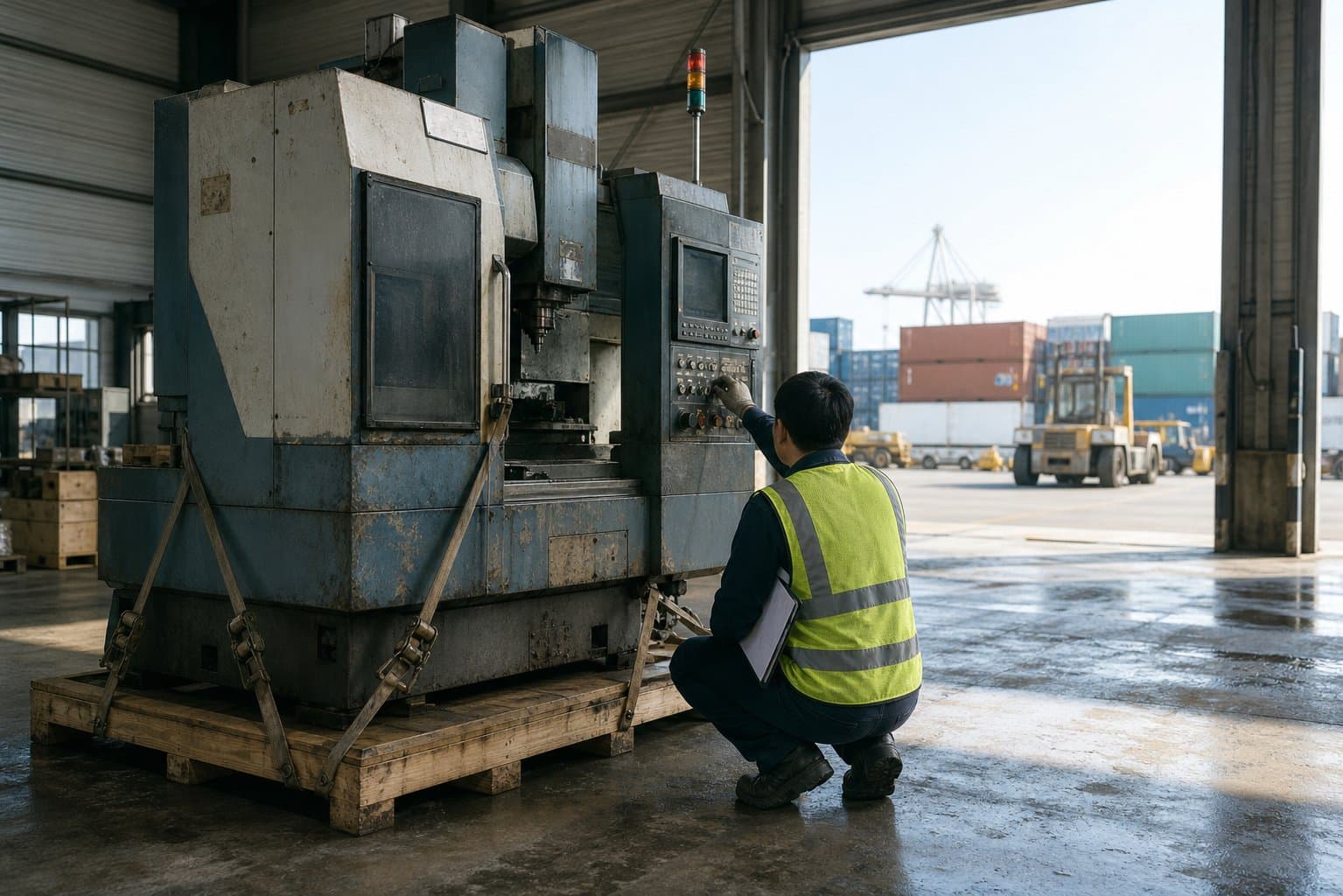
The key point: not every used machine can enter Vietnam
Used machinery clears Vietnamese customs only when it meets two criteria under Decision 18/2019/QD-TTg at the same time. First, the equipment age must not exceed 10 years, counted from the year of manufacture to the year the goods reach a Vietnamese border gate; certain machinery in mechanical engineering, wood processing, and paper production is allowed 15 or 20 years under Appendix I of the Decision. Second, the machine must have been manufactured to standards consistent with Vietnamese technical regulations (QCVN), Vietnamese national standards (TCVN), or the national standards of G7 countries or Korea on safety, energy efficiency, and environmental protection.
One more condition sits on top: the goods must directly serve the importing company's own production. Importing used machines for resale is not permitted under this Decision. And the point most buyers miss: the equipment age must be certified by a designated inspection body in a formal certificate. The seller's word carries no weight in the customs file.
Equipment age runs from the year of manufacture to the year the goods reach a Vietnamese border gate, and the number must be certified by a designated inspection body, not by the seller.
HS codes for used machinery: chapters 84 and 85
Used machinery has no HS codes of its own: a used machine takes the same code as a new one of the same kind. Most of it falls under chapter 84 for mechanical machinery, machine tools, and handling equipment, and chapter 85 for electrical machinery. Classification follows the machine's principal function, checked against the chapter notes and heading texts.
- Plastic injection molding machines sit in heading 84.77; metalworking machine tools such as lathes and milling machines run from 84.58 to 84.65 depending on the working principle.
- Weaving machines fall under 84.46, industrial printing machinery under 84.43, while electric motors and transformers sit in chapter 85.
- Handling equipment such as forklifts belongs to heading 84.27 and has quirks of its own, covered in our forklift import guide.
The HS code sets both the duty rate and the product policy, so classify from the machine's catalog and actual specifications, not from the seller's invoice description. A wrong code is harder to unwind on used equipment than on new, because the declaration is filed together with an inspection certificate stating the exact model and serial number, and correcting one means reopening the whole file.
Import duty and VAT: used machines are taxed like new ones
There is no separate tariff schedule for used machinery: import duty follows the HS code in the tariff in force when the declaration is filed, exactly as for new equipment. Many production machinery lines carry low preferential rates, but the rate for each line must be checked against the precise eight-digit code, not carried over from a similar shipment last year.
A certificate of origin keeps its full value on used equipment: a valid C/O from a country holding a free trade agreement with Vietnam earns the special preferential rate. The catch is that used machines are often bought through trading companies or from equipment yards, after the goods have changed hands several times, which makes obtaining a C/O close to impossible. In that case, price the deal at the non-preferential rate from the first quotation and treat any C/O that does materialize as a bonus, not a baseline.
VAT applies at the standard rate, currently 10%, on the value including import duty. Customs valuation is where used equipment most often stalls: the purchase price of a used machine sits far below the price data customs holds for the same model new, so the declaration is a natural candidate for a valuation consultation. Keep the contract, bank payment records, and a clear explanation of why the price is low; that is the fastest way through.
The legal framework: Decision 18/2019/QD-TTg and its criteria
The legal framework for this cargo is leaner than for chemicals or food, but its technical criteria bite harder:
- Decision 18/2019/QD-TTg of the Prime Minister, dated April 19, 2019: the spine of the whole procedure, setting the age criteria, manufacturing standards, dossier, and process for importing used machinery, equipment, and technological lines.
- Decision 28/2022/QD-TTg, in force since March 1, 2023: amends Decision 18, including an on-site inspection mechanism for technological lines of high-tech enterprises after installation.
- For used technological lines: remaining capacity or performance must be at least 85% of the design level, and consumption of materials and energy must not exceed the design level by more than 15%.
- The import-export tariff in force: duty is checked by HS code at the time of filing, alongside each FTA's special preferential schedule where a valid C/O exists.
A machine older than 10 years is not automatically finished, but the remaining path is narrow: a company already manufacturing in Vietnam, needing that specific machine to keep production running, may apply to the Ministry of Science and Technology for permission to import. It is an approval sought in advance, granted before the goods ship. Applying after the cargo has landed is almost always too late, and if the application fails, the remaining option is re-export.
Five steps to import used machinery into Vietnam
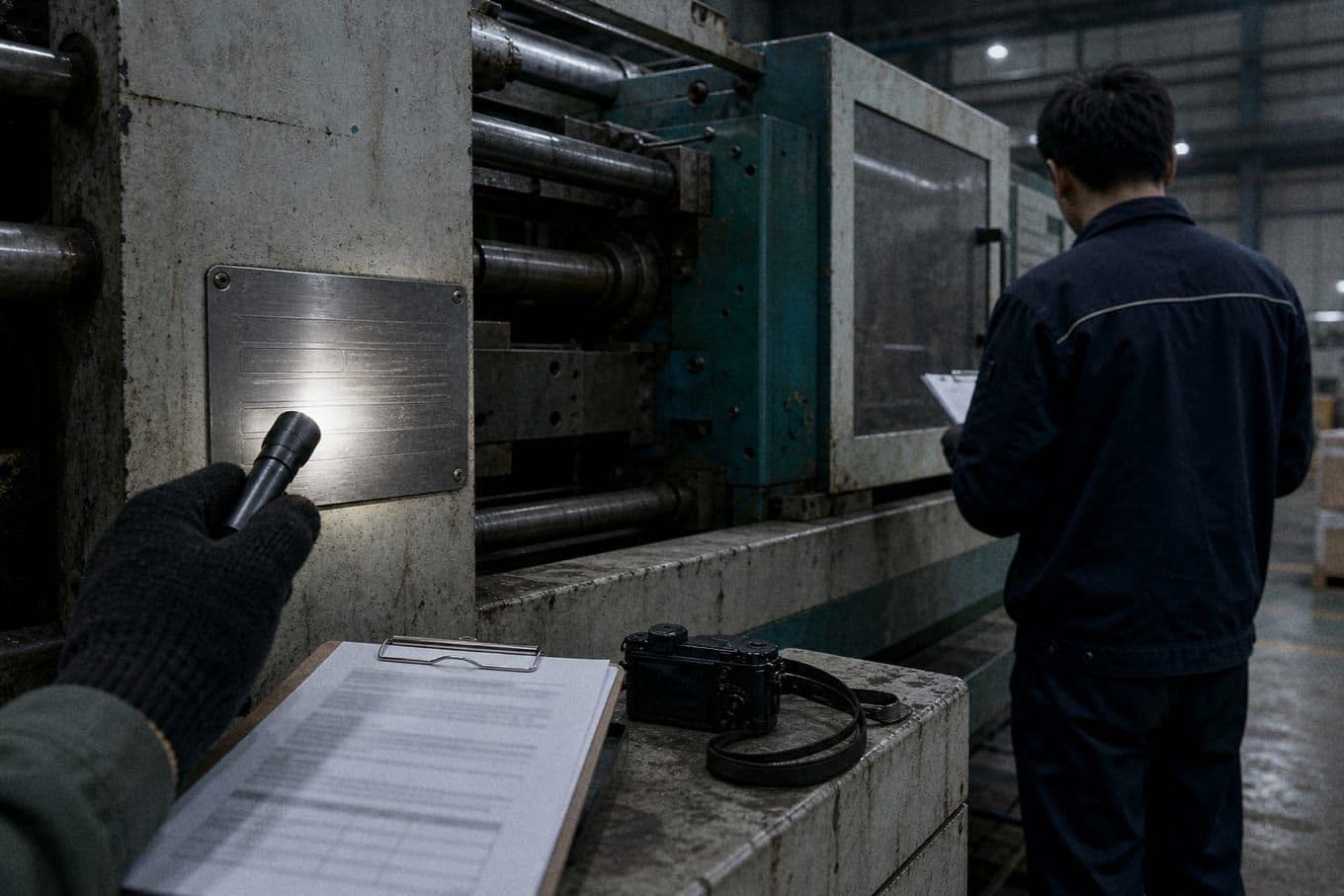
A real shipment of used machinery runs through five steps, and the inspection step sets the tempo for the whole file:
- Check the conditions and book an equipment-age inspection with a body designated by the Ministry of Science and Technology, published on the ministry's portal. Inspecting in the export country before loading is the fastest route.
- Prepare the pre-clearance dossier: the inspection certificate or the manufacturer's confirmation of the year of manufacture and standards, the business registration certificate, and the commercial documents.
- Transmit the customs declaration through ECUS/VNACCS, declaring the goods as used with the year of manufacture, then wait for the risk channel and pay the duties.
- If the certificate is not ready at filing: submit the inspection registration confirmed by the inspection body and request release of the goods for storage at your warehouse, where the inspector examines the machine.
- File the inspection certificate with customs within 30 days of taking the goods into storage to complete clearance. A failed result means an administrative penalty and forced re-export.
The biggest difference between a smooth shipment and one stuck in the yard is when the inspection happens. Done in the export country, the machine lands with only the declaration and duties left, a matter of days. Left until after arrival, the file gains registration time, haulage to the warehouse, the wait for the inspector, and the wait for the certificate, measured in weeks.
The document set
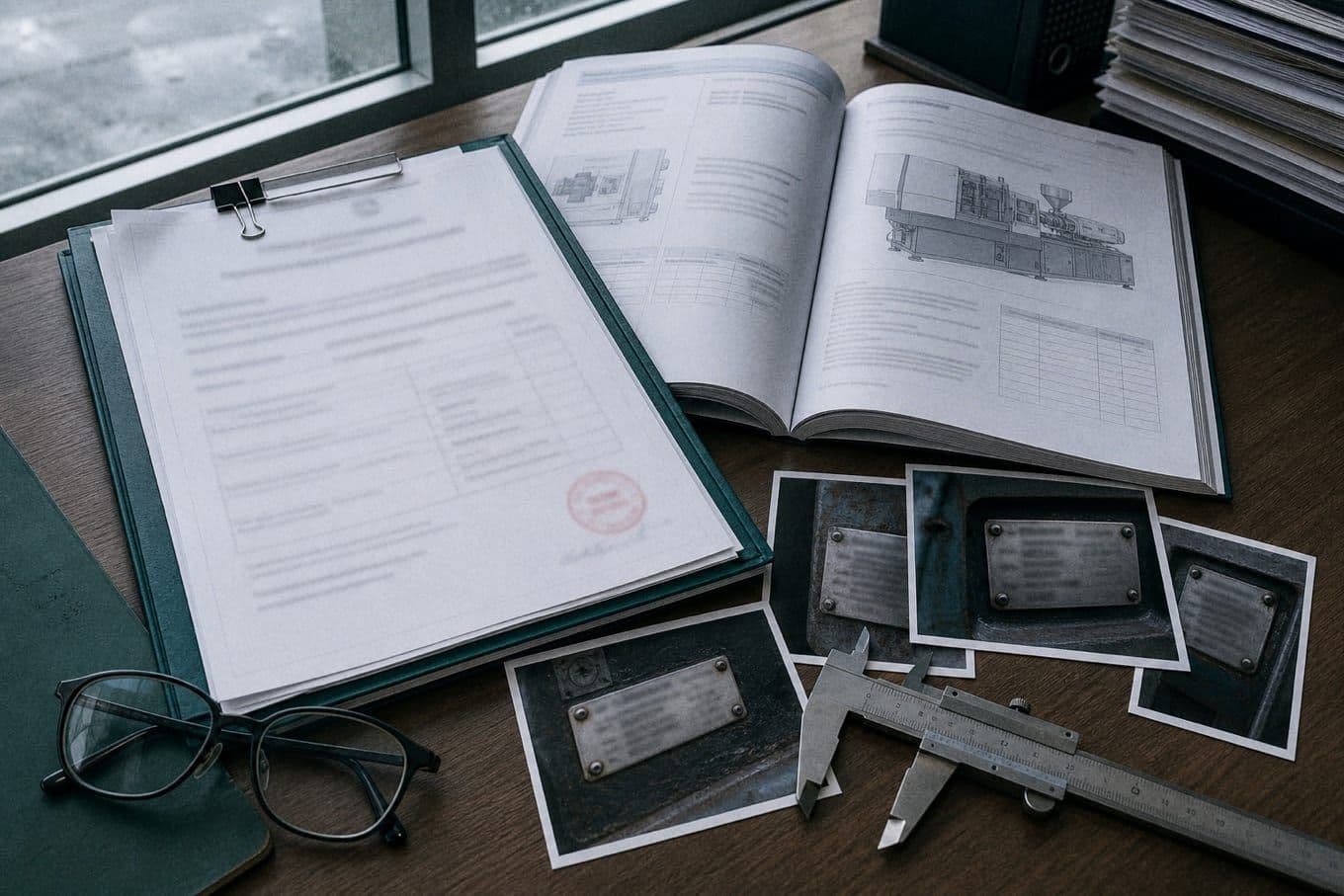
Beyond the familiar commercial document set, a used-machinery shipment needs a group of papers proving the equipment's age and standards:
- Commercial documents: the customs declaration, commercial invoice, packing list, B/L, the foreign trade contract, and a C/O where available.
- The inspection certificate on equipment age and manufacturing standards issued by a designated inspection body, or the inspection registration when requesting release for storage.
- The manufacturer's confirmation of the year of manufacture and applicable standards, where used in place of the certificate as the rules allow.
- A stamped copy of the business registration certificate, showing the goods serve the importer's own production.
- The catalog and technical documents showing the model, serial number, year of manufacture, and capacity.
The first thing every party checks is that the year of manufacture matches across the entire file: the nameplate on the machine, the serial number, the catalog, the invoice, and the certificate. Used machines that sat in a yard often lose their nameplates, or the plate is too worn to read; the inspection body then has to trace the serial back to the manufacturer, the certificate slips, and the whole shipment waits with it. Before paying, the single most useful demand is a clear photo of the nameplate and a serial number that matches the machine's papers.
Common mistakes when importing used machinery
The three errors below account for most of the stuck used-machinery cases we see, and every one is avoidable before the cargo is loaded:
- Declaring a used machine as '100% new': one physical inspection finding worn parts, touch-up paint, or an hour meter is enough to reject the declaration and reclassify the file as a false declaration, or worse, an attempt to dodge Decision 18. The importer then lands in the high-risk channel for shipments to come.
- Starting to look for an inspection body only after the cargo lands: the machine sits in the yard through registration and the inspector's schedule, while container and storage charges accrue daily until the certificate arrives.
- A disassembled production line packed into several containers, arriving on several vessels, filed as separate declarations: customs then applies the single-machine criteria to each unit, and any unit over 10 years old gets stuck, even if the line as a whole passes the remaining-capacity test. A line must be declared and inspected as one whole from the start, with any multi-shipment plan registered in advance.
A typical scenario in this trade: a client bought an eight-year-old plastic injection molding machine in Japan, shipped it to Hai Phong, and only then asked about the procedure, too late for an inspection in Japan. The shipment took the long way around: filing the inspection registration, requesting release for storage, hauling the machine to the client's factory in Hung Yen, waiting for the inspector, then waiting for the certificate. The shipment lost nine days against the inspect-before-loading route, plus two-way haulage and container detention charges. The machine had qualified all along; only the order of steps was wrong.
Used machinery is not a hard cargo, but it punishes anyone who works the steps out of order: verify the equipment age before paying, book the inspection before loading. Homexim checks the Decision 18 conditions while you are still evaluating the machine, connects you with a designated inspection body, and handles customs clearance end to end, so the machine you bought runs on your floor instead of waiting in the yard for paperwork.
Related service: Customs brokerage