

Contents
Vietnam's National Assembly passed the amended Customs Law on 23 August with 471 of 474 deputies voting in favour, according to the Government News portal. Law 11/2026/QH16 contains four articles and takes effect on 1 March 2027. Planning for that date should cover three changes: the removal of tax suspension warehouses, a storage period of up to 24 months for bonded goods, and the inclusion of e-commerce platform operators among customs declarants.
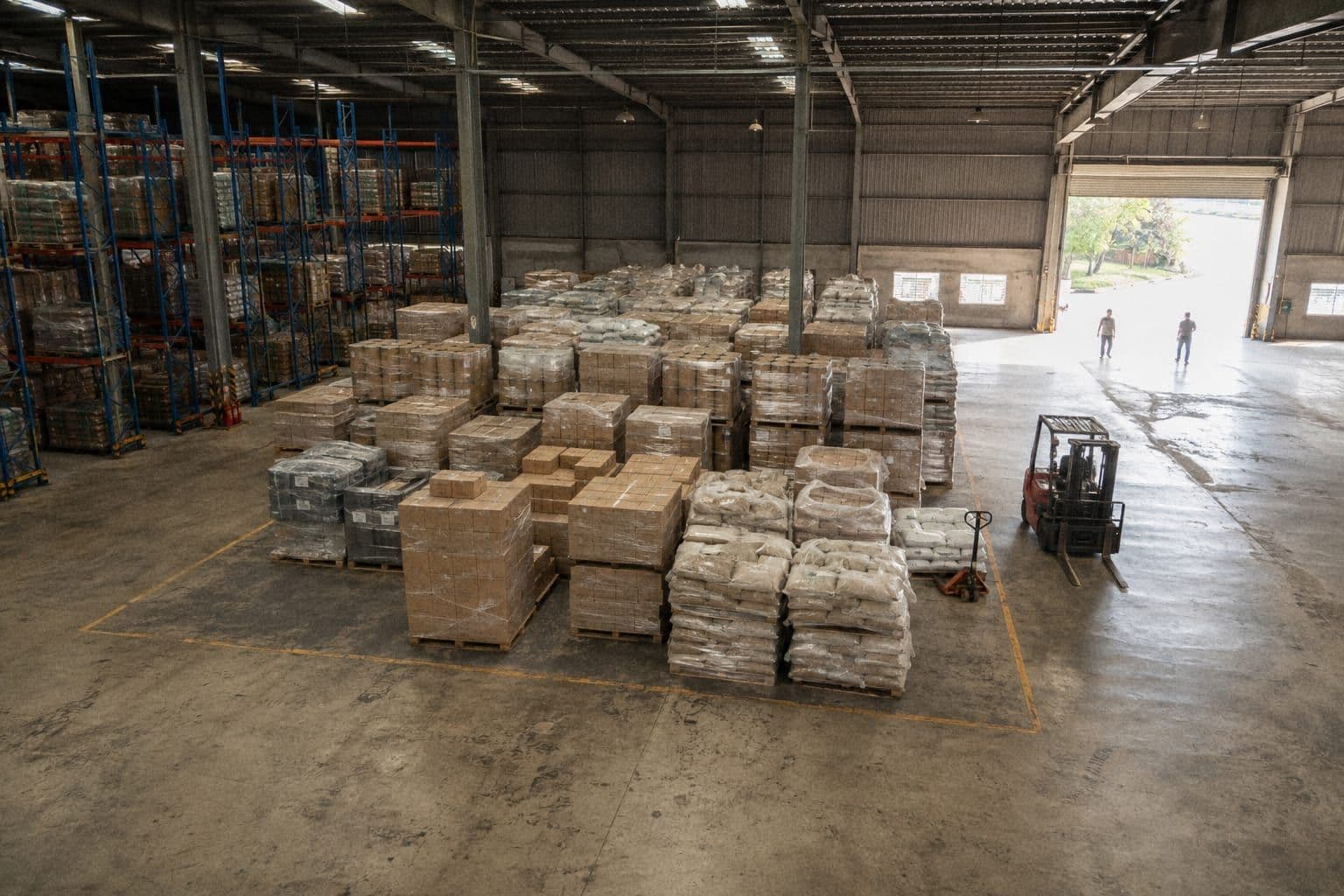
Vietnam's customs law retires the tax suspension warehouse
Clause 32 of article 1 repeals article 47 of the Customs Law in full, the provision that created the tax suspension warehouse regime and set out establishment conditions and operator obligations. The definition itself, at clause 9 of article 4 of the 2014 Customs Law, goes too, along with cross-references in articles 7 and 22. A tax suspension warehouse holds imported raw materials and supplies that have cleared customs but not yet paid duty, held for export production. From 1 March 2027 the model has no statutory basis.
The scale of the regime explains how quietly it can be dropped. One facility is left in the country, in Ho Chi Minh City. Companies still holding materials in such a warehouse when the law takes effect get a runway: that stock continues to be handled under section 5, chapter III of the 2014 Customs Law for six months from 1 March 2027.
Bonded warehouses go to 24 months, CFS to 180 days
Article 61 lifts the dwell ceiling in bonded warehouses. Goods deposited in a bonded warehouse may be held for up to 24 months from the date of deposit; the 2014 law allows 12 months plus one extension of up to 12 months for justified reasons. Consolidation cargo gets its own limit: goods brought into a container freight station may be held for up to 180 days.
Goods deposited in a bonded warehouse may be held for up to 24 months from the date of deposit; the 2014 law allows 12 months plus one extension of up to 12 months for justified reasons.
The second opening is geographic. Bonded warehouses, container freight stations and the gathering, inspection and supervision sites for import and export cargo may now be established inside industrial parks, hi-tech parks, non-tariff zones, free trade zones, logistics centres, concentrated digital technology zones and industrial clusters. Storage can sit beside the plant instead of hugging the border gate, and the inland drayage leg shortens with it.
The trade-off falls on the warehouse operator. Bonded warehouse operators must keep accounting and statistical records and install the equipment to manage stock electronically. Transit, transshipment and border-gate transfer cargo all sit within the scope of movements under customs supervision.
Platforms become the declarant on cross-border e-commerce
The 2014 Customs Law carried no dedicated rules for cross-border e-commerce and never named platform operators as customs declarants. New article 16a closes that gap. Goods exported or imported through an e-commerce platform must go through customs formalities and are subject to customs inspection and supervision.
Vietnamese organisations and individuals buying from or selling to counterparties abroad through a platform must complete electronic identification and authentication. The platform operator has to connect to the customs electronic data processing system during that process, act as the customs declarant and carry a declarant's obligations. Warehouse operators, carriers and logistics agents must hand customs the shipment data behind platform transactions. The value threshold and the procedure itself are delegated to the Government; businesses should check the implementing regulations when designing their processes.
The law widens duties on postal operators, express carriers and providers of transit and transshipment services along the same lines, following the Kyoto Convention and international practice.
File once, and your compliance record sets the inspection rate
Article 17a writes compliance management into the statute. Customs collects and processes information, builds a compliance profile and applies control measures according to each declarant's compliance rating. Declarants in good standing are considered for priority processing and for reduced or waived inspection. Read from the documentation desk, that means the compliance file now drives declaration channel assignment and how often a consignment gets pulled.
The law also fixes the principle that paper copies cannot be demanded again for data already shared between agencies, and the single-window mechanism drops duplicate filing. Under article 29, cleared goods may be covered by a supplementary declaration within 60 days of clearance and before a decision to stop goods passing through the customs supervision area, conduct a post-clearance audit, or launch an inspection. This excludes amendments concerning import or export licences and specialised checks on quality, health, culture, animal or plant quarantine, and food safety. Late amendments or those requested by customs are handled under tax law, administrative penalty rules and other relevant legislation.
Operating procedures need to be checked against the implementing regulations. Finance Minister Ngo Van Tuan told the assembly the law delegates 13 items to the Government and seven to the Minister of Finance for detailed regulation. Businesses designing their processes should review the decrees and circulars covering e-commerce value thresholds, compliance management and warehouse conditions, rather than rely solely on the principles in the law.
Impact by commodity
Imported raw materials and supplies for export production take the sharpest hit. That is precisely the cargo the tax suspension warehouse existed to hold: cleared but unpaid duty, stored on the manufacturer's own site. Because only one facility is still operating, in Ho Chi Minh City, the conversion population is small. Anyone using it has six months from 1 March 2027 to run the stock down under the old rules before moving to another regime.
Consolidation cargo gains a hard ceiling of 180 days in the container freight station. On multi-shipper boxes waiting to fill or waiting on documents from origin, that limit belongs in the consolidation schedule. For regional distribution stock in bonded warehouses, businesses can factor the 24-month period into seasonal inventory and re-export plans. The distinction matters: the old law allows 12 months plus one extension of up to 12 months for justified reasons.
Cross-border retail changes hands on the declaration. Vietnamese buyers and sellers must be electronically identified and authenticated, the platform signs as declarant, and warehouses, carriers and logistics agents feed shipment data to customs. With no dedicated rules in the 2014 law, 1 March 2027 is the first time this channel has a declaration framework of its own.
Brand owners and counterfeit-exposed goods get a deadline worth noting. On cargo suspected of infringing intellectual property rights, the head of the customs office handling the file must decide to suspend clearance or refuse suspension within two working hours of receiving a complete request. Two hours is the response time, not the preparation time, so the request package has to exist before the vessel berths.
What to do before 1 March 2027
- Using a tax suspension warehouse: plan the move to another regime and quantify the stock that must clear within six months of 1 March 2027.
- Long-dwell bonded stock: revisit storage contracts against the 24-month ceiling and rebuild the regional inventory plan around it.
- Consolidation cargo: write the 180-day CFS ceiling into consolidation schedules and into terms with your origin consolidator.
- Selling cross-border through a platform: confirm with the platform who signs as declarant, and prepare electronic identification for the legal entity.
- Warehouse operators, hauliers and logistics agents: prepare the data feed of shipment information to customs.
- Bonded warehouse operators: audit accounting and statistical records and the electronic stock management equipment.
- Compliance file: review errors early and check article 29's conditions and exclusions before filing an amendment; the 60-day window is not a blanket right to change every detail.
- Brand owners: have the suspension request package drafted before you need it on a suspect consignment.
- Track the implementing texts: 13 items sit with the Government and seven with the Minister of Finance.
Homexim handles customs clearance and documentation for Vietnamese import and export cargo, including the choice of storage regime and routing for goods that have to sit. In the near term it is the September package of decrees and circulars that touches live declarations; the amended Customs Law is a first-quarter 2027 job. Send the commodity, the storage regime you use today and the destination market, and we will map it against both.
Sources
- Báo Chính phủ: Quốc hội thông qua Luật Hải quan sửa đổi, xây dựng nền hải quan số thông minh, hiện đại, minh bạch
- Thời báo Tài chính Việt Nam: Quốc hội thông qua Luật sửa đổi, bổ sung một số điều của Luật Hải quan
- LuatVietnam: Điểm mới Luật Hải quan sửa đổi 2026
- LuatVietnam: Luật Hải quan sửa đổi 2026 bãi bỏ kho bảo thuế từ ngày 01/3/2027
- LuatVietnam: Từ 01/3/2027, hàng hóa xuất nhập khẩu qua nền tảng thương mại điện tử phải định danh, xác thực điện tử
- Tạp chí Kinh tế Tài chính: Luật Hải quan, những điểm cốt lõi định hình phương thức quản lý mới
- Tạp chí Kinh tế Tài chính: Luật Hải quan mở thêm dư địa cho chuỗi logistics
Related service: Customs brokerage