

Contents
Decree 365/2026/NĐ-CP on rice export and import business takes effect today, October 1, 2026. The government issued it on September 23, 2026, replacing Decree 107/2018/NĐ-CP of August 15, 2018. Rice exporters now have to meet two conditions instead of three.
The same package repeals Decree 01/2025/NĐ-CP and Clause 2, Article 27 of Decree 85/2024/NĐ-CP.
Two conditions remain, and paperwork moves faster
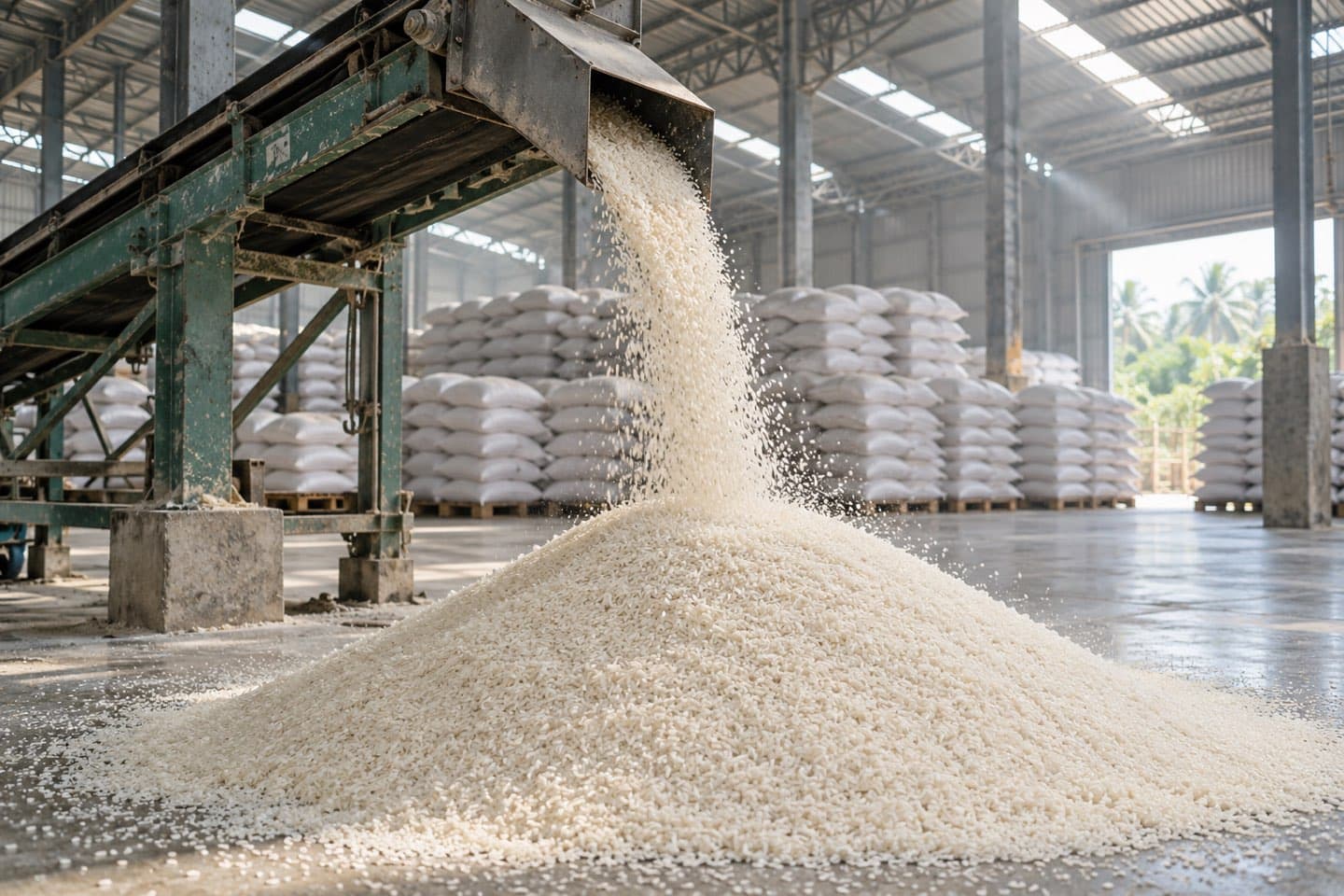
To export rice, a trader needs at least one dedicated paddy and rice warehouse and one rice mill, owned or leased. Both must meet food safety and technical requirements.
A leased warehouse or mill requires a written lease that runs for as long as the Certificate is valid. Once a facility has been certified, it cannot be subleased to another trader.
The Certificate of Eligibility is now issued within 10 working days instead of 15, counted from the date a complete dossier is received. Reissues and amendments drop from 10 to 7 working days.
Reporting is lighter too. Traders used to file three reports a month. Now they file one, due on the 5th of each month.
Traders already holding a certificate under the old rules can keep operating until the expiry date printed on it. They do not need to reapply.
Impact by commodity: organic, parboiled and fortified rice no longer need dedicated warehouses or milling facilities
Organic rice, parboiled rice and micronutrient-fortified rice get their own treatment. According to Báo Công Thương and VTV, traders exporting these three types do not need a dedicated paddy and rice warehouse or a rice mill, do not have to hold circulation reserves, and do not have to file periodic reports. Báo Sức khỏe và Đời sống goes one step further, saying these traders are not required to hold a Certificate at all. The sources diverge on exactly this point, so shippers with cargo in these three categories should check the original text before acting on any reading.
Consignment exports and rice imports
Only traders holding a Certificate can accept rice export consignments. Cargo owners who want to ship through a consignee must pick one that currently holds a valid certificate.
Rice importers take on one added duty: they must notify the Ministry of Industry and Trade of their import plans.
When a Certificate can be revoked
A Certificate can be revoked in 10 cases. According to Báo Sức khỏe và Đời sống, these include: a trader starting dissolution procedures or being declared bankrupt; loss of its business registration, enterprise registration or investment registration; failure to maintain warehouse and rice mill conditions throughout its operations; false declarations about warehouse capacity or processing facilities; and failure to maintain the mandatory paddy and rice reserve.
Two of the grounds hit day-to-day operations directly. The first is not appearing as the exporter on any export declaration for 12 consecutive months, unless the trader has properly notified a suspension of business. The second is failing to file a report within 45 days of the Ministry of Industry and Trade sending a reminder. Traders who export only in batches, or who mostly handle consignments, should track both deadlines closely.
From January 1, 2028, traders will be rated for creditworthiness on 10 criteria: credit; tax; customs; production linkages and product offtake; rice brand building and development; export results; compliance with reporting and circulation reserve rules; compliance with rules on dedicated warehouses and rice mills; integrated, modern dedicated warehouse and logistics infrastructure; and compliance with rules on occupational safety and hygiene, fire prevention, and natural disaster and flood prevention.
What cargo owners should do
Before accepting a consignment or signing a transport contract, ask any rice exporter to show a Certificate that is still valid. A trader whose Certificate has expired or been revoked cannot take consignments.
Traders leasing a warehouse or mill should check that the lease term matches the Certificate's term.
For organic, parboiled or fortified rice, read the original text to see whether a Certificate is required before planning the shipment. Báo Sức khỏe và Đời sống says it is not required, while Báo Công Thương and VTV do not mention the point.
Set a reminder to file the report before the 5th of each month. If a reminder arrives from the Ministry of Industry and Trade, file immediately: once 45 days pass from the date it was sent without a report, that is grounds for revoking the Certificate.
Beyond rice, October brings Decree 336/2026/NĐ-CP on the national single window mechanism, Circular 128/2026/TT-BTC on smart border gates (imported goods may be held for up to 30 days) and Circular 127/2026/TT-BTC on declaring means of transport, all effective October 15, 2026. Cargo owners with shipments crossing the border after that date should review their customs declaration process. For last month's deadlines, see our September policy roundup, and for where the rice goes, see Philippines keeps buying Vietnamese rice.
Sources
- Báo Công Thương: Nghị định 365/2026/NĐ-CP tạo thuận lợi cho kinh doanh xuất, nhập khẩu gạo
- VTV: Từ 1/10, điều kiện kinh doanh xuất khẩu gạo thay đổi thế nào?
- Sức khỏe & Đời sống: Nghị định số 365/2026/NĐ-CP quy định chi tiết điều kiện kinh doanh xuất khẩu gạo từ 1/10/2026
- Thương Gia: 4 chính sách mới trong lĩnh vực xuất nhập khẩu có hiệu lực từ tháng 10/2026
Related service: Customs brokerage