

Contents
The Philippines had imported 3.3 million tonnes of rice by August 2 this year. Its government confirmed imports will keep running to hold strategic reserves through April 2027, rather than close the door the way some rice markets do when a good local harvest looks likely. For Vietnamese rice exporters that is a good sign: the Philippines already accounts for 45% of Vietnam's rice export revenue over the first seven months of the year.
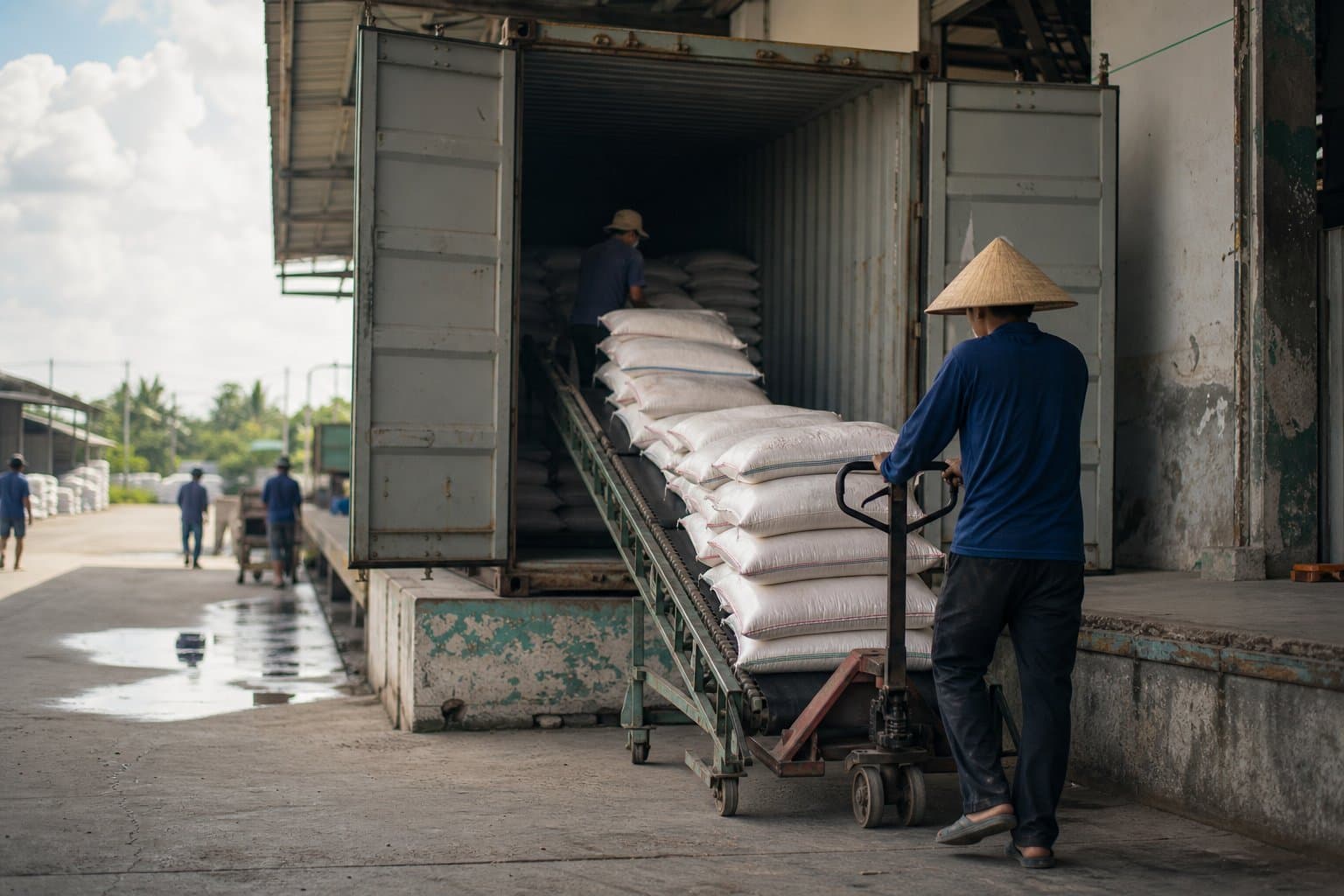
El Niño threatens 750,000 tonnes of local paddy, but NFA isn't shutting the door
The Philippines' Department of Agriculture forecasts a strong El Niño late this year could cost the country around 750,000 tonnes of paddy output. Rather than cutting imports to protect farmgate prices the way it has in past cycles, the National Food Authority (NFA) is running both tracks at once: buying 500,000 tonnes of local paddy this wet season at a support price of 21 pesos per kilo for fresh paddy, 25 to 27 pesos for dried, while keeping the import pipeline open to hold reserves.
NFA's 2026 budget jumped from 9 billion to 14 billion pesos, and its subsidized rice distribution rose to 40,000 tonnes a month at 20 pesos a kilo. That is a sharply bigger commitment than a year earlier, and it signals Manila is choosing supply security over import protection for domestic paddy prices.
Vietnam still holds the top spot, but not without friction
Over the first seven months of the year, Vietnam exported roughly 5.5 million tonnes of rice worth 2.64 billion USD, and the Philippines accounted for 45% of that revenue.
That number explains why one exporter in Dong Thap province said continued Philippine buying makes year-end contract negotiations easier, its largest customer isn't stepping back right as the winter-spring crop comes in. But that concentration cuts both ways: Vietnam's rice volume to the Philippines fell 3.8% year-on-year in the first half, a sign price competition is tightening rather than demand pulling back.
Impact by commodity
Standard white rice, the 5% broken grade at $431-435 a tonne, sits in the most price-competitive tier, where a small swing in the peso or a few dollars a tonne in freight can decide who wins the order. Fragrant rice, 5% broken at $500-510 a tonne, and Jasmine at $550 a tonne carry better margins and feel less price pressure as Manila opens imports to cover the shortfall.
Rice exporters should track NFA's progress on that 500,000-tonne local paddy purchase closely, it is the variable that determines how much more the Philippines needs to import late in the year, right when Vietnam's own winter-spring harvest comes online.
What rice shippers should line up
- Lock in year-end contracts with Philippine buyers early, while Manila has confirmed it won't tighten imports.
- Track NFA's 500,000-tonne local paddy purchase to gauge how much more import demand is coming late in the year.
- For standard white rice, run freight cost per tonne carefully, the competitive margin is thin.
- Where mill capacity allows, push fragrant and Jasmine grades toward the less price-sensitive segment.
Homexim helps rice shippers price ocean freight against real contract volumes, so a tight competitive margin doesn't get eaten by shipping cost.
Sources
Related service: Ocean freight FCL/LCL