

Contents
Vietnam imported 1.81 million tonnes of raw cashew worth more than $3 billion by July 15, according to figures just released by the Customs Department. Volume rose 4% year on year while value climbed 12.3%, meaning the average import price is also moving up, not just the tonnage. That is a heavy foreign-currency outlay for an industry where Vietnam still leads the world in processed cashew kernel exports, and it points to a supply chain that leans hard on imported raw material.
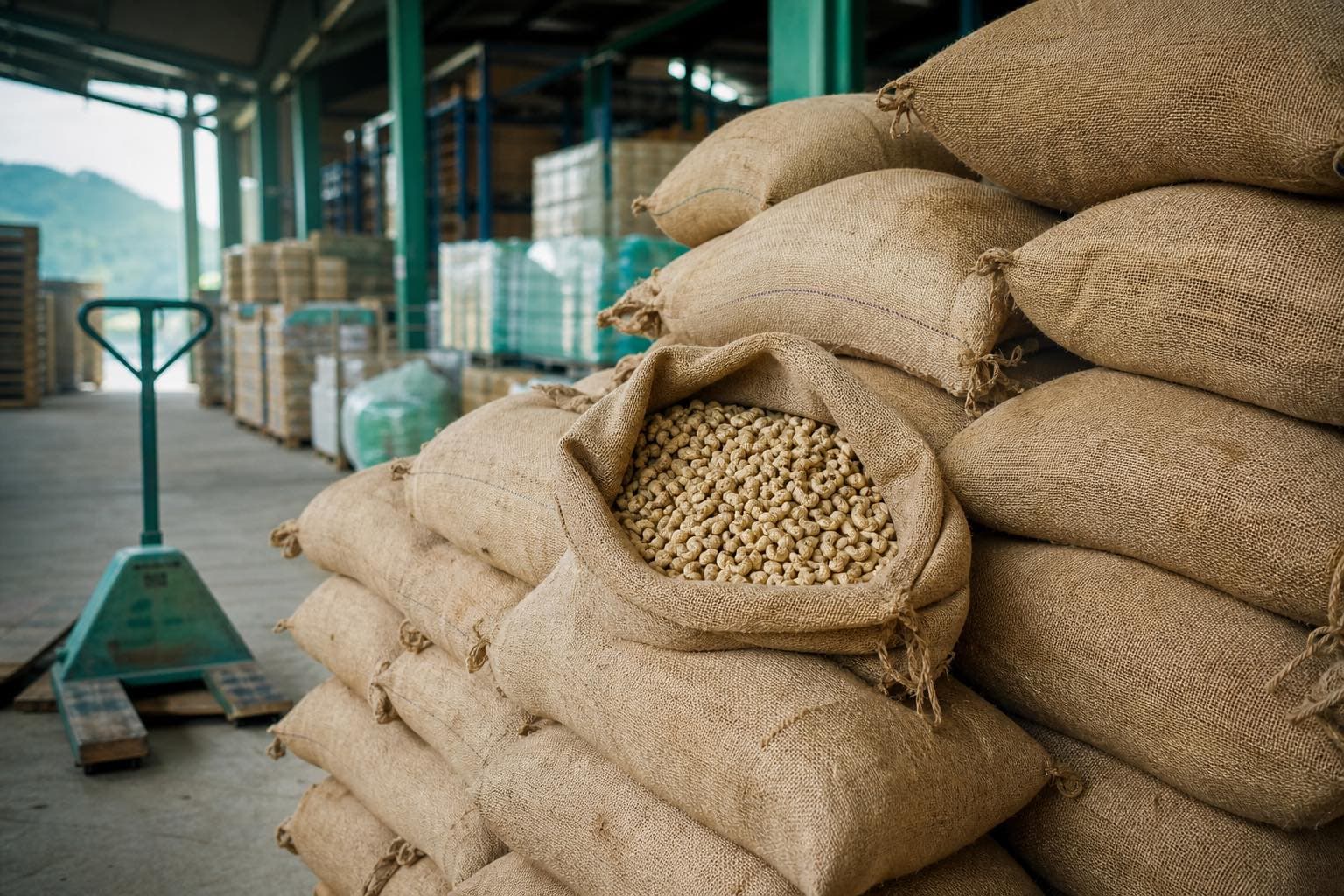
Cambodia holds over half the supply, up in both volume and price
Cambodia is the largest supplier, accounting for 54.2% of volume and 56.3% of value in Vietnam's raw cashew imports. Vietnam brought in 980,700 tonnes from Cambodia worth over $1.7 billion, up 10.3% in volume and 25.9% in value year on year. Value growing at nearly one and a half times the volume growth shows sourcing costs from Cambodia climbing fast, not simply more tonnage moving. The rest of the supply comes from African origins such as Ivory Coast, Tanzania and Nigeria, longer-haul markets that move by sea rather than overland border crossing.
Raw cashew imports from Cambodia grew 10.3% in volume but 25.9% in value, showing sourcing costs rising faster than tonnage.
A trade deficit built on insufficient local raw material
On the other side of the ledger, Vietnam exported close to 373,800 tonnes of cashew kernels in the same period, earning $2.63 billion, up 3.1% in value. Set the two sides together: more than $3 billion spent on raw material against $2.63 billion earned on processed exports, and the industry keeps running a deficit. The reason sits in domestic cashew-growing acreage, which only covers part of what processing plants need to keep running export orders to the US, China and Europe, forcing companies to import large raw-material volumes to hold capacity.
Impact by commodity
For raw cashew sourced from Cambodia, nearly 981,000 tonnes moves mainly by road through Vietnam's southwestern border crossings, so clearance speed and yard capacity at those crossings feed directly into processing plants' raw-material schedules. Volume rising 10.3% a year adds pressure on border infrastructure sized for an older pace of flow.
For raw cashew sourced from Africa (Ivory Coast, Tanzania, Nigeria), this cargo moves by ocean container over a long haul, so freight cost and sailing schedules from West Africa into Vietnamese ports feed directly into raw-material landed cost. Buyers relying on African origins should track this lane more closely, since their share could grow if Cambodian supply hits a volume ceiling.
What cashew shippers should do
- Importers sourcing across the Cambodia border: book raw-material intake earlier than usual as industry-wide volume keeps rising, to avoid congestion at crossings during peak buying season.
- Importers sourcing from Africa: compare landed cost across loading ports in Ivory Coast, Tanzania and Nigeria, since freight-rate spreads between them can offset raw-material price gaps.
- Processors and exporters: weigh the pace of raw-material price growth (25.9% from Cambodia) against kernel export prices to protect margin, since the two are not moving at the same speed.
- Watch the next Customs Department release to see whether raw-material prices keep climbing or level off ahead of the new harvest.
Homexim works both legs of the cashew supply chain: ocean freight for container cargo from West African ports and customs coordination for overland imports through the Cambodia border. To reset your raw-material intake schedule for the final quarter, send us your lane for a quote by loading port.
Sources
Related service: Ocean freight FCL/LCL