

Contents
Lithium-ion batteries packed with equipment (PI 966, Section I) can fly only at a state of charge (SoC) of 30% of rated capacity or less from 1 January 2026, according to VLR. The 2026 IATA edition also bans defective batteries from air transport, and sodium-ion batteries now have their own UN numbers.
UN numbers and the 30% charge cap: what shippers must declare correctly
Lithium metal batteries carry UN 3090/3091. Lithium-ion batteries carry UN 3480/3481. Sodium-ion batteries with an organic electrolyte carry UN 3551/3552, which IATA added in 2025. According to a summary of the IATA 2026 Battery Guidance Document, sodium-ion batteries with an aqueous alkaline electrolyte fall under UN 2795. Battery-powered vehicles have three numbers: UN 3556 for lithium-ion, UN 3557 for lithium metal and UN 3558 for sodium-ion. Batteries packed with or installed in equipment ship under UN 3481 (lithium-ion) or UN 3552 (sodium-ion).
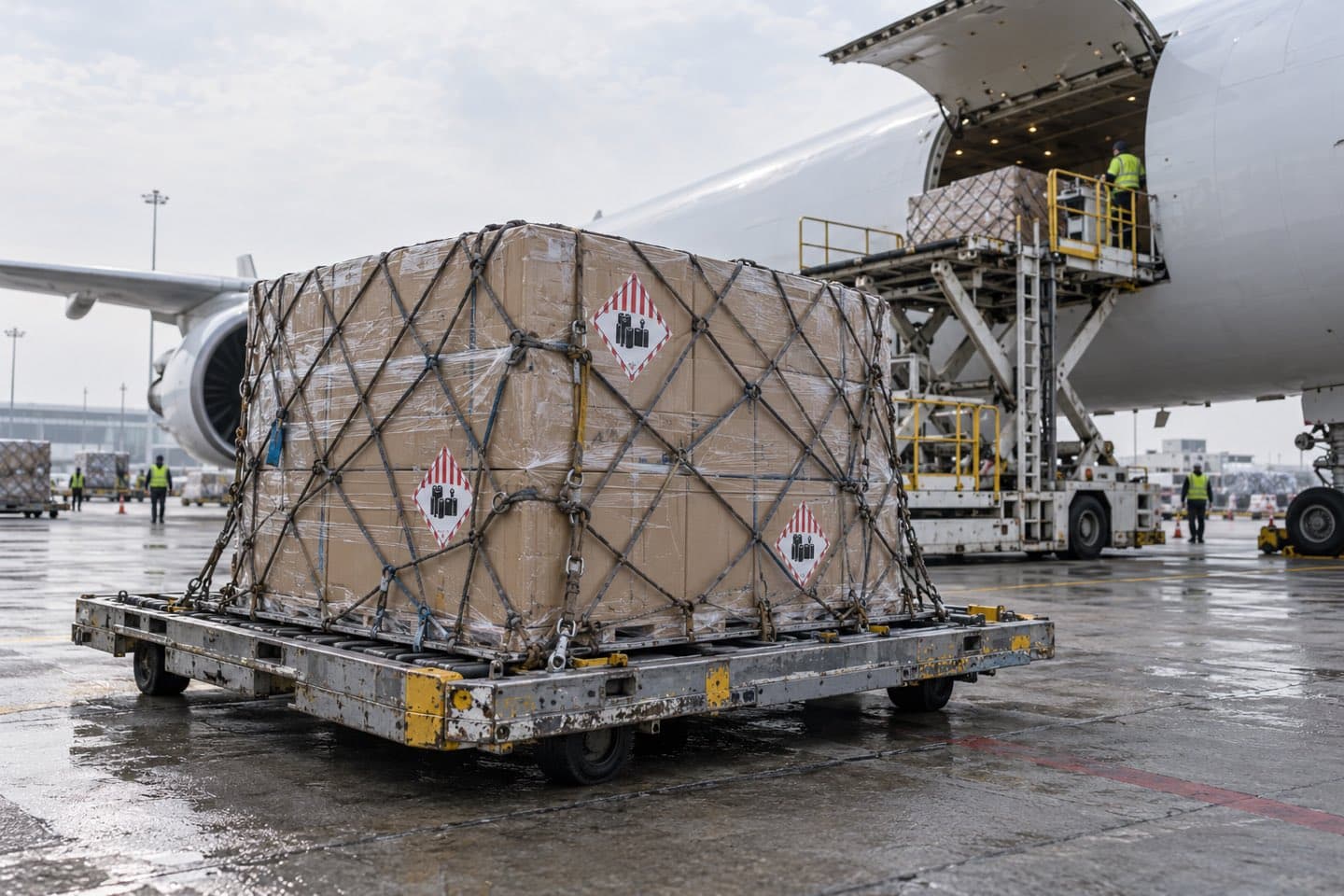
Lithium-ion batteries under UN 3480 and sodium-ion batteries under UN 3551 shipped on their own must be at an SoC of no more than 30% of rated capacity. They cannot go on passenger aircraft, and packages must carry the "Cargo Aircraft Only" label. Lithium-ion batteries packed alone under PI 965 face the same 30% cap. To ship at a higher charge, the shipper needs approval from both the state of origin and the state of the operator (Special Provision A331).
For lithium-ion batteries packed with equipment (PI 966, Section I), the 30% cap applies from 1 January 2026. According to VLR, PI 966 Part II applies the same limit to batteries above 2.7 Wh. Vehicles with batteries above 100 Wh must be at an SoC of 30% or less, or show no more than 25% remaining capacity. Anything above these levels needs approval from the competent national authority.
Misdeclare the SoC and the carrier or cargo handler may refuse the shipment (offload).
UN 38.3 test documentation is also mandatory. Manufacturers or distributors need a test summary for most cells, batteries and devices. Forwarders must confirm a shipment has passed testing before accepting the booking, but they do not test batteries themselves.
Damaged and defective batteries: barred from aircraft
IATA 2026 bans air carriage of lithium-ion or sodium-ion batteries in either of two cases. The manufacturer has identified a safety defect in the battery, or the battery is damaged in a way that could cause overheating, fire or a short circuit. The ban also covers batteries inside equipment recalled for a battery safety defect.
A single battery in this category is enough to keep the whole consignment off an aircraft.
Impact by sector
**Electronics and battery-powered devices.** This group is hit hardest. Whether shipping batteries, power banks or battery-powered devices, shippers must declare the right UN number and SoC.
For passengers, rules from the Civil Aviation Authority of Vietnam take effect on 1 July 2026: each person may carry at most two power banks in hand luggage. Power banks may not be recharged on board, nor used to charge other devices during the flight. Lithium-ion power banks of 100-160 Wh need airline approval.
**Electric vehicles and energy storage.** According to VLR, companies in this group need to update product documentation to match the new rules. For vehicles with batteries above 100 Wh, they must watch both the 30% SoC cap and the 25% displayed-capacity threshold. Documents must state the UN number, the UN 38.3 test summary and the charge level at shipment. Batteries or devices recalled for battery defects cannot go by air.
**New sodium-ion batteries.** Besides UN 3551/3552 and UN 3558 for vehicles, sodium-ion batteries under PI 977/978 are not yet bound by an SoC limit like lithium-ion, but IATA recommends keeping them at 30% or below. According to VLR, the IATA DGR 2027 edition will add hybrid batteries, meaning batteries containing both lithium-ion and sodium-ion cells, and will revise the rules on sodium-ion and on packing prototypes. Amendment 24 of the UN Recommendations (UN Model Regulations, 2025) already covers hybrid batteries.
What shippers should do now
- Check the UN 38.3 test summary for each battery and device model before booking. Forwarders will ask for it before accepting the cargo.
- State the SoC and UN number on shipping documents. A wrong SoC can lead the airline to offload the entire consignment.
- Separate batteries shipped alone (UN 3480, UN 3551) from batteries packed with or installed in equipment (UN 3481, UN 3552) and from battery-powered vehicles (UN 3556, 3557, 3558).
- Ask the forwarder and airline before booking, especially for vehicles with batteries above 100 Wh, sodium-ion batteries or prototypes.
Homexim handles air freight for battery cargo, from classification checks to booking with the airline. If the shipment also needs customs clearance, shippers can cross-check the customs documentation checklist so the transport and declaration files match.
Sources
Related service: Air freight