

Contents
Vietnamese exports have faced 327 trade remedy investigations across 27 markets as of mid-September 2026. The first nine months of the year brought 27 new cases, more than four above the full-year 2025 total.
Eight new cases opened in the third quarter, from India, South Africa, the Eurasian Economic Union (EAEU), Taiwan, the UK, Malaysia and Türkiye. Building materials exporters should watch one closely: the South African probe into Portland cement.
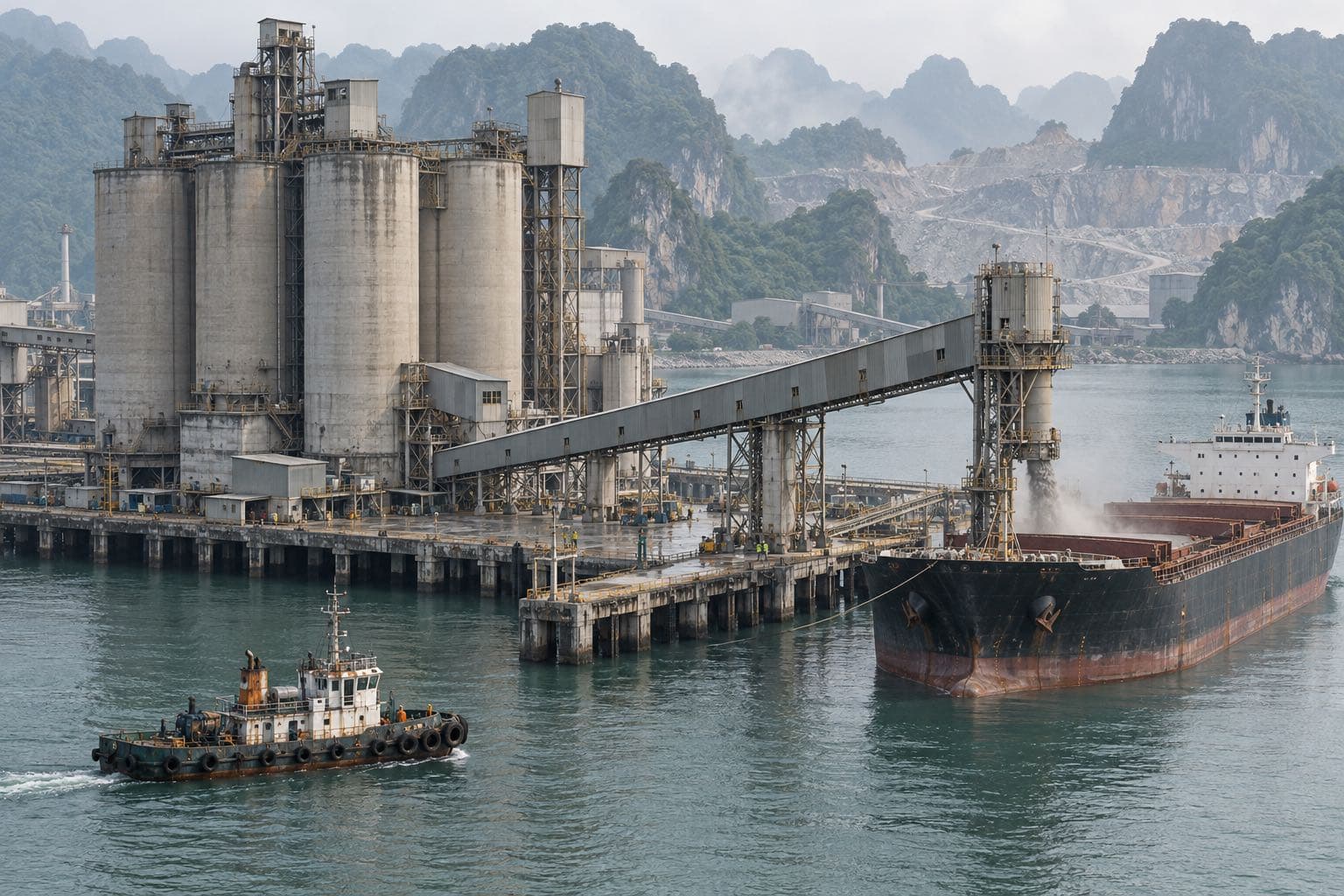
South Africa targets Vietnamese cement
South Africa's International Trade Administration Commission (ITAC) has opened an anti-dumping investigation into Portland cement (subheading 2523.29) from Vietnam and Mozambique. The petitioners are Afrimat Industries South Africa, Intercement South Africa and Dangote Cement South Africa (Sephaku). The alleged dumping margin for Vietnam is 37.04%.
The dumping period of investigation runs from 1 January 2025 to 31 December 2025. The injury period covers 1 January 2023 to 31 December 2025.
Normal value for Vietnam comes from the construction materials price list of the Quang Ninh Department of Construction. Export prices are based on import data from the South African Revenue Service (SARS). ITAC will assess injury cumulatively, combining imports from Vietnam and Mozambique.
ITAC plans on-site verification three to five weeks after companies file their questionnaire responses. The Trade Remedies Authority of Vietnam (Ministry of Industry and Trade) urges exporters to contact ITAC and confirm they have received the application and the investigation questionnaire. Companies should study the requirements closely, file a complete response on time, hire advisers if needed and cooperate fully with investigators.
The authority also asked industry associations to coordinate closely on which companies export the investigated product to the Southern African Customs Union (SACU), and to report any difficulties.
Other cases this quarter
In late September, India opened anti-dumping and countervailing duty investigations into grooved copper tubes. Canada is conducting an expiry review of measures on upholstered chairs. Australia is considering whether to keep anti-dumping duties on galvanized steel.
In the US, the countervailing duty case on air compressors has produced preliminary results. The mandatory respondent received a preliminary subsidy margin of 0.35%, which is de minimis. Eight non-cooperating companies face 74.39% based on adverse facts available. All other companies face 37.2%.
There was good news too. Indonesia ended its polypropylene homopolymer investigation without imposing duties. The EU placed Vietnam on its list of developing countries excluded from the provisional safeguard measure on grain-oriented electrical steel.
Impact by sector
Metals, chemicals, plastics and building materials account for a large share of cases because of overcapacity and fierce price competition, said Le Sy Giang, director of GH Consults. He added that anti-circumvention and origin-fraud measures are also spreading.
Metals face pressure in several markets at once: grooved copper tubes in India, galvanized steel in Australia. Grain-oriented electrical steel is the exception, as the EU excluded Vietnam from its provisional measure.
Chemicals and plastics got a rare break: Indonesia closed the polypropylene homopolymer case with no duties.
Building materials carry the South African cement case, with its alleged 37.04% margin.
Machinery and household goods are also on the list: air compressors in the US, upholstered chairs in Canada. Preliminary subsidy margins in the air compressor case range from 0.35% (de minimis) to 74.39%. Whether a company cooperates with investigators directly determines its result.
What it means for exporters
Being investigated is not the same as being hit with duties, so each case needs its own assessment. But staying out of an investigation means giving up the chance to defend yourself with your own data. The risk also outlasts the duties: keep records and track each case for as long as you trade with that market.
Investigators can demand a shipment's full document set, including invoice, packing list, B/L and C/O, often through the forwarder holding those documents. With anti-circumvention measures spreading, your records only count if the HS code and factory name match across every document for each shipment.
Chu Thang Trung, deputy director of the Trade Remedies Authority of Vietnam, stressed the need for early warnings, standardized data and stronger capacity at both associations and companies.
What to do now
Cement exporters shipping to South Africa should contact ITAC now to confirm they have received the application and the investigation questionnaire, and stay in touch with their association and the Trade Remedies Authority. Name a person in charge, consider hiring advisers and prepare supply records so you can file a complete response on time. On-site verification follows three to five weeks later.
Exporters in other sectors should check their products against this quarter's case list. When choosing markets, look beyond order size and price: trade remedy risk belongs in the calculation.
For every shipment in transit, recheck the document set: HS code and factory name must match across the invoice, packing list, B/L and C/O. The full list is in our document preparation checklist. If you need someone to review your files before the declaration is opened, see our customs clearance services.
Sources
- Trung tâm WTO và Hội nhập VCCI: Phòng vệ thương mại quý III/2026: giữ thị trường bằng năng lực ứng phó
- Trung tâm WTO và Hội nhập VCCI: Nam Phi khởi xướng điều tra chống bán phá giá đối với xi măng Portland nhập khẩu từ Việt Nam và Mozambique
- Báo Lào Cai: Hàng Việt Nam xuất khẩu đang đối mặt với 327 vụ việc điều tra phòng vệ thương mại
Related service: Customs brokerage