

Contents
To import industrial ethanol into Vietnam is, at its core, to build a chemical file rather than a liquor file. Industrial ethanol is denatured alcohol, blended with agents such as methanol, isopropanol, or denatonium benzoate so it can no longer be consumed. It serves as a solvent for paint, cleaning products, and printing ink, and as a feedstock for biofuel. It is a different animal from food-grade or medical ethanol, which is pure and carries a high special consumption tax.
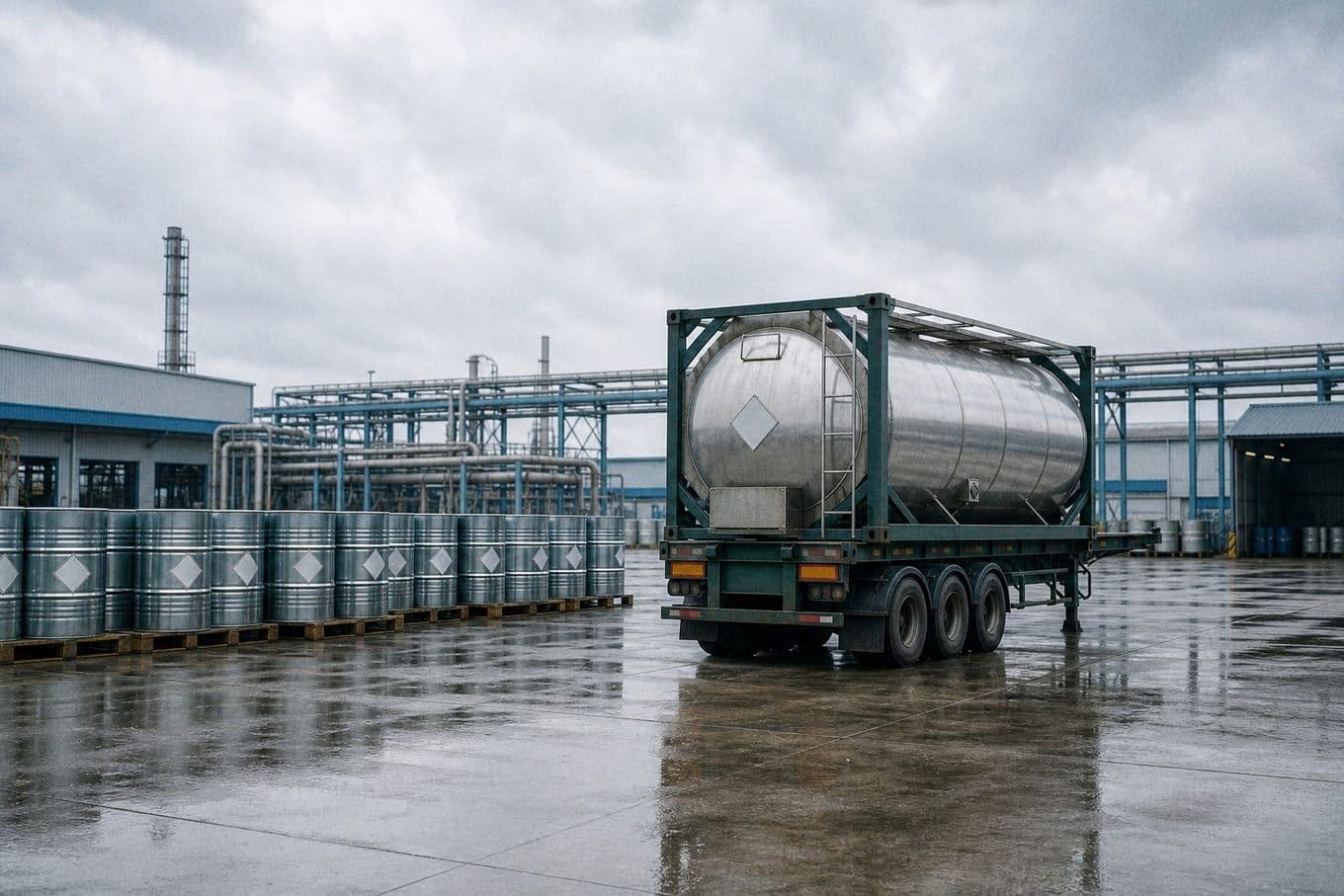
That difference drives the whole procedure. Many first-time owners see the word alcohol, worry about special consumption tax, and miss what actually decides the shipment: the import chemical declaration, the Ministry of Industry and Trade permit, and the documents proving the goods are denatured. This guide covers the HS codes, the duties, the legal framework, the five-step process, and the mistakes a forwarder sees most often on this cargo.
The key point: chemical, not liquor
Denatured industrial ethanol does not carry special consumption tax, because it can no longer be used as a drink. Instead it falls under chemical management, and that is the spine of the whole file. Every document and every step behind it revolves around proving the chemical nature of the goods and complying with chemical rules, not around dodging a liquor tax.
In practice this means the shipment runs on two paper tracks at once. The customs track holds the declaration, the duties, and the risk channel, the same as any cargo. The chemical track holds the import chemical declaration on the National Single Window (VNSW), the check against the chemical schedules of Decree 24/2026/ND-CP, and the ministry permit if the goods fall in the special-control category. The second track is the one that decides whether the ethanol reaches the warehouse on time or sits in the yard.
Denatured industrial ethanol carries no special consumption tax, but it falls under chemical management. That is the spine of the whole file.
HS codes for industrial ethanol
Industrial ethanol sits in heading 22.07. The two lines used most often:
- 2207.20.11: denatured ethyl alcohol at an alcohol strength of 99% by volume or higher.
- 2207.20.19: other denatured ethyl alcohol, at a strength below 99% by volume.
The right line depends on the actual alcohol strength stated in the certificate of analysis. A wrong code drags in the wrong duty and the wrong product policy, so classification must follow the COA of the shipment rather than a guess.
The line that matters even more is denaturing itself. Undenatured ethanol falls under subheading 2207.10, is treated as liquor, and attracts special consumption tax. If the denaturing agent falls short of the threshold, customs can reclassify the goods into that subheading, and the tax difference can wipe out the margin on the entire shipment. For long-term contracts or high-value lots, the safe play is an advance HS ruling from Vietnam customs before the cargo is loaded: it costs extra time for samples and paperwork, but the code is fixed in writing and there is no argument left when the goods arrive.
The duties to compute
Importing industrial ethanol means computing three charges. The exact rates shift with the strength and the tariff in force, so check them against the precise HS code rather than fixing on a single figure:
- Standard preferential import duty: applies to goods without a qualifying certificate of origin.
- Special preferential import duty: applies when a valid C/O comes from a country with a free trade agreement with Vietnam, usually below the standard rate.
- Value added tax (VAT): the standard rate is currently 10%, charged on the value that already includes import duty; confirm the applicable rate under the VAT policy in force when the declaration is filed.
Because the gap between the standard and special preferential rates can be wide, a clean C/O from the supplier is worth demanding at the contract stage.
The C/O form follows the trade lane: form E for China, form D for ASEAN, form AK or AJ and the matching bilateral forms for Korea and Japan. What a forwarder actually scrutinizes is not which form was issued but whether the C/O matches the rest of the file line by line: product name, HS code, invoice number, shipper, and consignee. One mismatch between the C/O and the bill of lading is enough for customs to reject the preference, and the duty snaps back to the standard rate at the moment of clearance.
The legal framework for importing industrial ethanol
The legal framework for this cargo fits into four groups of instruments. Know these four and the logic of the whole procedure falls into place:
- The Law on Chemicals No. 69/2025/QH15, in force from January 1, 2026 and replacing the 2007 law: the foundation of the chemical management regime, setting the duties to declare, classify, and label chemicals placed on the market.
- Decree 26/2026/ND-CP, in force from January 17, 2026 and replacing Decree 113/2017/ND-CP and Decree 82/2022/ND-CP: the instrument closest to an ethanol shipment, governing the import chemical declaration via VNSW and the Ministry of Industry and Trade licensing mechanism; the chemical schedules themselves, covering conditional trading and special control, sit in Decree 24/2026/ND-CP, with detailed guidance in Circular 01/2026/TT-BCT.
- Decree 43/2017/ND-CP on goods labeling, as amended and supplemented: the basis for the Vietnamese supplementary label, covering product name, composition, importing organization, and safety warnings.
- The import-export tariff in force: rates are checked by HS code at the time the declaration is filed, alongside the special preferential schedule of each trade agreement where a valid C/O exists.
The point to remember is that the chemical schedules do not stand still. An amendment can move a substance from the declaration category into the special-control one or back, so last year's shipment is no substitute for checking the instruments in force this year. Before every lot, a forwarder rechecks the MSDS composition against the latest version of the schedules and treats that as a mandatory step, not a one-time exercise.
The five steps to import industrial ethanol into Vietnam
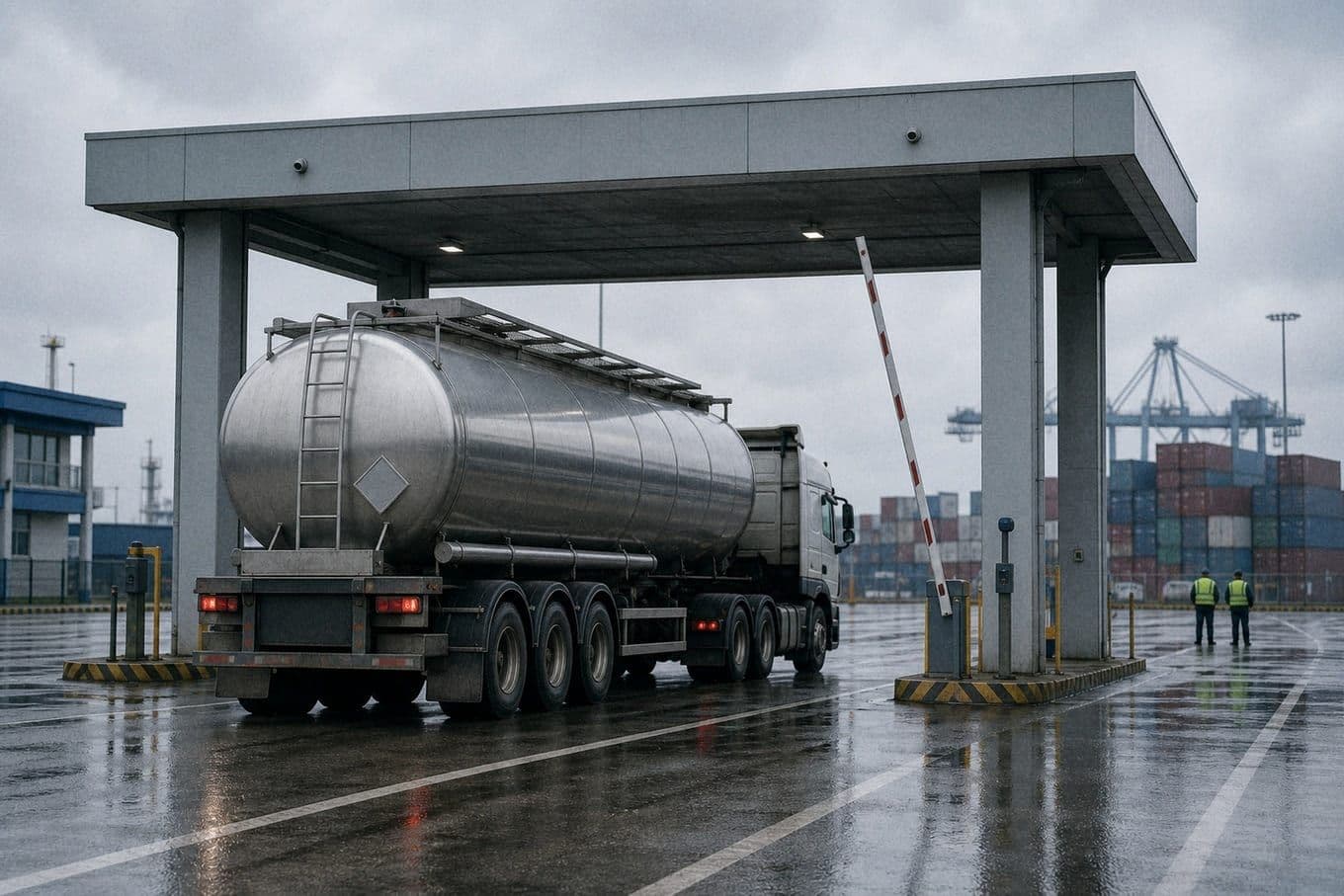
A real shipment of industrial ethanol runs through five steps, with the chemical management piece appearing at the start rather than the end:
- Check the chemical management policy for the item. Ask the supplier for the MSDS, then file the import chemical declaration on the National Single Window (VNSW).
- Match the MSDS composition against the chemical schedules of Decree 24/2026/ND-CP to determine whether the shipment needs a special-control chemical import license from the Ministry of Industry and Trade.
- Register the state inspection and take samples for analysis when the cargo lands, to confirm the composition matches the declaration.
- Transmit the electronic customs declaration through ECUS/VNACCS, wait for the risk channel, and pay the duties.
- Clear the goods and haul them to the warehouse on specialized transport, in line with fire safety rules.
What sets this apart from an ordinary shipment is the first two steps. Wait until the cargo is at the port to begin the chemical declaration or ask about a ministry license, and the shipment will almost certainly sit and wait.
On timing, these are the safety margins Homexim holds for clients. Demand the MSDS and COA at contract signing, because a supplier can take one to two weeks to issue the full versions. File the chemical declaration on VNSW at least several days before the vessel arrives: a clean file gets an automatic response quickly, but one wrong field means correcting and waiting all over again. A special-control chemical import license, where required, is measured in weeks rather than days, so it must start before the cargo is even loaded. Sampling and analysis at the port usually add a few more working days before the result is in hand to complete clearance.
On the VNSW declaration itself, the four errors below account for most of the rejected files Homexim has handled:
- A chemical name that does not match the nomenclature in the schedules: filing the trade name of the product instead of ethanol, or omitting that it is denatured.
- A wrong or missing CAS number: ethanol is 64-17-5, and entering the denaturant's number or leaving the field blank stalls the file.
- A declared strength that differs between the COA and the MSDS: once the documents disagree, the receiving agency is entitled to demand an explanation.
- Filing after the cargo has already arrived: the chemical declaration must be completed before clearance, so starting it while the goods sit in the yard simply adds storage charges to the cost of goods.
The document set
Beyond the familiar commercial pack, an industrial ethanol shipment needs a chemical-specific group of documents:
- Commercial documents: the customs declaration, commercial invoice, packing list, B/L or AWB, C/O, and the foreign trade contract.
- MSDS in English with a Vietnamese translation, clearly showing the composition and the denaturing agent.
- Confirmation of the import chemical declaration on VNSW.
- COA, the certificate of composition analysis, used to classify the HS code and to cross-check at sampling.
- A chemical import license from the Ministry of Industry and Trade, if the composition falls in the special-control category under the rules in force.
Within this set, the MSDS deserves the most attention. A proper GHS-format MSDS has 16 sections, and section 3 on composition is the first place every agency looks: it must state the ethanol percentage plus the name and ratio of the denaturing agent. The one-page summary some suppliers send for convenience cannot support the declaration.
One case Homexim handled: two containers of ethanol arrived at Hai Phong with the commercial documents complete, but the MSDS was an abridged version with no denaturant ratio. No chemical declaration meant no clearance. Getting the supplier to reissue the full document took close to a week, and for that entire week container and yard charges accrued daily. The cheapest lesson in this trade: read the MSDS before the cargo is loaded, not after it lands.
Three points that trip a shipment up
The three points below are where an industrial ethanol shipment most often runs into trouble, and each can be settled at the ordering stage:
- Ask the manufacturer to state the denaturing ratio clearly. If the ratio falls short of the denaturing threshold, customs may reclassify the goods as food-grade alcohol, which brings a large tax exposure.
- Prepare a complete Vietnamese supplementary label under the goods-labeling rules: product name, importing organization, composition, usage instructions, and safety warnings. A missing label is the kind of fault a physical inspection catches immediately.
- Ethanol is highly flammable and volatile. Hire a carrier licensed for dangerous goods, and use a warehouse that meets fire safety standards, with ventilation and a spill containment bund.
All three share the same arithmetic: fixing them at the ordering stage costs close to nothing, while fixing them once the cargo is at the port is priced in storage charges, declaration amendments, and sometimes a tax reassessment. This is not a cargo that forgives improvisation.
Industrial ethanol is not a hard item to clear, but it punishes anyone who works the steps out of order. Homexim checks the chemical policy by HS code and handles the VNSW declaration and the ministry license before the cargo arrives, so your ethanol shipment is not left waiting on paperwork at the port.
Related service: Customs brokerage