

Contents
Importing chemicals into Vietnam is hard not because of the paperwork volume, but because one product can fall under any of four management regimes: declaration only, conditional trading, special control, or an outright ban. Change one additive in the formula and the regime can change with it, along with the document set and the waiting time.
2026 makes this cargo even less forgiving: a new Law on Chemicals and its guiding decrees replaced the entire old framework in January 2026, so much of the guidance still circulating online is out of date. This guide follows the order of a real shipment: determine the regime, check CAS and HS codes, compute the duties, then move to declaration, permits, and clearance.
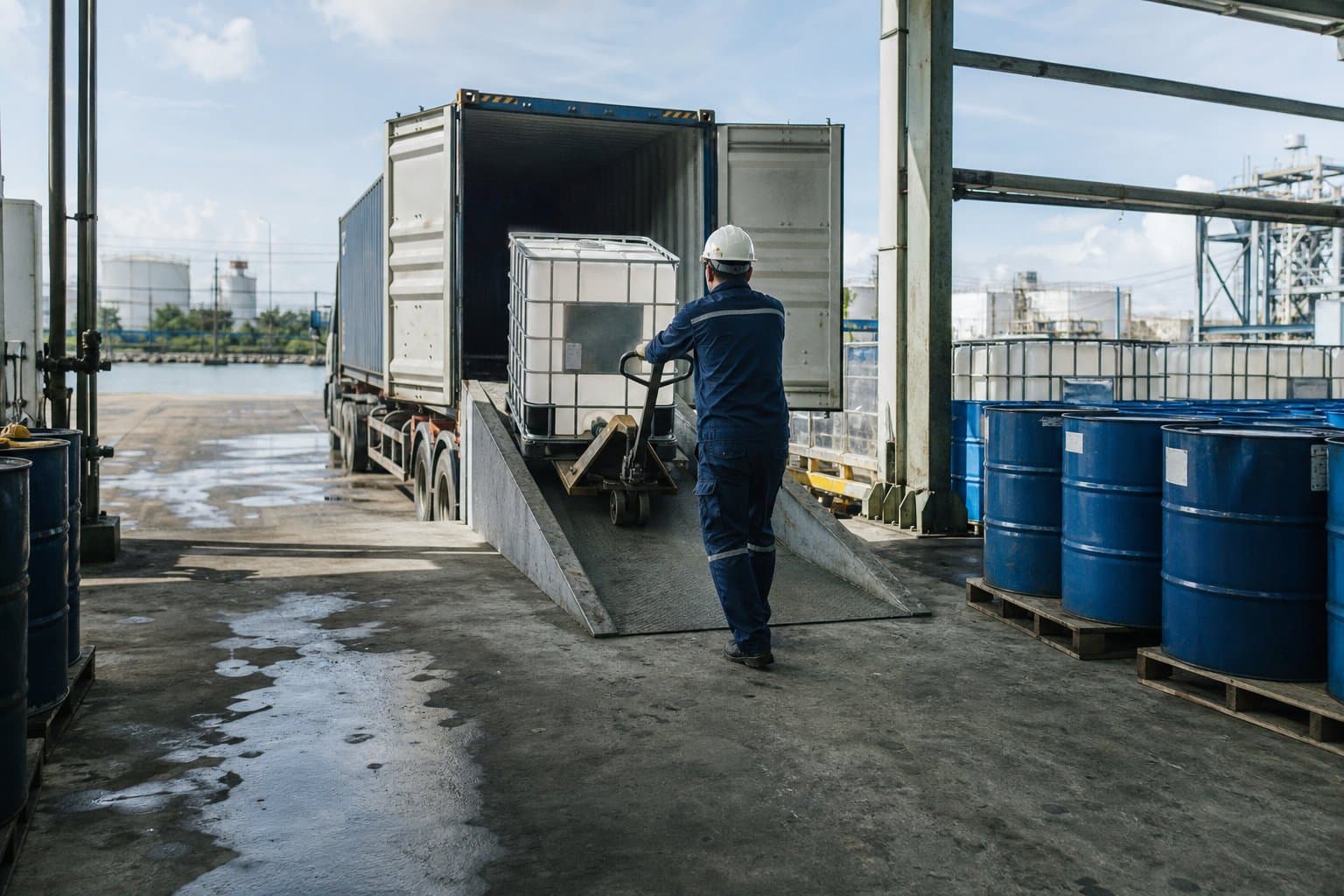
The key point: one product, four management regimes
The first task on any chemical shipment is to determine which regime the goods fall under, and it must be done before the contract is signed, not after. Under the framework now in force, imported chemicals split into four groups:
- Chemicals subject to declaration: substances under HS Chapters 28 and 29. They are declared on the National Single Window (VNSW) before customs clearance; a clean file gets an automatic response quickly.
- Conditional-trading chemicals: importing them for resale requires an eligibility certificate issued by the competent authority.
- Specially controlled chemicals: a new category under the 2025 Law on Chemicals that absorbs industrial precursors and the previously restricted chemicals. These need an import or export permit before the cargo arrives.
- Banned chemicals: not permitted for import, except in narrow cases licensed separately under the regulations.
Getting the regime wrong is the most expensive mistake on this cargo. Sign the contract, then discover the substance is specially controlled, with a permit measured in weeks while the goods are already on the water: the cargo-before-paper scenario becomes almost certain. Every chemical shipment should start at the desk, not at the vessel booking.
MSDS and HS codes: the CAS number decides, not the trade name
The management regime of a chemical shipment is determined by the CAS number of each component, not by the trade name on the label. A name like multi-purpose solvent or cleaner X100 tells you nothing: under the same name, two suppliers can blend two different formulas. A CAS number is unique to each substance, ethanol is 64-17-5, toluene is 108-88-3, and every control schedule is checked against that exact string of digits.
The reliable method: ask the supplier for the full GHS-format MSDS at the quotation stage, open section 3 on composition, list every CAS number with its percentage, and check each one against the schedules issued with the decrees in force. For mixtures, check every component: a single substance in the formula that sits on the specially controlled schedule at the regulated threshold pulls the whole shipment into that regime, even at a few percent.
The management regime of a chemical shipment is determined by the CAS number of each component, not by the trade name on the label.
The HS code comes after the CAS check. Inorganic chemicals sit in Chapter 28, organic chemicals in Chapter 29, while preparations and mixtures usually land in Chapter 38. Classification follows the COA of the actual shipment: purity, physical form, blend composition. A wrong code drags in the wrong duty and the wrong product policy, so for long-term contracts or high-value lots, an advance HS ruling from Vietnam customs is cheap insurance against a reclassification after arrival.
Import duty, VAT and C/O preferences for chemicals
A chemical shipment into Vietnam carries two main charges: import duty by HS code and value added tax. Check the exact rates against the tariff in force when the declaration is filed, rather than reusing figures from an old article:
- Standard preferential import duty: many basic chemical lines in Chapters 28 and 29 carry low rates, but the spread between lines within the same chapter is wide, so the full 8-digit code matters.
- Special preferential import duty: applies with a valid C/O under a free trade agreement, form E for China, form D for ASEAN, AK or AJ for Korea and Japan. Many chemical lines drop to very low or zero rates with a clean C/O.
- Value added tax: the standard rate is currently 10%, charged on the value that already includes import duty; confirm the applicable rate under the VAT policy in force at filing.
A field note on chemical C/Os: the product name on the C/O is often written as the trade name while the invoice carries the chemical name, or the other way round. Customs compares line by line, and one mismatch across the C/O, the invoice, and the bill of lading is enough to lose the preference on the whole lot. Agree a single naming convention with the supplier at the ordering stage.
The legal framework: Vietnam's chemical rules changed in 2026
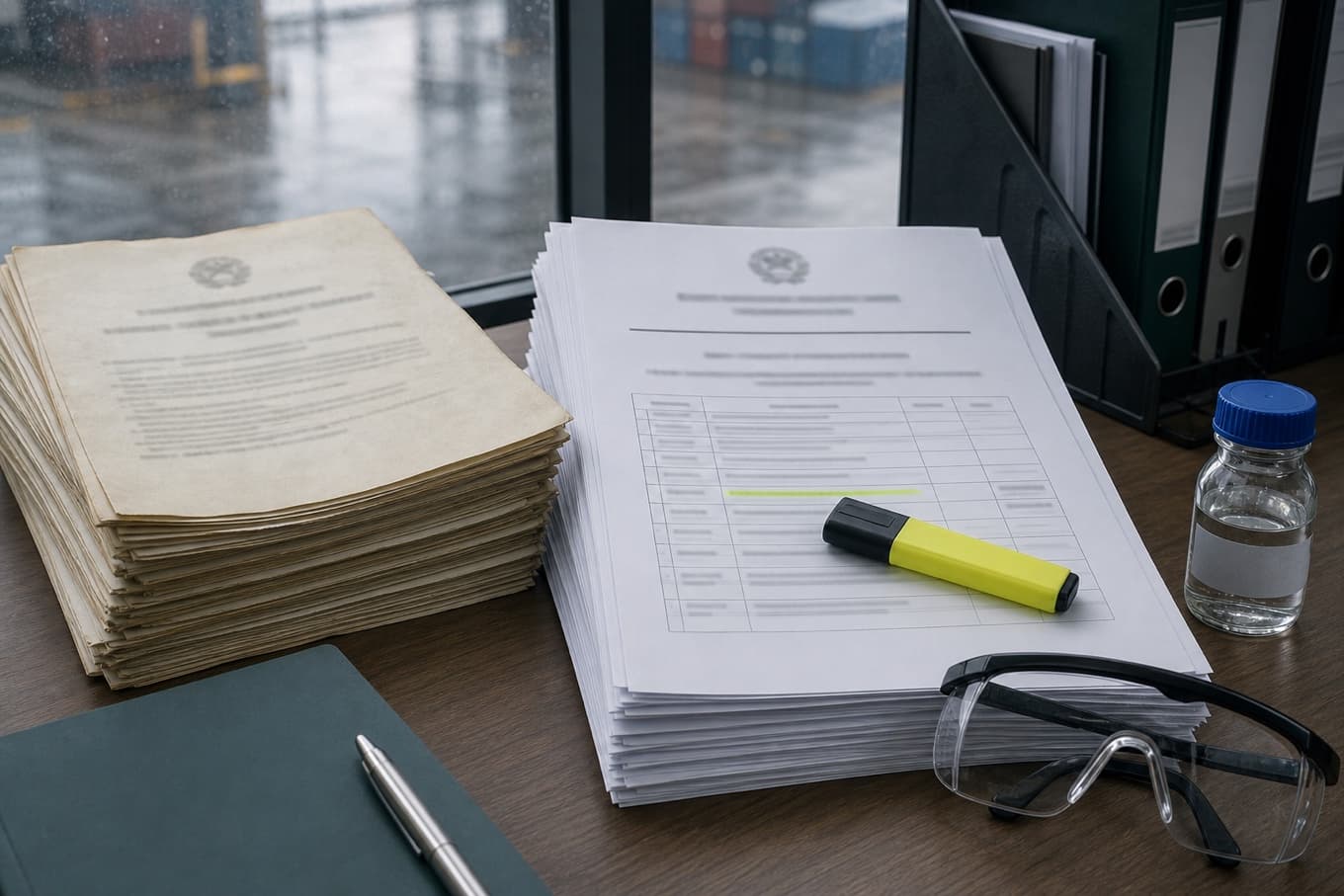
From January 1, 2026, the Law on Chemicals No. 69/2025/QH15 took effect, replacing the 2007 law after almost two decades. The implementing instruments changed in the same month:
- Decree 26/2026/ND-CP: the instrument closest to import shipments, governing the chemical declaration via the National Single Window and the permit mechanism for specially controlled chemicals. It replaced Decree 113/2017/ND-CP and Decree 82/2022/ND-CP from January 17, 2026.
- Decree 24/2026/ND-CP: issues the chemical schedules, where each CAS number is checked to determine the regime of a substance.
- Circular 01/2026/TT-BCT: provides the forms and procedural details.
The trap of the transition period: most guidance still circulating online was written around Decree 113/2017 and its old appendices, and that decree is no longer in force. Checking a schedule through an outdated article is a real risk, because a substance may have moved between categories. Permits and certificates issued under the old rules generally remain valid until their stated expiry under the transitional provisions, but a new shipment should be checked against the new schedules from the start. If you import through a local agent, this is exactly the check your forwarder should run for you before anything is signed.
Five steps to import chemicals into Vietnam
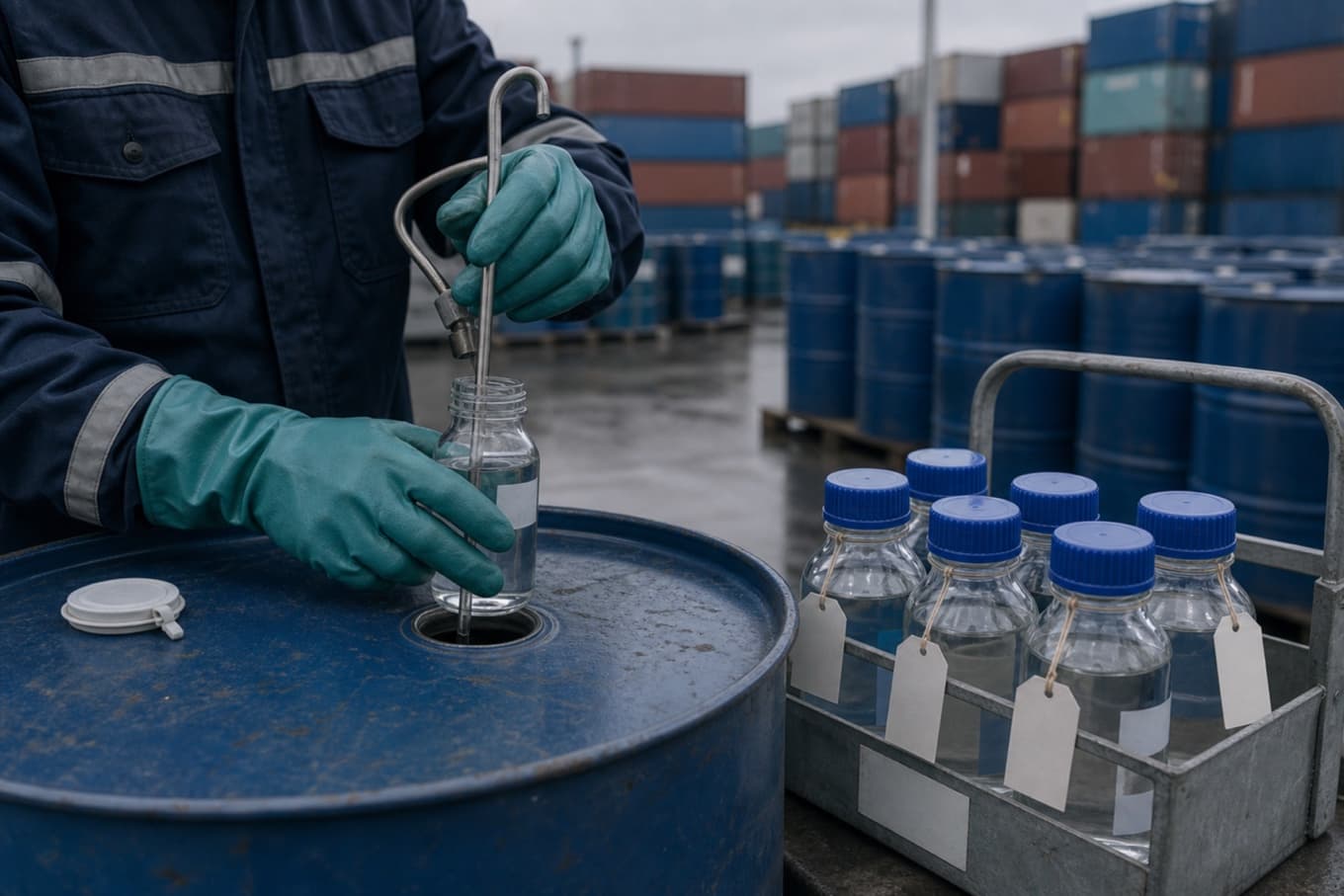
A standard chemical shipment runs through five steps, and the first two must be finished before the cargo is loaded:
- Match every CAS number in the MSDS against the schedules in force to fix the management regime, ideally before the contract is signed. This step decides the entire route that follows.
- File the chemical import declaration on the National Single Window for goods under Chapters 28 and 29. The file includes the commercial invoice and the MSDS; shipments under 10 kg are exempt under the current rules.
- Obtain the import permit if the goods are specially controlled, including industrial precursors. The statutory processing time runs in working days, but with document preparation added, budget several weeks.
- Transmit the customs declaration through ECUS/VNACCS on arrival, wait for the risk channel, and pay the duties under the fixed HS code.
- Clear the goods and haul them on transport licensed for dangerous cargo where the chemical is flammable, corrosive, or toxic, into a warehouse that meets fire safety standards.
On timing: the declaration response is automatic and therefore fast, but only when the MSDS is right, since one wrong field means starting over. The permit for specially controlled chemicals must be in hand before the vessel arrives, because without it there is no path to clearance. A first-time supplier can take one to two weeks to issue the full MSDS and COA, so in practice the paper chain starts at the price negotiation.
The document set
The complete file for a chemical shipment is the familiar commercial pack plus a chemical-specific group:
- The full GHS-format MSDS with a Vietnamese translation: the source document for the CAS check, the declaration, and any inspection.
- The COA of the shipment: the basis for HS classification and for cross-checking strength and composition.
- Confirmation of the chemical import declaration on the National Single Window.
- The specially-controlled-chemical import permit or the eligibility certificate, where the goods fall in those categories.
- Commercial documents: the foreign trade contract, commercial invoice, packing list, B/L, and the C/O where a duty preference is claimed.
The principle that ties the set together: every figure and every name must match. The chemical name on the MSDS matches the invoice, the strength on the COA matches the MSDS, the declared CAS number matches the permit. Every agency cross-checks, and every mismatch costs an explanation and a wait.
Common mistakes when importing chemicals into Vietnam
The three mistakes below account for most of the delayed chemical shipments a forwarder sees, and each can be prevented at the ordering stage:
- Checking the regime by trade name instead of CAS number: the substance sits on a control schedule unnoticed, and the gap surfaces only when customs asks for a permit while the cargo is already in the yard.
- A one-page abridged MSDS with no composition section: it cannot support the declaration, and waiting for the supplier to reissue the full version costs days to a week.
- Starting the declaration after the cargo has landed: the declaration must be completed before clearance, and every waiting day adds container and yard charges to the cost of goods.
To see how these mistakes play out on a real product, industrial ethanol is the textbook case: a single denaturing additive decides whether the shipment is treated as a chemical or as liquor with special consumption tax, and an MSDS missing the denaturant ratio once left two containers at Hai Phong for almost a week. The full story is in our guide to importing industrial ethanol.
Chemicals punish anyone who works the steps out of order, and reward anyone who starts early. Homexim checks every CAS number against the schedules in force, handles the declaration and the permits before the cargo is loaded, and runs the customs clearance end to end on arrival, so your chemical shipment is not left waiting on paperwork at the port.
Related service: Customs brokerage