

Contents
Importing forklifts into Vietnam differs from importing ordinary machinery on exactly one point: a forklift driven by a motor is classified as specialized machinery, a category that must be registered for a technical safety inspection with the Vietnam Register before customs clearance. Treat it as plain machinery, file the declaration, then discover the inspection requirement afterwards, and the lesson will be priced in daily container storage charges.
The file for a forklift shipment is therefore shaped by two questions that should be answered before the contract is signed: what type of truck it is, electric, diesel, or hand-operated; and whether it is new or used. Answer those two correctly and you have the HS code, the duty, the inspection obligation, and whether the unit is even allowed in.
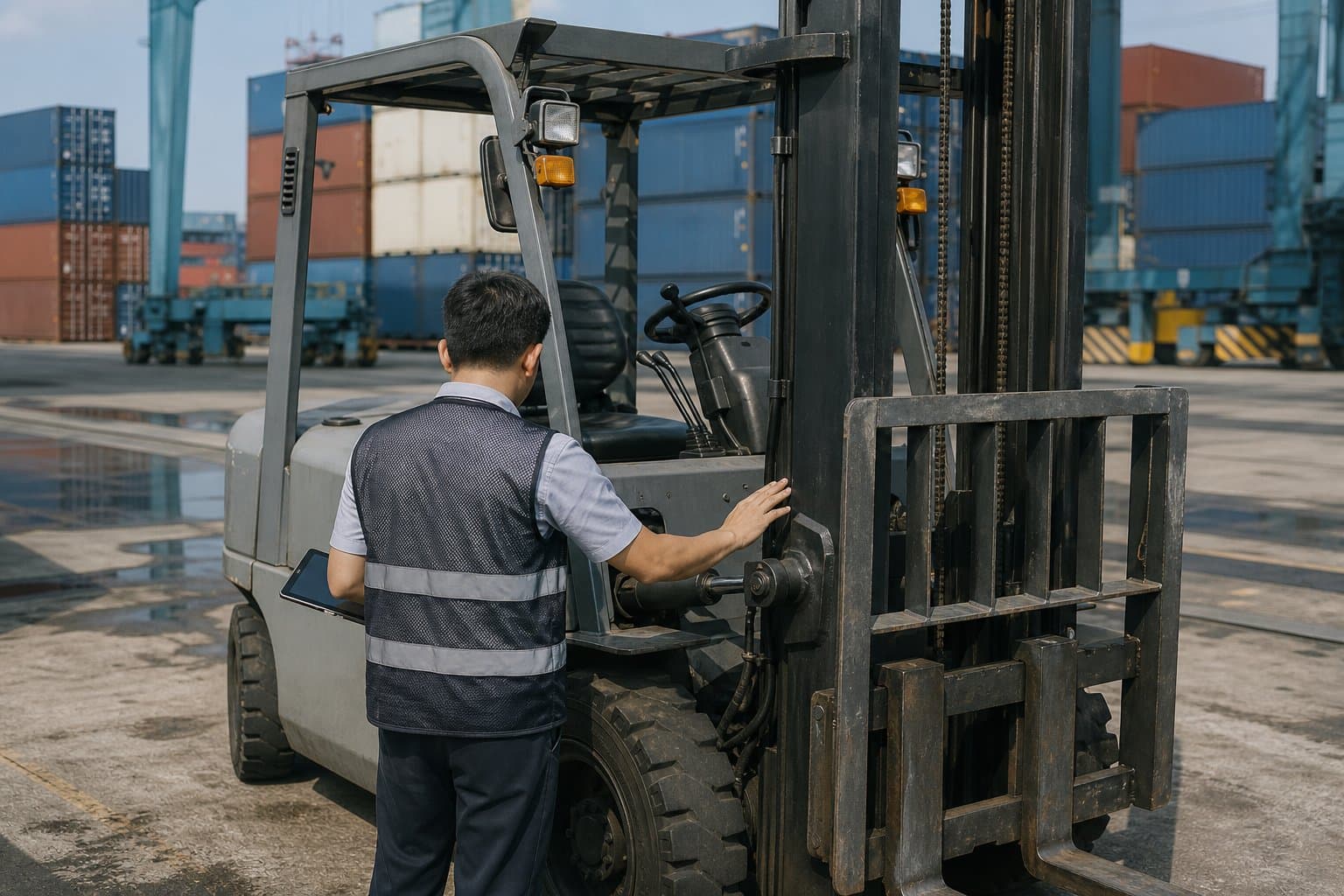
The key point: a motorized forklift is a registered vehicle
A forklift with a motor, whether electric or diesel, counts as specialized machinery under Vietnamese transport rules: it must be registered for a technical safety and environmental inspection with the Vietnam Register, and customs will not release it until the certificate is issued. A hydraulic hand pallet truck operated entirely by human power, by contrast, needs no inspection and clears like any ordinary mechanical goods.
The line is drawn at the motor, not at the word forklift: motorized means inspection, purely manual means none. The line matters because the market is full of semi-electric pallet trucks that look almost identical to manual ones but carry a small electric motor for lifting or travel. That one motor is enough to move the whole unit into the inspected category.
The line is drawn at the motor, not at the word forklift: motorized means inspection, purely manual means none.
One note from actual clearance work: there was a period when Vietnam customs required quality inspection for everything under heading 84.27, including hand pallet trucks, based on the old product list of Circular 41/2018/TT-BGTVT. That list has since been replaced by Circular 12/2022/TT-BGTVT, but the lesson stands: the goods description on the declaration should state clearly that the truck is operated entirely by human power with no motor fitted, backed by the catalogue, so the shipment is not read into the inspected category.
HS codes for forklifts by type
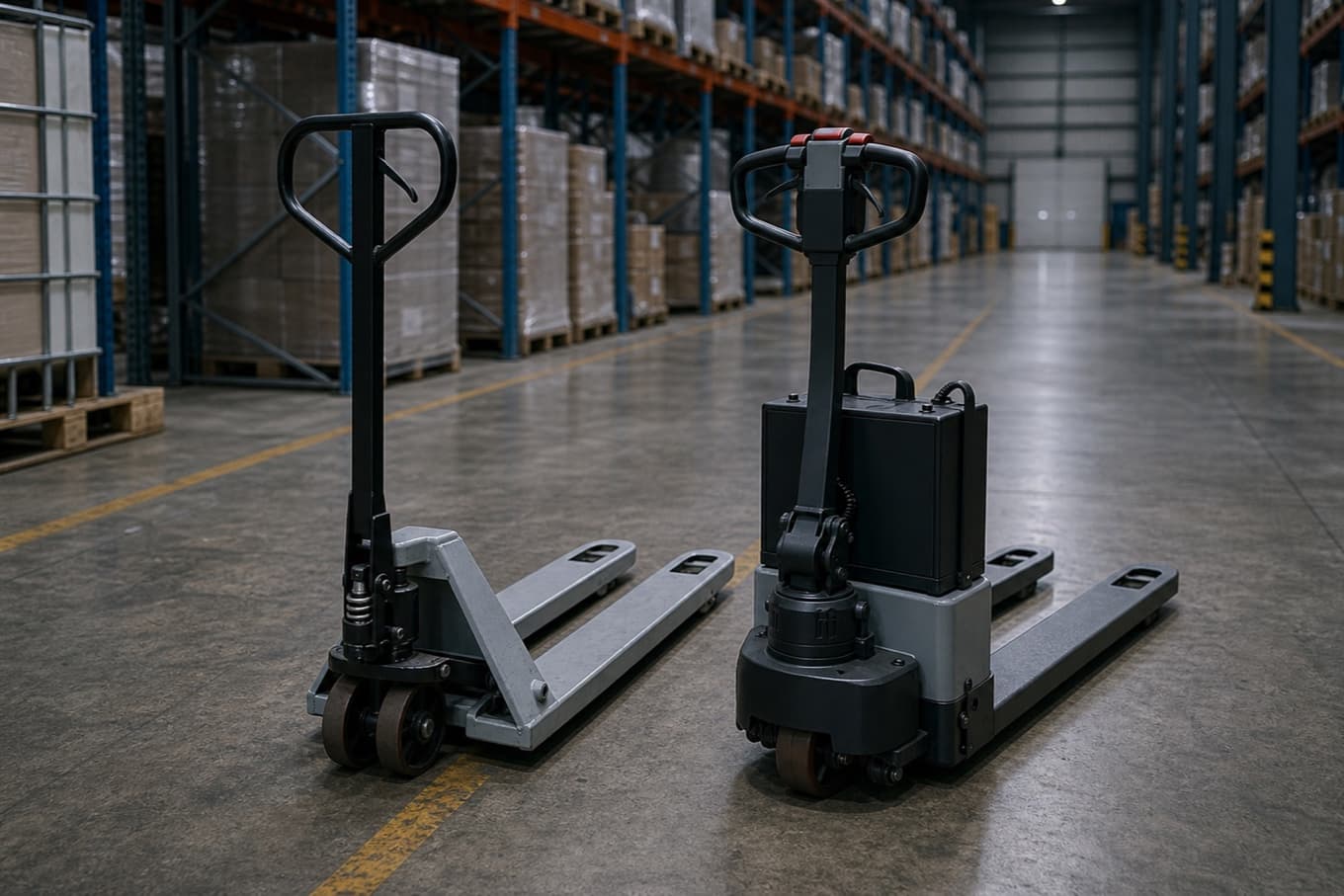
Forklifts sit in heading 84.27 of the tariff. The three lines seen most often:
- 8427.10: self-propelled trucks powered by an electric motor, the standard choice for indoor warehouses.
- 8427.20: other self-propelled trucks, covering diesel, petrol, and gas units, usually working in open yards.
- 8427.90: other trucks, including hydraulic hand pallet trucks with no motor.
The subheading drives two things. First, product policy: the two self-propelled lines carry the inspection obligation, while purely manual trucks under 8427.90 do not. Second, duty: each eight-digit line has its own import duty and FTA preferential rate, so the wrong line means the wrong tax.
Classification should follow the actual construction of the truck as shown in the catalogue: power source, drive, lifting capacity. For large orders or hybrid models that are hard to place, an advance HS ruling from Vietnam customs before loading fixes the code in writing and removes the argument at the port.
Duties, FTA forms, and the rules on used forklifts
On tax, a forklift shipment carries two main charges: import duty and VAT, with VAT at the standard rate of currently 10%. For import duty, do not memorize a single figure: rates differ between the eight-digit lines within heading 8427 and move with each tariff revision, so check the tariff in force against the exact code when the declaration is filed.
The money sits in the special preferential rates. Most forklifts entering Vietnam ship from China, Japan, Korea, and ASEAN, all lanes covered by free trade agreements. A valid form E for Chinese cargo or form D for ASEAN cargo usually pulls the duty well below the standard rate, down to zero on many lines. The condition is that the C/O matches the rest of the file detail by detail: product name, HS code, invoice number, shipper, and consignee. One mismatch against the bill of lading is enough for customs to reject the preference.
Used forklifts can be imported, with conditions. A used forklift is used machinery under chapter 84 and falls under Decision 18/2019/QD-TTg, as amended by Decision 28/2022/QD-TTg: the unit must be no more than 10 years old counted from the year of manufacture to the year of import, imported for the importer's own production, and covered by an inspection certificate from a designated assessment body. The general rules on used machinery imports apply to forklifts in full. The quick check before paying a deposit: match the year of manufacture on the frame plate against the papers, because a unit past 10 years has practically no legal route into Vietnam.
The legal framework for importing forklifts into Vietnam
The legal framework fits into four instruments, and notably most of them changed within the last few years:
- Circular 89/2015/TT-BGTVT, amended by Circular 23/2020/TT-BGTVT: the procedure for quality, technical safety, and environmental inspection of specialized machinery, including imported units.
- Circular 12/2022/TT-BGTVT, amended by Circular 62/2024/TT-BGTVT: the list of transport-sector goods subject to safety control, replacing Circular 41/2018/TT-BGTVT since August 2022.
- QCVN 13:2023/BGTVT, issued under Circular 45/2023/TT-BGTVT and effective from July 1, 2024: the national technical regulation on safety quality of specialized machinery, replacing QCVN 13:2011/BGTVT.
- Decision 18/2019/QD-TTg, amended by Decision 28/2022/QD-TTg: the conditions for importing used machinery and equipment, applied to used forklifts.
A detail worth attention: many guides online still cite Circular 41/2018/TT-BGTVT and QCVN 13:2011 as current law, when both have been replaced. Building a file on an outdated article will not necessarily stall the shipment by itself, but citing an expired instrument when explaining your case to a regulator weakens your own position. Checking the validity status of each instrument before every shipment takes minutes.
The five steps to import a forklift into Vietnam
A motorized forklift moves through five steps, with the inspection woven into the customs flow rather than sitting apart from it:
- Determine the type and the policy: motorized or purely manual, new or used; that fixes the HS code, the inspection obligation, and the age condition for used units.
- Register for the quality inspection with the Vietnam Register: file the registration form with the truck's technical documents and receive a registration number, which the customs declaration will reference.
- Transmit the customs declaration through ECUS/VNACCS when the cargo arrives, pay the duties, and request release of the goods to your own warehouse pending the inspection result.
- Physical inspection: the inspector matches the chassis number, engine number, and specifications against the registered file; used units are additionally checked against the age and condition assessment certificate.
- Receive the quality certificate, submit it to customs to complete clearance, and put the truck into service.
On timing, file the inspection registration several days before the vessel arrives, because the registration number is needed when the declaration is transmitted. The bonded-release mechanism works as it does for other goods under specialized inspection: the truck waits at your warehouse instead of the port, but cannot be put to work until the certificate is issued. The physical inspection is usually scheduled within a week, and a clean file runs from registration to certificate in about two weeks.
The document set
The file for a forklift shipment has two layers: the familiar commercial pack and the inspection-specific documents:
- The registration form for quality, technical safety, and environmental inspection, filed with the Vietnam Register.
- Technical documents for the truck: the catalogue or specification sheet showing model, chassis number, power source, and lifting capacity.
- The manufacturer's certificate of quality (C/Q), or equivalent records for used units.
- Commercial documents: the contract, commercial invoice, packing list, B/L, and C/O where an FTA preference is claimed.
- The customs declaration; used units additionally need the assessment certificate covering age and remaining performance.
Within this set, the technical documents are the most underrated item. The physical inspection is essentially a matching exercise between paper and machine: the chassis number stamped on the truck must match the registration character for character, and the model on the plate must match the catalogue. Used trucks bought through traders, with worn plates or missing papers, are the group that stalls most often at this step.
Common mistakes when importing forklifts
The three mistakes below account for most of the delayed forklift shipments Homexim has been called in to fix:
- Confusing semi-electric pallet trucks with manual ones: a single electric motor puts the unit in the inspected category, and declaring it as a manual truck stops clearance.
- Missing technical documents or a chassis number that does not match at physical inspection: when the registered file and the actual truck disagree, the registration starts over.
- Buying a used truck past 10 years of age: over the limit under Decision 18/2019/QD-TTg means the unit does not qualify for import, and a deposit already paid is close to unrecoverable.
A typical scenario in this trade: a client ordered a container of 20 pallet trucks from China, six of them semi-electric with a small lifting motor, all declared under 8427.90 as manual trucks. Customs checked the catalogue, split the six units into the specialized-machinery category, and required a supplementary inspection registration. The shipment lost nine working days to the registration and physical inspection round, container and yard storage accumulated to more than 10 million dong, and the declaration had to be amended on top. The lesson is not about how to declare, it is about reading the catalogue before ordering: the small motor on the forks decides the entire paper route.
A forklift is not a difficult item to import, but it punishes anyone who works the paperwork out of order. Homexim checks the HS code and the inspection policy while the client is still comparing trucks, files the inspection registration before the vessel docks, and follows the shipment through to customs clearance, so the forklift arrives at the warehouse ready to work instead of waiting in the yard for its papers.
Related service: Customs brokerage