

Contents
Exporters of minerals and metals from Vietnam should circle July 23, 2026 on the calendar. That is when Decree 201/2026/ND-CP takes effect, rewriting export duty rates across HS headings 25.29 and 81.06. The decree pulls in three directions at once: several mineral lines move to a 10% duty, high-grade fluorite is cut in half to 5%, and deep-processed bismuth cement drops to 0%. For shippers this is more than a few percentage points either way: the tariff now splits into new 10-digit HS codes, and declaring the wrong line means paying the wrong duty.
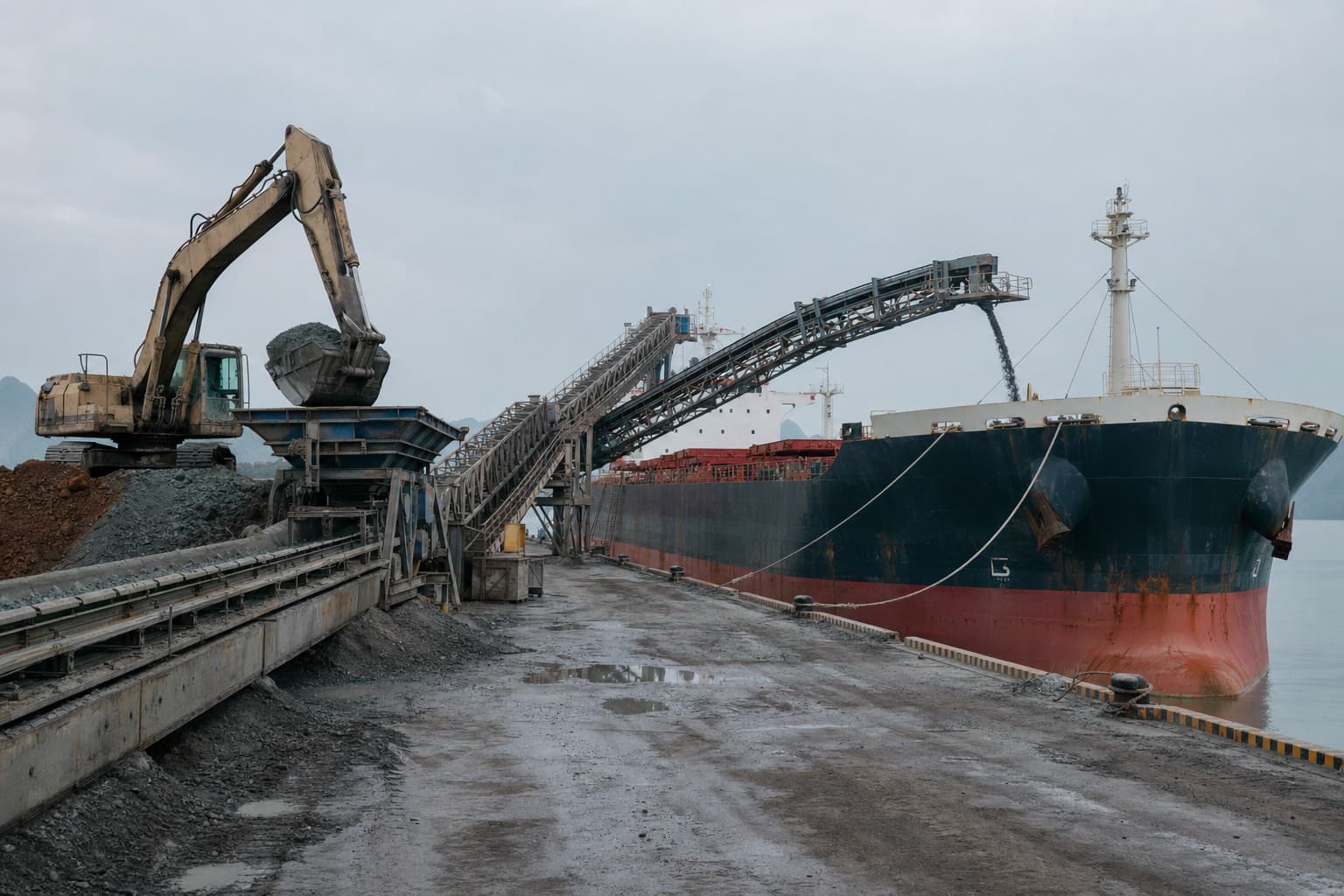
What Decree 201/2026 changes in export duties
The changes concentrate on two product groups, minerals under heading 25.29 and bismuth under 81.06, with three rates moving in different directions.
- A 10% duty applies to feldspar potash and feldspar soda (HS 2529.10.10), fluorspar containing 97% or less calcium fluoride (HS 2529.21.00), and leucite, nepheline and nepheline syenite (HS 2529.30.00).
- Fluorspar containing more than 97% calcium fluoride (HS 2529.22.00) sees its export duty cut from 10% to 5%.
- In the bismuth heading 81.06: waste and scrap carry the top rate of 22%, bismuth cement in powder and cake form gets 0%, and other items are set at 5%.
The logic of the new schedule is plain: the rawer the cargo, the higher the duty; the further it has been refined and processed, the lower the rate. The Ministry of Finance frames the adjustment as a push for companies to invest in technology, expand deep processing and use mineral resources efficiently rather than shipping raw ore abroad.
HS codes now run to 10 digits, and content grade sets the rate
The technical trap sits in the bismuth heading. The decree carves 81.06 into new 10-digit codes for bismuth cement: powder under 8106.10.10.20, cake under 8106.10.90.20, plus 8106.90.10.20 and 8106.90.90.20 for material with a Bi content above 70% and up to 99.99% by weight. One bismuth heading now spans three duty rates of 22%, 5% and 0%, so declaring the right 10-digit code is what keeps that entire spread in your pocket.
One bismuth heading now spans three duty rates of 22%, 5% and 0%, so declaring the right 10-digit code is what keeps that entire spread in your pocket.
Fluorspar follows the same threshold logic: above 97% calcium fluoride pays 5%, at or below 97% pays 10%. The assay result for each shipment is no longer supporting paperwork; it is the direct basis of the duty bill. A lot sitting close to the threshold without a convincing inspection certificate will struggle to defend the lower rate in a post-clearance audit.
Impact by commodity
The clearest winners are deep-processing operations. Fluorspar beneficiated past 97% calcium fluoride, a feedstock for chemicals and aluminium smelting, gets its duty halved from 10% to 5%: investment in a beneficiation line that clears the grade threshold now converts directly into duty savings on every tonne. Bismuth cement in powder and cake form dropping to 0% pushes the same way, while bismuth waste and scrap stay at 22% to block raw outflows.
On the other side, mineral lines feeding ceramics and glass, feldspar potash, feldspar soda, nepheline, and fluorspar below the 97% grade, all land on 10%, a round of changes tax advisers describe as increases of up to 10% across multiple mineral products. Exporters selling these lines on FOB terms will feel the cost from the first declaration registered after July 23, and should reprice offers for second-half deliveries.
What shippers should do before July 23
With three days before the new schedule applies, run the review in this order.
- Screen the HS codes of every mineral and metal product you export against the amended list in Decree 201/2026/ND-CP, starting with headings 25.29 and 81.06.
- For fluorspar and bismuth cargo, line up assay results and inspection certificates in advance, since duty rates now hinge on specific content thresholds.
- For contracts delivering after July 23, recalculate duty exposure and offer prices; for lots mid-process, weigh the declaration registration date against the effective date.
- Cross-check the full annex of the decree itself; this article covers the main lines only.
Homexim handles customs clearance for export cargo, including HS classification advice and document preparation before the declaration is channel-assigned. Send the HS codes you ship, and the documentation desk will map them against the new schedule and flag which lines change rate from July 23, before your cargo reaches the port.
Sources
Related service: Customs brokerage