

Contents
Vietnam's goods trade passed $1 trillion in the first 10 months of 2026 for the first time, reaching an estimated $1,010.6 billion, up 32.3% from a year earlier. October alone is estimated at $122.2 billion, up 47.6%.
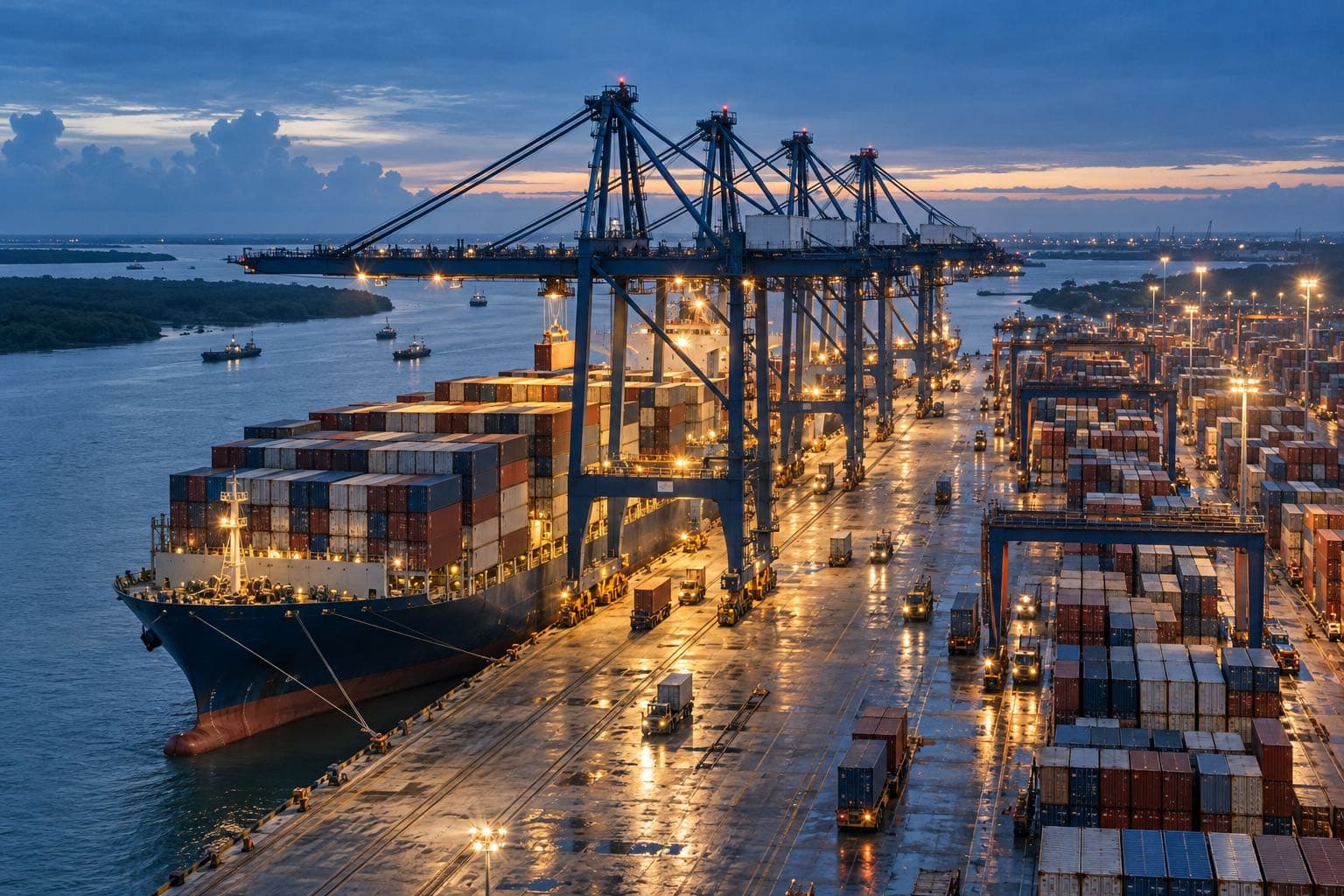
The Import-Export Department under the Ministry of Industry and Trade released the estimate on 29 October 2026. It is not the official count. September came in just under $118 billion, below October.
October pushes the trade balance into surplus
Vietnam is estimated to have run a $6.8 billion surplus in October, its second in a row after September. That cut the cumulative deficit from $19.42 billion after nine months to about $12.7 billion after ten. At a Ministry of Industry and Trade briefing on 7 October, Trinh Thi Thu Hien, deputy head of the department, said the goal was to bring the deficit down to around $10 billion in the final months of the year (VietnamPlus, 30 October). At $12.7 billion, the gap is still wider than that target.
Exports over the 10 months are estimated at $499 billion, up 27.4%. That is well ahead of the roughly 15-16% growth Resolution 01/NQ-CP sets for 2026 as a whole. Cong Thuong newspaper says the full-year target remains reachable barring a sharp external shock. For the earlier benchmark, see the 15 August figures.
What it means by sector
Processed and manufactured goods make up 87.4% of export value. Both domestic firms and foreign-invested enterprises grew exports. Shipments to China, the US, the EU, South Korea and ASEAN all rose. For shippers, that means industrial cargo accounts for almost the entire export flow.
Textiles and garments are a story of their own. Truong Van Cam, vice chairman and secretary general of the Vietnam Textile and Apparel Association, told VietnamPlus (30 October) that the industry now produces more than 4.2 million tonnes of yarn. Fabric output is about 3.2 billion m², of which roughly 1 billion m² goes to export.
Building up domestic supply of materials helps manufacturers meet rules of origin, he said. Under the CPTPP, the "yarn-forward" rule is driving investment in yarn and fabric. Under the EVFTA, fabric production "remains a weak point for the industry".
Textile and garment shipments moving under either agreement need origin documents for their materials, and the shipper has to arrange them. Start early rather than waiting until the vessel's cut-off.
Draft 2030 strategy and what shippers should do
The draft Strategy for Goods Import and Export to 2030, with a vision to 2045, is open for comment and not final. For 2026-2030 it targets average export growth of 15-16% a year and import growth of 12-13%. It sets three scenarios for 2030 export value: $765 billion (low), $953.7 billion (medium) and $1,041.1 billion (high). Processed and manufactured goods are projected to make up 89-90% of exports.
October volumes already beat September, and the year-end peak season is approaching.
Official figures are not out yet, but shippers can act now:
- Review Q4 booking plans and lock in space early for cargo with confirmed sailing dates.
- Have the document set ready before the vessel arrives, not at the cut-off.
- For textile and garment cargo moving under the CPTPP or EVFTA, recheck origin documents for yarn and fabric inputs.
- Watch for the customs authority's official figures, since the current numbers are estimates.
To book Q4 space, see ocean freight FCL/LCL. To check paperwork before the vessel arrives, see customs declaration.
Sources
- Báo Đầu tư: Xuất nhập khẩu tháng 10/2026 lập đỉnh mới, vượt 122 tỷ USD
- Báo Công Thương: 10 tháng năm 2026, kim ngạch xuất nhập khẩu hàng hóa vượt mốc 1.000 tỷ USD
- VietnamPlus: Xuất nhập khẩu lần đầu vượt 1.000 tỷ USD, cán cân thương mại cải thiện
- Bộ Công Thương: Kim ngạch xuất nhập khẩu hàng hóa Việt Nam vượt mốc 1.000 tỷ USD sau 10 tháng năm 2026
Related service: Customs brokerage